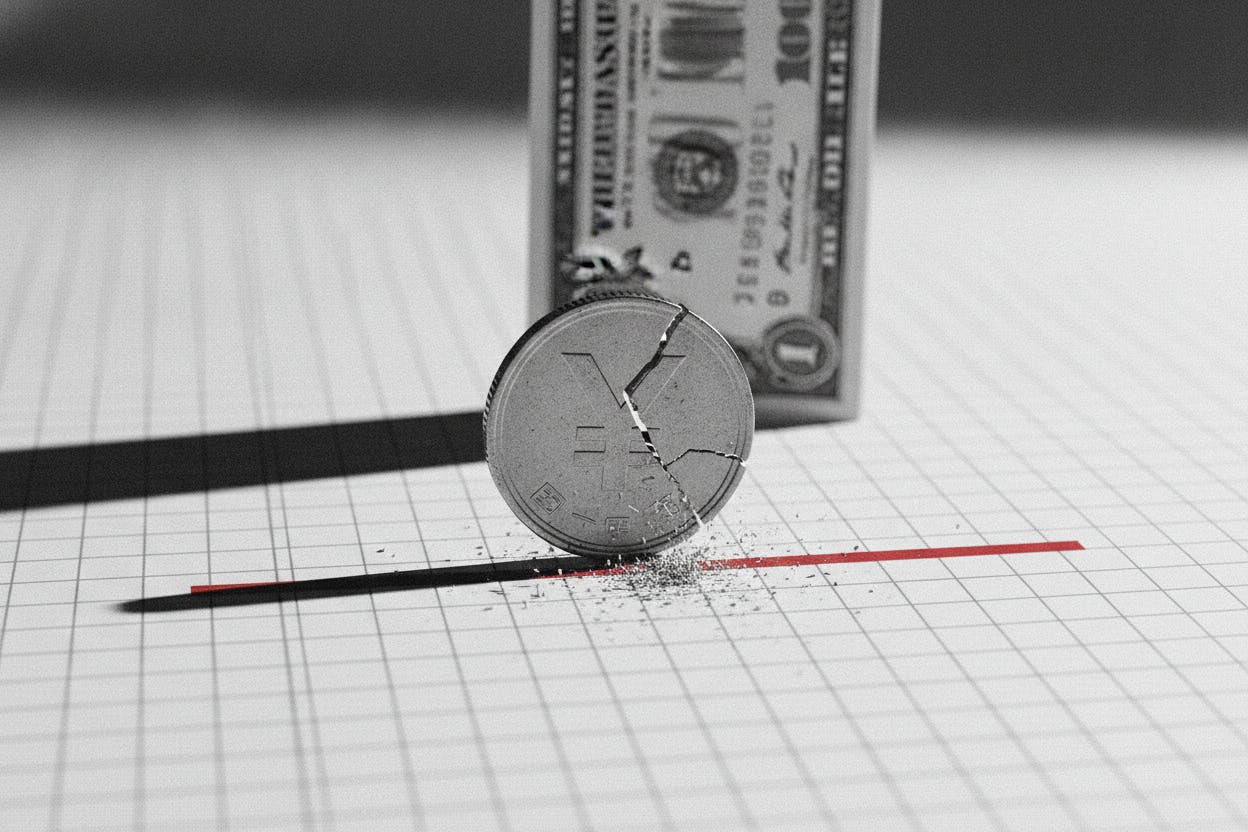
Japan's yen is clinging to levels not seen in four decades, trading near 161.82 per US dollar on Wednesday. The currency briefly touched 161.95, just shy of the 161.96 mark that would be its weakest since 1986. The move comes after May's personal consumption expenditures (PCE) price index—the Federal Reserve's preferred inflation gauge—came in line with expectations, offering little to shift the dollar's trajectory.
The PCE data, which showed inflation holding steady, initially cooled some of the dollar's recent momentum. But the reprieve was short-lived. Mixed signals from Fed speakers and persistent bets that US interest rates will stay elevated have kept the greenback strong, leaving the yen pinned near multi-decade lows.
Why the yen is under pressure
The core issue for the yen is the vast gap between US and Japanese interest rates. While the Fed has held its benchmark rate above 5% to fight inflation, the Bank of Japan (BOJ) has kept its key rate near zero, even as Tokyo inflation recently edged up to 1.6%—still below the BOJ's 2% target. That disparity makes it attractive for investors to borrow yen cheaply and invest in higher-yielding US assets, a strategy known as the carry trade.
According to CME Group's FedWatch tool, markets now see a 69% probability that the Fed will hold rates steady at its meeting ending July 29. That "higher for longer" outlook reinforces the yield advantage for the dollar. As long as US cash rates sit well above Japan's, the carry trade remains tempting, keeping downward pressure on the yen.
This dynamic has played out before. When the US dollar strengthens broadly, currencies like the yen and the Australian and New Zealand dollars often slide, as investors chase higher returns elsewhere.
The 161.96 threshold and intervention risk
The 161.96 level is more than just a number. It marks the yen's weakest point since 1986, and crossing it tends to draw headlines and sharpen market focus. More importantly, it raises the specter of Japanese official intervention. The Ministry of Finance and the BOJ have a history of stepping into currency markets when they view moves as excessive or disorderly.
"Two-way risk" is the term traders use for this situation. On one side, the wide rate gap keeps USD/JPY elevated. On the other, the possibility of a sudden intervention can trigger sharp reversals. These reversals often spill into other yen pairs like EUR/JPY and AUD/JPY, which global macro funds use to express or hedge risk.
For everyday investors, this means that while the yen looks weak, betting against it carries its own dangers. A sudden move by Japanese authorities could erase weeks of gains in minutes. That's why currency markets around the 161.96 level often show calm trading followed by abrupt, volatile swings.
What it means for investors
For those with exposure to Japanese assets or currency-hedged investments, the yen's slide has real implications. A weaker yen boosts the value of Japanese exports and can lift Tokyo-listed stocks, but it also erodes returns for foreign investors who convert yen-denominated gains back into dollars or other currencies.
The broader backdrop also matters. The Fed's inflation fight is far from over, and while May's PCE data was in line with forecasts, it didn't provide the clear signal markets hoped for. The PCE reading of 4.1% keeps the door open for further rate hikes if inflation proves stubborn. That would only widen the US-Japan rate gap and add more pressure on the yen.
Meanwhile, the BOJ faces its own dilemma. Raising rates could help support the yen, but it risks choking off a fragile economic recovery. The bank's next policy meeting will be closely watched for any hints of a shift.
For now, the yen remains in a holding pattern—caught between the gravitational pull of higher US yields and the looming threat of official intervention. Investors should expect more volatility, especially if USD/JPY tests and breaks the 161.96 barrier.