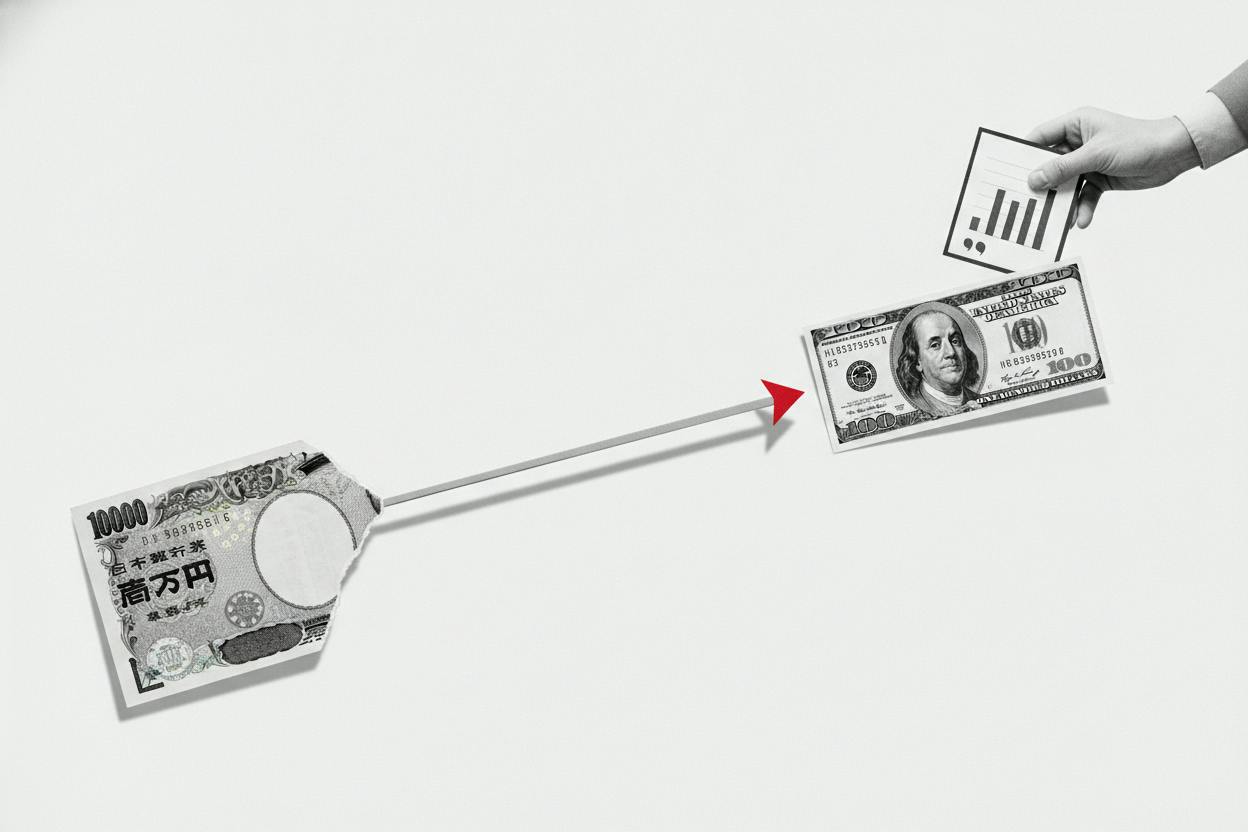
The Japanese yen weakened toward 157.47 per dollar in Asian trading on [day], as currency markets continued to price in a wide interest-rate gap between the US and Japan. Despite a reported “rate check” by Japanese authorities—a warning signal that intervention may be coming—traders are still betting that the yield differential will persist.
Currency moves often come down to incentives. With US interest rates still far above Japan’s, investors can borrow yen cheaply, swap into dollars, and earn the higher yield in what’s known as a “carry trade.” The strategy works as long as the exchange rate doesn’t move against them too quickly.
That’s why the market’s focus is on the roughly 275-basis-point gap investors still see between US and Japanese policy rates. The Bank of Japan’s latest rate hike didn’t convince traders that Japan is ready to close that gap anytime soon.
What is a carry trade?
In simple terms, a carry trade involves borrowing in a currency with a low interest rate and investing in one with a higher rate. The profit comes from the difference, or “carry.” For years, the yen has been a favorite funding currency because Japan’s rates have been near zero or negative, while US rates have been much higher.
But carry trades carry risk. If the yen suddenly strengthens, the cost of repaying the borrowed yen rises, and traders can lose money fast. That’s why Japanese officials watch the currency closely and sometimes step in to support it.
The reported “rate check” is a tool the Ministry of Finance uses to signal that it’s monitoring the market and may intervene. It’s a warning shot, not an actual intervention, but it can make traders nervous.
Why the yen keeps sliding
The yen’s weakness is largely a story of interest-rate divergence. The Federal Reserve has kept US rates elevated to fight inflation, while the Bank of Japan has only begun to move away from its ultra-loose policy. Even after the BOJ’s recent hike, the gap remains wide.
Investors are also watching US economic data for clues about the Fed’s next move. If US rates stay high for longer, the carry trade becomes even more attractive, putting more downward pressure on the yen.
Japanese officials have repeatedly said they are watching currency moves “with a sense of urgency.” But intervention is costly and often only provides temporary relief. The last time Japan intervened was in 2022, when the yen fell to levels that prompted action.
What it means for investors
For everyday investors, the yen’s slide has several implications. A weaker yen can boost the profits of Japanese exporters, which may be reflected in their stock prices. It also makes Japanese goods cheaper abroad, which could help the country’s economy.
But for those holding yen-denominated assets or planning to travel to Japan, a weaker yen means less purchasing power. It also raises the cost of imported goods in Japan, which could feed into inflation.
For global markets, the yen’s movements can affect risk sentiment. A sudden spike in the yen could trigger unwinding of carry trades, leading to volatility in other currencies and assets. That’s why traders and investors alike are watching for any signs of intervention.
Related: oil and dollar moves set the tone for Africa's markets and the rupee's slide as the RBI defends the 96 level show how currency pressures are playing out across emerging markets.
As the week progresses, all eyes will be on any comments from Japanese officials and on US economic data that could shift rate expectations. For now, the carry trade remains alive, and the yen is feeling the weight of it.