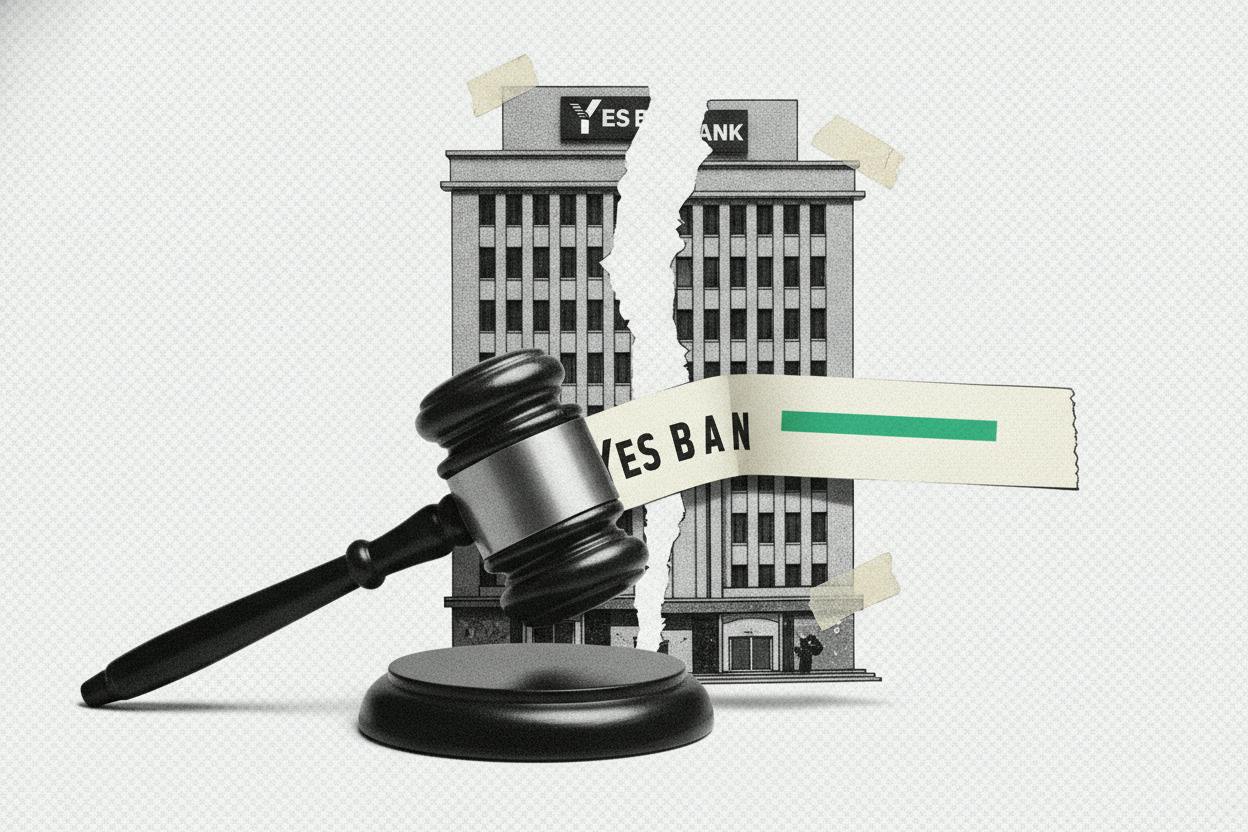
Investors who lost money when Yes Bank's additional Tier 1 (AT1) bonds were written off during the lender's 2020 rescue are pressing India's central bank to help carry out a Supreme Court ruling that ordered the bonds restored. The dispute centers on 84.15 billion rupees (roughly $1 billion) of securities that were wiped out as part of a government-engineered bailout.
Last month, India's Supreme Court ruled that the write-off was unlawful because the proper procedures were not followed. The court ordered the bonds reinstated, including the value investors lost. But Yes Bank and the Reserve Bank of India (RBI) have both filed review petitions, asking the court to reconsider its decision. That has slowed the practical question investors care about: when, and on what terms, the bonds and any missed interest payments will come back.
What are AT1 bonds?
AT1 bonds are a type of bank debt designed to absorb losses in a crisis. They sit between equity and traditional debt in a bank's capital structure. If a bank gets into trouble, regulators can write off or convert these bonds into equity, giving the lender a cushion to keep operating. In exchange for this risk, AT1 bonds typically pay higher interest than ordinary bonds.
When Yes Bank was restructured in March 2020, the RBI and the government orchestrated a rescue led by State Bank of India. As part of that plan, the bank's AT1 bonds were written down to zero, leaving investors with nothing. At the time, regulators argued this was necessary to protect the bank's capital position and prevent a collapse.
But the Supreme Court disagreed. It said the write-off did not follow the required legal steps, making it unlawful. The court's order to restore the bonds was a rare reversal of a regulatory decision, and it has sent ripples through India's banking sector.
Why are review petitions delaying things?
Review petitions are a standard legal mechanism in India. They allow a party to ask the court to revisit its own judgment if there is an error on the face of the record. Filing a review does not automatically stay the original order, but it can create uncertainty about enforcement.
In this case, both Yes Bank and the RBI have filed review petitions. The RBI has warned that the ruling could weaken future bank rescues, arguing that the ability to write off AT1 bonds is a critical tool for managing stressed lenders. The central bank's stance has frustrated bondholders, who see the review as a way to delay paying what the court has already ordered.
Axis Trustee Services, which acts as a trustee for the bondholders, has gone a step further and filed a contempt petition. The trustee argues that the Supreme Court's ruling is still in force while the reviews are pending, and that failing to comply amounts to contempt of court. It has also pointed out that many of the affected investors are retail savers and long-term institutional pools like pension and provident funds, which have been tied up in this dispute for years.
What does this mean for investors?
For the bondholders themselves, the practical impact is clear: they are still waiting for their money. The Supreme Court's order was a victory, but the review petitions mean the timeline is uncertain. If the reviews fail, the bonds would be restored, and investors would likely receive the principal plus any missed interest payments. If the reviews succeed, the write-off could stand, and investors would be back to square one.
For the broader market, the dispute is about more than one bank. AT1 bonds only work as "shock absorbers" if investors trust that the loss-absorption rules will be applied consistently. A top-court order to reverse a write-off, followed by the regulator's own request to revisit that decision, adds legal and regulatory uncertainty to an already complex product.
That uncertainty typically shows up as a bigger risk premium. Investors may demand higher interest rates, tighter terms, or simply avoid new AT1 deals altogether. For Indian banks, that can translate into a higher cost of raising capital-like funding, which matters most when the sector is trying to build buffers without leaning too heavily on ordinary equity issuance.
The RBI's warning that the ruling could weaken future rescues is a legitimate concern. If regulators cannot confidently write off AT1 bonds in a crisis, they may have to rely more on taxpayer-funded bailouts or force losses onto ordinary depositors and shareholders. But bondholders argue that the write-off process must follow the law, and that the court's ruling is a check on arbitrary regulatory power.
What to watch next
The immediate focus is on the Supreme Court's handling of the review petitions. If the court dismisses them, the restoration order would stand, and Yes Bank would need to work out the mechanics of returning the bonds. That could involve issuing new securities or paying cash compensation, depending on the court's exact instructions.
Investors will also be watching how the RBI responds. The central bank has a dual role here: it is both a party to the case and the regulator responsible for overseeing Yes Bank. Its stance will signal how it plans to handle similar situations in the future.
For everyday investors, this case is a reminder that AT1 bonds are not like ordinary bonds. They are designed to take losses in a crisis, and that risk is part of the reason they offer higher yields. But the Yes Bank case shows that even when a court steps in, the path to recovery can be long and uncertain.
As the legal process plays out, the broader Indian banking sector will be watching closely. The outcome could shape how banks raise capital and how regulators manage stressed lenders for years to come.