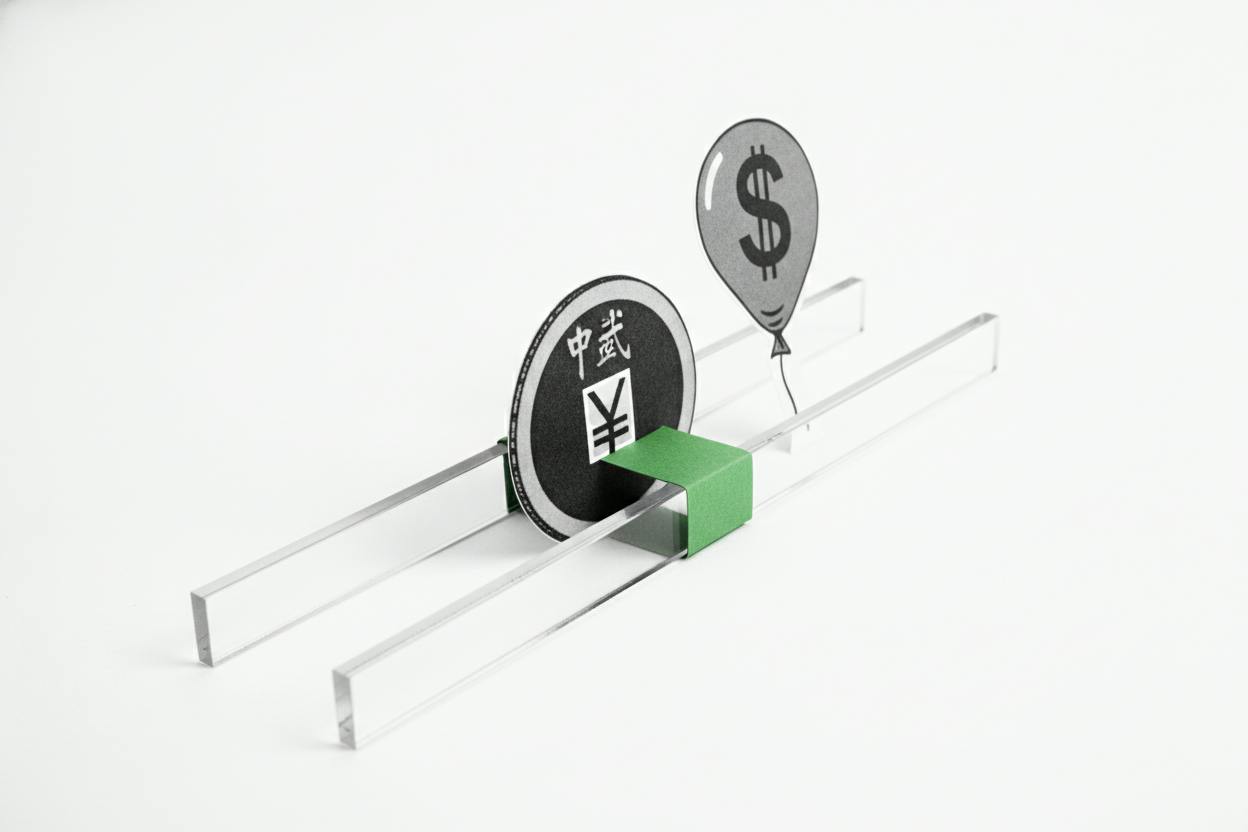
China's yuan inched higher on Tuesday as the US dollar took a breather, after Federal Reserve officials played down the chances of an interest-rate hike in the near term. The onshore yuan strengthened modestly against the dollar, but the move was far from a one-way bet.
The People's Bank of China (PBOC) set its daily midpoint – a reference rate that anchors trading – at 6.7253 per dollar, a level weaker than what market models had predicted. Because the spot yuan can only trade within a 2% band around that fix, a softer midpoint effectively shifts the day's trading range higher and can slow how quickly the dollar-yuan exchange rate falls.
The twist is that the yuan looks firmer when measured against a basket of trading partners' currencies. The CFETS index – a trade-weighted gauge – hit a more than four-year high of 103.73, suggesting China is tolerating strength that matters for imports and exports even while managing the bilateral move versus the dollar.
Why the midpoint matters
For everyday investors, the daily fix might seem like a technical detail, but it's a key tool in China's managed-float system. The PBOC sets a reference rate each morning, and the yuan can move only within a set band around it. By choosing a weaker-than-expected midpoint, the central bank can inject two-way volatility into the market, making it harder for speculators to bet on a steady appreciation.
That balance lets officials avoid rewarding 'one-way' bets, especially heading into big Chinese data releases. With major economic indicators due soon, the PBOC appears keen to keep the currency from becoming a one-way trade.
The CFETS basket's rise to 103.73 – its highest in more than four years – shows that China is comfortable with a stronger trade-weighted currency, even as it manages the bilateral rate against the dollar. This matters because a stronger basket can make Chinese exports more expensive, but it also helps reduce the cost of imports and can ease inflationary pressures.
What it means for investors
For macro funds and corporate hedgers, the key takeaway is that the yuan isn't a one-way trade. The PBOC's fix at 6.7253, weaker than expected, signals that officials are wary of a rapid rally. The 2% band around the fix means the central bank can set the 'rails' for the day's trading, and a softer midpoint can lead to choppier price action.
This raises the risk of sudden reversals between the onshore and offshore yuan, which can deter speculative inflows that rely on a steady grind. Even if the longer-run trend of a stronger CFETS basket holds, pricing may stay choppy through the rest of 2026, with bigger intraday moves around events like major data prints and central bank messaging.
For ordinary investors, the practical implication is that currency moves can be volatile, and that central bank policy plays a big role in shaping them. The dollar's recent cooling – partly due to Fed officials downplaying rate hikes – has given the yuan some room to firm, but the PBOC is clearly not letting it run too far.
Investors with exposure to Chinese assets or trade-sensitive sectors should keep an eye on both the dollar-yuan rate and the CFETS basket. A stronger basket can affect the competitiveness of Chinese exporters, while a weaker dollar can support emerging-market currencies and commodities.
Related stories: gold's rebound as the dollar retreats and how hot US inflation lifted the dollar show how currency moves ripple through other markets. Meanwhile, iron ore's slide on weak China steel demand highlights the broader economic backdrop.
As always, the key is to stay informed and not chase short-term moves. The yuan's path will depend on a mix of US monetary policy, Chinese economic data, and the PBOC's willingness to manage the currency's pace.