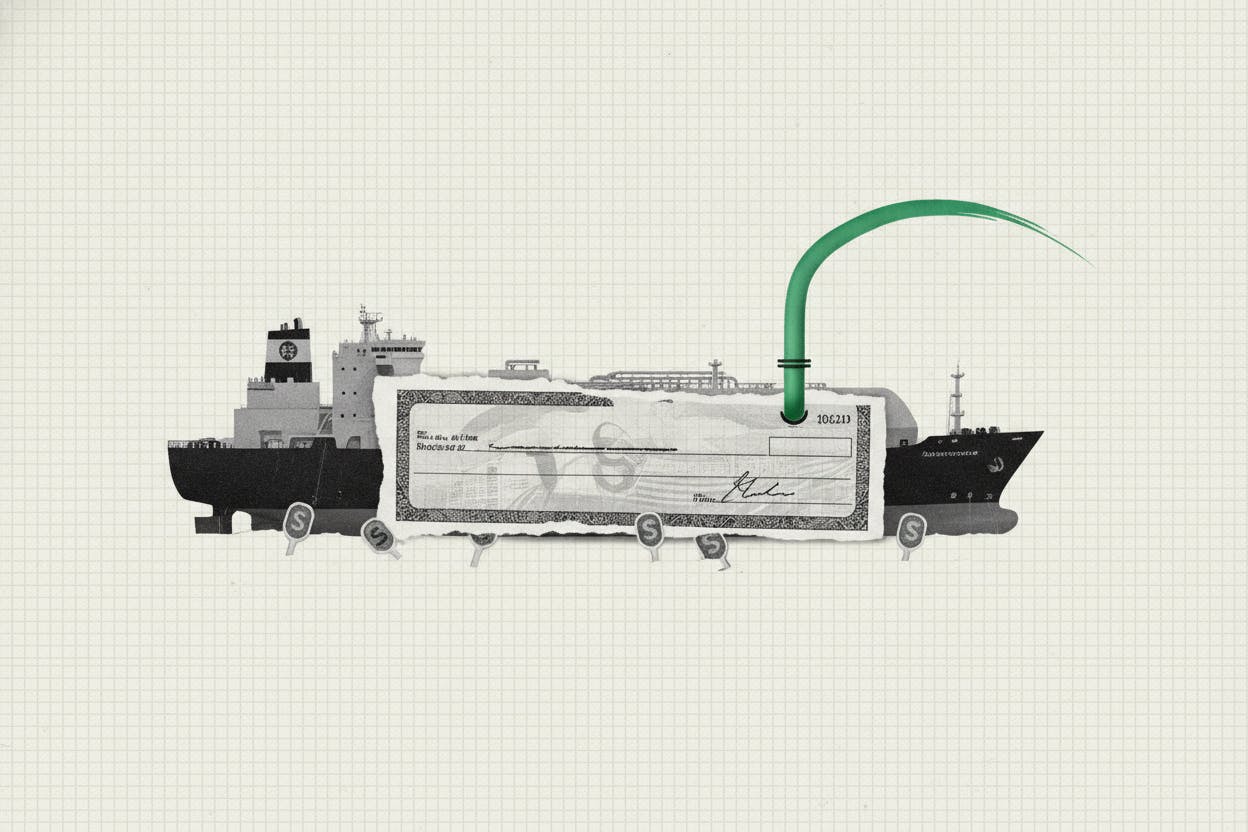
A private investment office linked to Abu Dhabi's ruling family is making a major bet on liquefied natural gas (LNG), committing $1.13 billion to MidOcean Energy, a platform that already holds stakes in projects across the Americas and Australia.
The investment comes from the Private Department of Sheikh Mohammed Bin Khalid Al Nahyan, a vehicle that manages assets on behalf of the prominent Emirati royal. It marks the department's first direct push into global LNG markets and adds significant financial weight to a platform that says it already has more than $5 billion on its balance sheet.
Who is MidOcean Energy?
MidOcean Energy is a private investment platform focused on acquiring and managing LNG assets. It is backed by a consortium of heavyweight investors including EIG, a US-based energy infrastructure firm, Saudi Aramco, and Japan's Mitsubishi. The platform describes itself as a long-term, institutional owner of LNG assets, and it has been actively building a portfolio of stakes in liquefaction and regasification projects.
LNG is natural gas that has been cooled to a liquid state for easier storage and transport. It has become a critical part of global energy security, especially after the disruption of Russian pipeline gas supplies to Europe. Demand for LNG is expected to grow significantly over the coming decade as countries seek to replace coal and improve energy independence.
The new capital from Abu Dhabi is intended to strengthen MidOcean's ability to compete for large-scale deals. The company called the investment a step up in its “institutional shareholder base” – a reference to the kind of patient, well-known capital that helps private funds raise additional money and win competitive auctions.
A strategic partnership for regional deals
Alongside the equity check, the two sides are forming a strategic partnership to source energy and related infrastructure opportunities in the UAE and the wider Middle East region. The arrangement is described as a “capital aggregation” model, meaning they will identify potential deals and then bring in regional investors alongside global partners.
In practice, this blends local access with global scale. The partnership creates a pipeline of potential deals in the Gulf region, matched with a larger and more stable pool of funding to pursue them. This could give MidOcean an edge in markets where relationships and local knowledge matter as much as financial firepower.
The move also aligns with broader trends in the region. Abu Dhabi has been aggressively expanding its energy footprint, both through its state oil company ADNOC and through investment vehicles like this one. Earlier this year, ADNOC Distribution bought Shell's South Africa fuel network for $1 billion, signaling the emirate's appetite for downstream energy assets.
What it means for investors
For everyday investors, this deal may seem distant, but it has implications for how private energy markets operate – and ultimately for the returns available in publicly traded energy stocks and funds.
In private markets, who your backers are can matter as much as how much money you have. A large, long-term commitment from a recognizable, deep-pocketed investor like the Al Nahyan office can lower a platform's funding costs over time. That is because follow-on fundraising tends to be easier when other investors see that patient capital is already on the cap table.
A lower cost of capital translates into a lower “return hurdle” – the minimum payoff a deal needs to be worth doing. That lets the buyer pay more for assets, accept longer timelines, or offer cleaner terms while still meeting its targets. Put that together with MidOcean's stated $5 billion-plus balance sheet, and the platform can show up to LNG and related-infrastructure auctions with bigger equity checks and faster execution.
The knock-on effect is tougher competition for smaller sponsors that need higher returns to justify the same assets. That could compress returns in the private LNG space, but it also signals confidence in the long-term outlook for natural gas as a transition fuel.
For investors in public markets, this kind of large-scale institutional commitment can serve as a signal. When sovereign-linked capital flows into a sector, it often precedes broader infrastructure buildout. That can benefit companies involved in LNG shipping, engineering, and construction, as well as utilities that rely on gas-fired power generation.
The deal also highlights the growing role of Middle Eastern capital in global energy markets. Similar to how Luxshare raised $3.1 billion in a Hong Kong listing to fund expansion, large institutional checks are reshaping the competitive landscape across industries.
Bottom line
The $1.13 billion commitment from Abu Dhabi's royal office is more than just a large check. It is a strategic move that gives MidOcean Energy deeper pockets, a regional deal pipeline, and the kind of institutional credibility that makes it a more formidable player in the global LNG market. For investors, it is a reminder that patient, long-term capital is flowing into energy infrastructure – and that competition for the best assets is only getting stiffer.