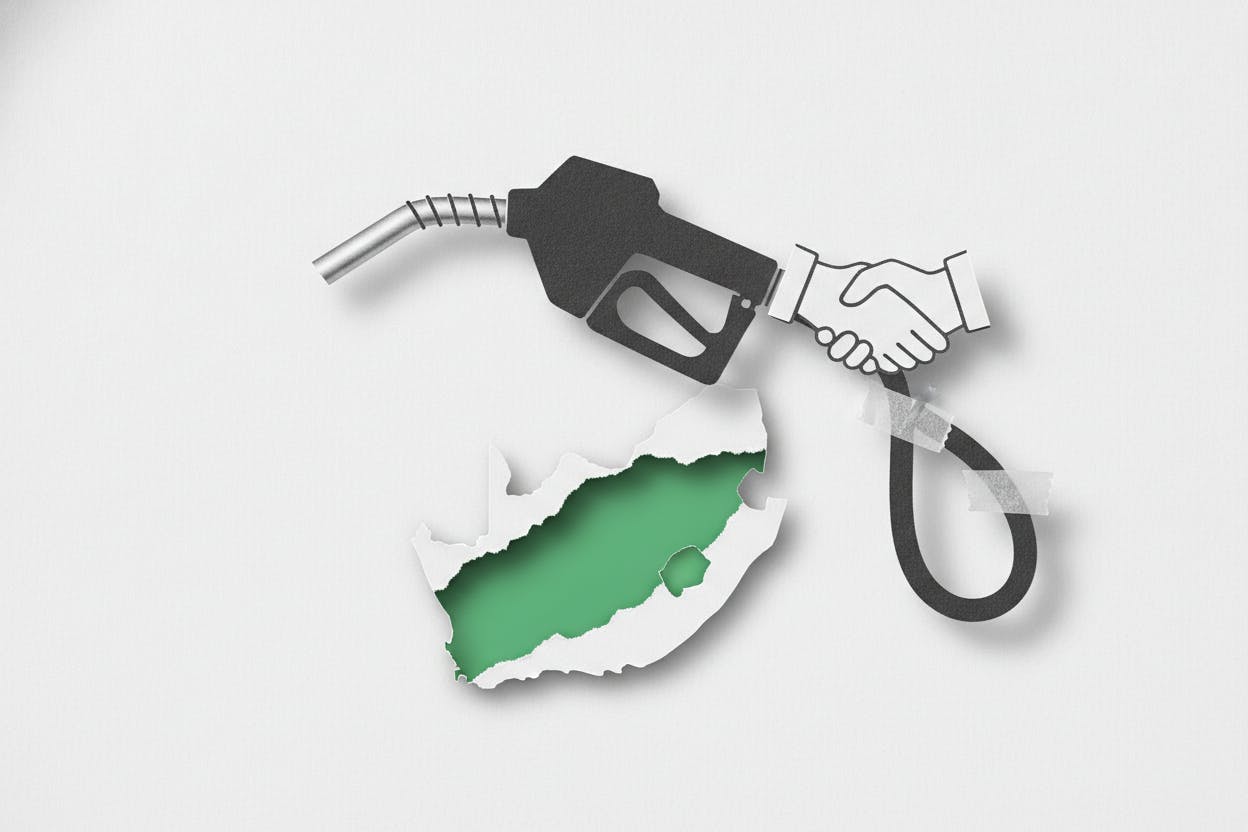
ADNOC Distribution, one of the United Arab Emirates' largest fuel retailers, announced Tuesday that it will acquire Shell's downstream business in South Africa for an implied enterprise value of roughly $1 billion. The deal adds 580 fuel stations to ADNOC Distribution's portfolio, bringing its total to about 1,600 sites, and includes a long-term license to keep operating under the Shell brand.
What the Deal Includes
The purchase covers Shell Downstream South Africa, which operates a network of fuel stations and 360 convenience stores across the country. ADNOC Distribution expects the acquisition to boost its earnings before interest, taxes, depreciation, and amortization (EBITDA) by around 13% and earnings per share (EPS) by 6% in the first full year after closing.
EBITDA is a measure of a company's operating profitability, stripping out the effects of financing and accounting decisions. EPS shows how much profit is allocated to each share of stock, making it a key metric for investors tracking returns.
The convenience stores are a critical part of the deal's logic. While fuel margins are thin, attached shops sell higher-margin items like snacks, drinks, and other everyday goods. That means ADNOC Distribution can potentially boost profits by getting more customers to stop and buy something beyond gasoline.
Why South Africa's Fuel Market Is Different
South Africa's fuel market operates under regulated pump prices, which sets it apart from the price-war model common in many other countries. The government sets maximum retail prices for petrol and diesel, so retailers cannot freely undercut each other to grab market share.
That regulation shifts the profit focus away from guessing oil prices or currency moves and toward running an efficient, high-volume business. With margins per liter relatively stable, success depends on attracting more customers to each station and getting them to spend inside the attached stores.
Keeping the Shell brand under a long-term license reduces the risk of losing customer traffic during a rebranding. For a business model built on repeat visits and convenience-store sales, brand recognition matters.
What It Means for Investors
For investors in ADNOC Distribution, this deal is as much about cash reliability as it is about growth. The company has committed to a dividend policy through 2030 that promises at least $700 million per year, or 75% of net income if that figure is higher.
Regulated fuel pricing makes the South African station network look more like an infrastructure-style business: steady, predictable cash flows from many small transactions. That kind of earnings stability could make it easier for ADNOC Distribution to maintain its dividend floor even as it expands internationally.
The convenience-store angle adds another layer. If ADNOC Distribution can increase traffic across 580 additional sites and capture more spending in the 360 attached stores, it can widen profit margins without needing higher fuel prices. More predictable cash generation supports the dividend promise.
Investors will be watching how quickly ADNOC Distribution can integrate the new assets and whether it can replicate its operational efficiency in a new market. The deal also signals the company's ambition to build a global retail footprint beyond the UAE.
Broader Market Context
The acquisition comes as South African markets hold steady amid global uncertainty, with investors awaiting Federal Reserve minutes for clues on interest rates. A stable local market helps reduce execution risk for a deal of this size.
ADNOC Distribution's move also reflects a broader trend in the energy sector: oil companies and fuel retailers are increasingly focusing on downstream assets and convenience retail as a way to generate steady returns, rather than relying solely on volatile oil prices.
For everyday investors, the key takeaway is that this deal is not about a quick profit from rising fuel prices. It is about building a large, stable network of stations and stores that can produce reliable cash flows over many years. Whether ADNOC Distribution can deliver on that promise will determine if the $1 billion price tag was money well spent.