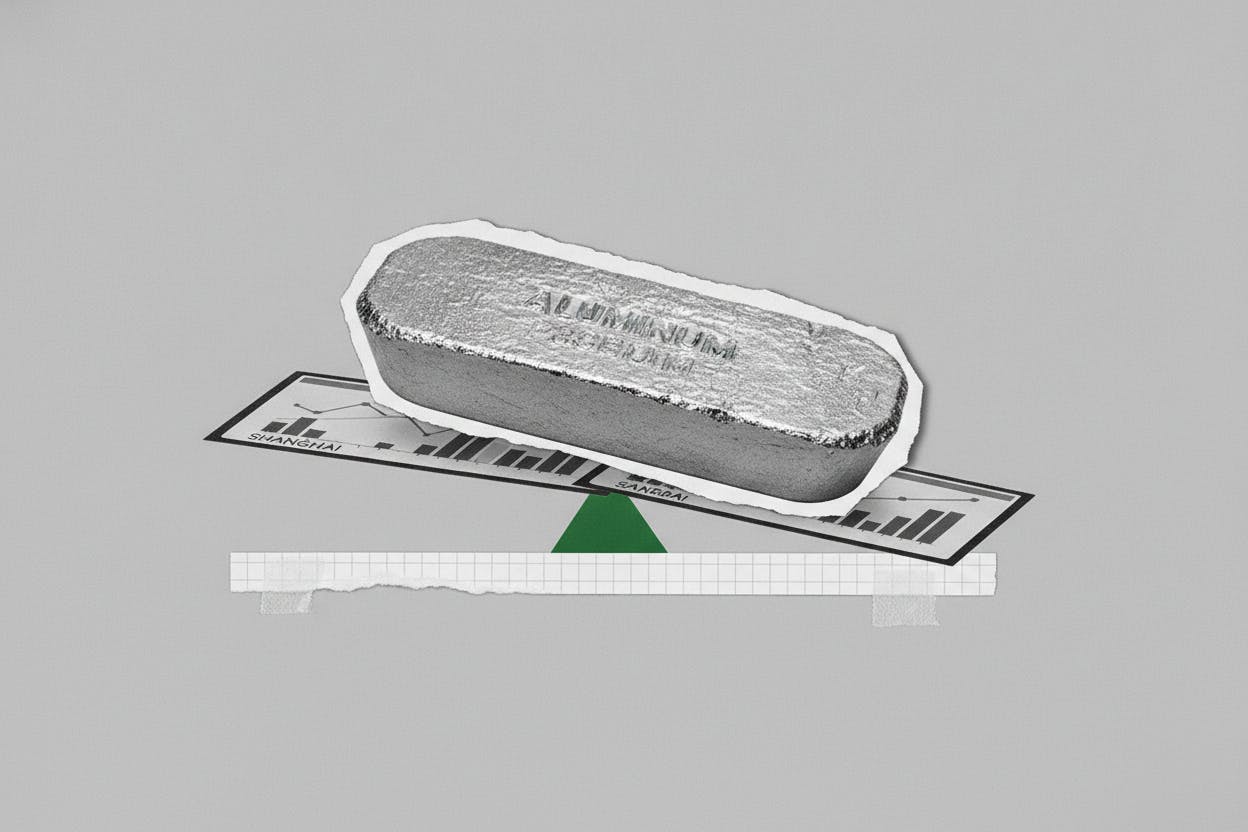
Aluminum prices ticked up on Tuesday as fresh manufacturing data from the world's three largest industrial regions pointed to resilience, even as input costs remain elevated. Three-month aluminum on the London Metal Exchange (LME) rose to $3,094 a ton, while the most-traded contract on the Shanghai Futures Exchange (SHFE) held around 22,505 yuan a ton (roughly $3,317), according to Reuters.
The move comes after a recent pullback in the metal, which had eased as geopolitical risk premia faded. But this week's factory surveys from China, Europe, and the United States suggested that industrial output is holding up better than some had feared, giving traders reason to step back in.
Why Aluminum Matters as an Economic Bellwether
Aluminum is used extensively in transport (cars, planes, trains), packaging (cans, foil), and construction (window frames, siding). Because it is so widely consumed, traders often treat the metal's price as a quick check on global industrial momentum. When factories are humming, demand for aluminum tends to rise; when output slows, prices typically fall.
This week's data hinted at steadier output across the three major manufacturing hubs. In China, the world's largest producer and consumer of aluminum, factory activity showed signs of stabilizing after a period of weakness. In Europe, surveys suggested that manufacturers are adapting to higher energy and raw material costs. In the US, industrial output remained resilient despite elevated interest rates.
The combination helped lift sentiment after a period of uncertainty. For context, aluminum prices had been under pressure in recent weeks as investors priced in a lower risk premium following easing tensions in the Middle East and a more cautious outlook from central banks. The latest data provided a counter-narrative: that demand, at least for now, is not collapsing.
What This Means for Investors
For everyday investors, the move in aluminum is a reminder that commodity prices often reflect broader economic trends. When industrial metals like aluminum rise, it can signal that factories are busy, which is generally positive for stocks in sectors like manufacturing, construction, and transportation. Conversely, a sustained decline can be an early warning of an economic slowdown.
However, investors should be cautious about reading too much into a single day's price move. Aluminum remains a volatile commodity, influenced by everything from Chinese government policy to energy prices to trade tariffs. The recent uptick does not necessarily mean a sustained rally is underway.
One factor to watch is the trajectory of input costs. The factory surveys that boosted aluminum prices also noted that manufacturers are facing higher costs for energy, labor, and raw materials. If those costs continue to rise, they could eventually squeeze profit margins and slow production, which would weigh on aluminum demand.
Another key variable is China's economic policy. The country's manufacturing sector is heavily influenced by government stimulus measures and property market conditions. Recent data showed some improvement, but the outlook remains uncertain. Investors should keep an eye on Chinese industrial production and housing data for further clues.
For those with exposure to aluminum through exchange-traded funds (ETFs) or mining stocks, the current environment suggests a cautious approach. The metal's price is likely to remain sensitive to economic data releases and central bank policy decisions in the coming weeks.
Broader Market Context
The aluminum price move comes against a backdrop of mixed signals in global markets. While factory surveys showed resilience, other data points have been less encouraging. For example, European stocks dipped recently as rate hike expectations returned to haunt markets, and Swiss shares slipped as manufacturing cooled and Middle East tensions rose.
In Asia, China's yuan held steady as traders awaited US jobs data for direction from the Federal Reserve. Meanwhile, rubber prices slid after China's auto sales forecast was slashed and oil hit lows, highlighting the uneven nature of the global recovery.
Aluminum's uptick, then, is a bright spot in a landscape that remains full of crosscurrents. For now, the metal is telling investors that factories are still running, but the road ahead is far from smooth.