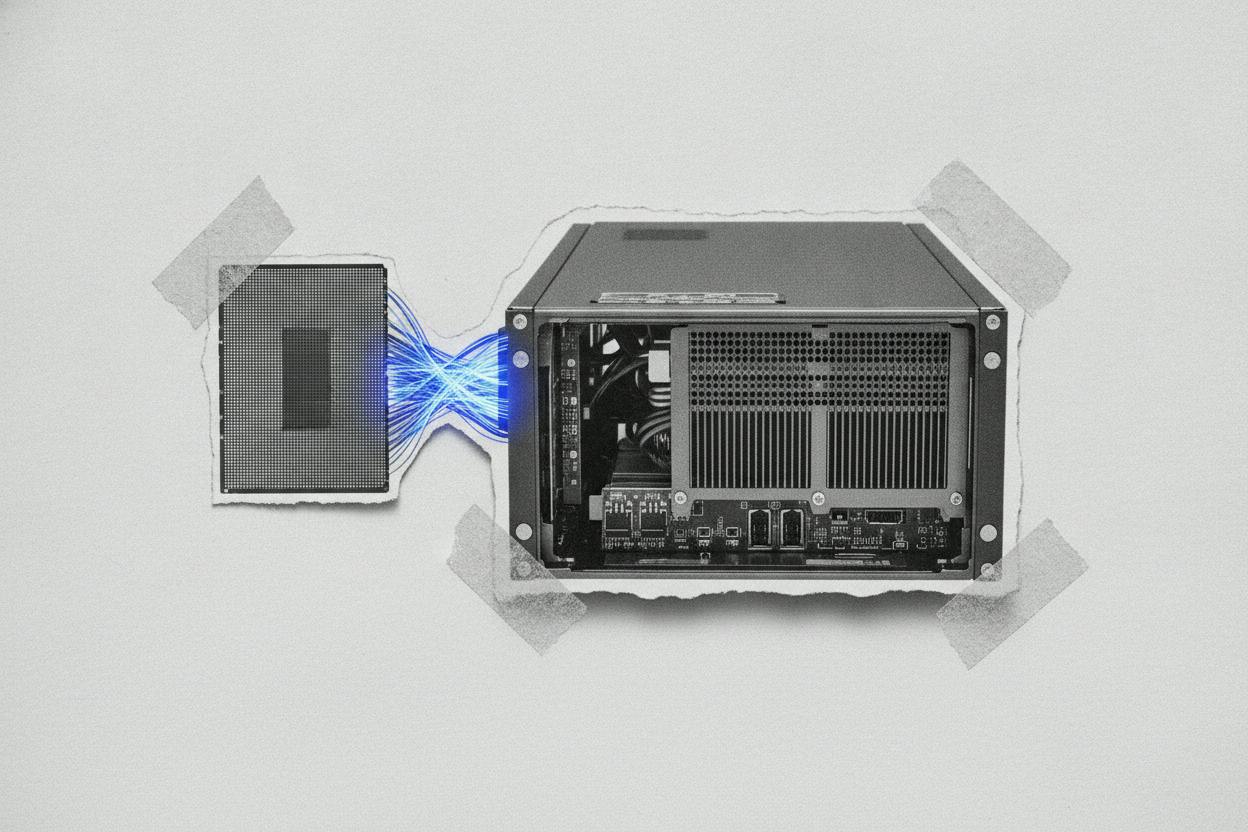
AMD said Thursday it will take an equity stake in PsiQuantum, a quantum computing company, as part of an expanded partnership to build the hardware and software behind utility-scale quantum systems. The investment size was not disclosed, but the move signals a deepening tie-up between one of the world's largest chipmakers and a leading player in the race to make quantum computers practical.
Quantum computing has long been hailed as a transformative technology, but today's machines are still experimental. They require extreme cooling, error correction, and careful control—tasks that conventional computers handle. That's why the partnership is as much about classical computing as it is about quantum.
Pairing classical and quantum
AMD is supplying the "classical" side of the equation: central processing units (CPUs), graphics processing units (GPUs), and software. PsiQuantum brings silicon photonics, an approach that builds quantum hardware using standard chip manufacturing techniques and light-based connections to move information. This method aims to make quantum systems more scalable and manufacturable than other approaches.
Because early quantum machines still need conventional computers to control experiments, run simulations, and manage data, the fastest progress usually comes from "hybrid" setups where both types of compute work together. That's why the companies are talking as much about infrastructure and applications as they are about quantum devices themselves.
Drug discovery is their headline example. PsiQuantum says its chemistry workflows already run on AMD hardware, and combining those with GPU-driven simulation has helped model covalent inhibitors, a class of compounds used in some oncology research. This is a concrete use case that could deliver value before quantum machines reach full power.
Government backing adds tailwind
The timing of AMD's investment lines up with a broader funding push. In May, the US Department of Commerce said it planned to take minority equity stakes in nine quantum firms under a $2 billion CHIPS Act program, including a $100 million deal with PsiQuantum. That government support helps extend PsiQuantum's runway and reduces some of the risk for private investors like AMD.
For AMD, the strategic rationale is clear: quantum R&D can pull through demand for conventional data-center silicon. Even before quantum computers are commercially viable, they need powerful CPUs and GPUs to run control systems, error-checking, large-scale simulation, and workflow software that connects a quantum test to a real task. These are the "picks and shovels" of the quantum gold rush, and AMD already sells them.
What it means for investors
For markets, the near-term read-through is more about AMD's core business than quantum sales. The company's upside from this deal likely comes from increased demand for its data-center chips, especially for hybrid workloads like the partners' drug-discovery simulations. Any payoff from quantum hardware itself is likely to be slower, bumpier, and harder to forecast.
Investors should view this as a strategic bet that could pay off in the long run, but it's not a signal that quantum computing is about to become a major revenue driver. The technology is still years away from utility-scale deployment, and many technical hurdles remain.
That said, the partnership is a reminder that the quantum race is heating up, with major tech companies and governments pouring money into the field. For everyday investors, the takeaway is that the benefits of quantum computing may show up first in the companies that supply the supporting infrastructure—like AMD—rather than in the quantum startups themselves.
As always, it's wise to keep an eye on how these partnerships evolve and whether they translate into real revenue. For now, AMD's stake in PsiQuantum is a calculated move to position itself at the intersection of classical and quantum computing, with drug discovery as an early proving ground.