US-listed shares of Asian companies slipped Wednesday morning, with the S&P Asia 50 ADR Index easing 0.37% to 2,862.09. The modest decline masked a wide range of individual moves, as technology and financial names in North Asia split in opposite directions.
American depositary receipts (ADRs) are a way for US investors to buy shares of foreign companies on US exchanges. They often serve as a real-time gauge of appetite for Asia-related risk during American trading hours, and Wednesday's action suggested a market driven more by company-specific stories than a broad shift in sentiment.
Winners and losers
On the upside, fintech firm Jiayin Group rose 4.2%, while chip designer Silicon Motion gained 3.8%. ASE Technology, a semiconductor packaging company, added 2.6%, and South Korean bank Shinhan Financial Group climbed 1.3%. These gains were offset by steep declines elsewhere: mobile app developer Cheetah Mobile tumbled 8.5%, solar panel maker JinkoSolar dropped 4.1%, fashion platform MOGU slid 4%, and fintech lender Qfin dipped 3.3%.
South Asia also showed a mixed picture. Dr. Reddy's Laboratories rose 3%, and Sify Technologies gained 1.9%, while Telekomunikasi Indonesia fell 3.1% and crypto-mining chip firm Canaan slipped 3%.
What's behind the divergence?
The split within North Asia tech is notable. While chip-related names like Silicon Motion and ASE Technology advanced, other tech plays such as Cheetah Mobile and Canaan retreated. This kind of divergence often reflects company-specific news or sector rotations rather than a unified view on the region's tech outlook.
For context, Asian tech stocks have been in focus recently, with chip rallies lifting South Korean indices and AI-driven gains in the sector drawing investor attention. However, the latest ADR moves suggest that not all tech names are moving in tandem.
What it means for investors
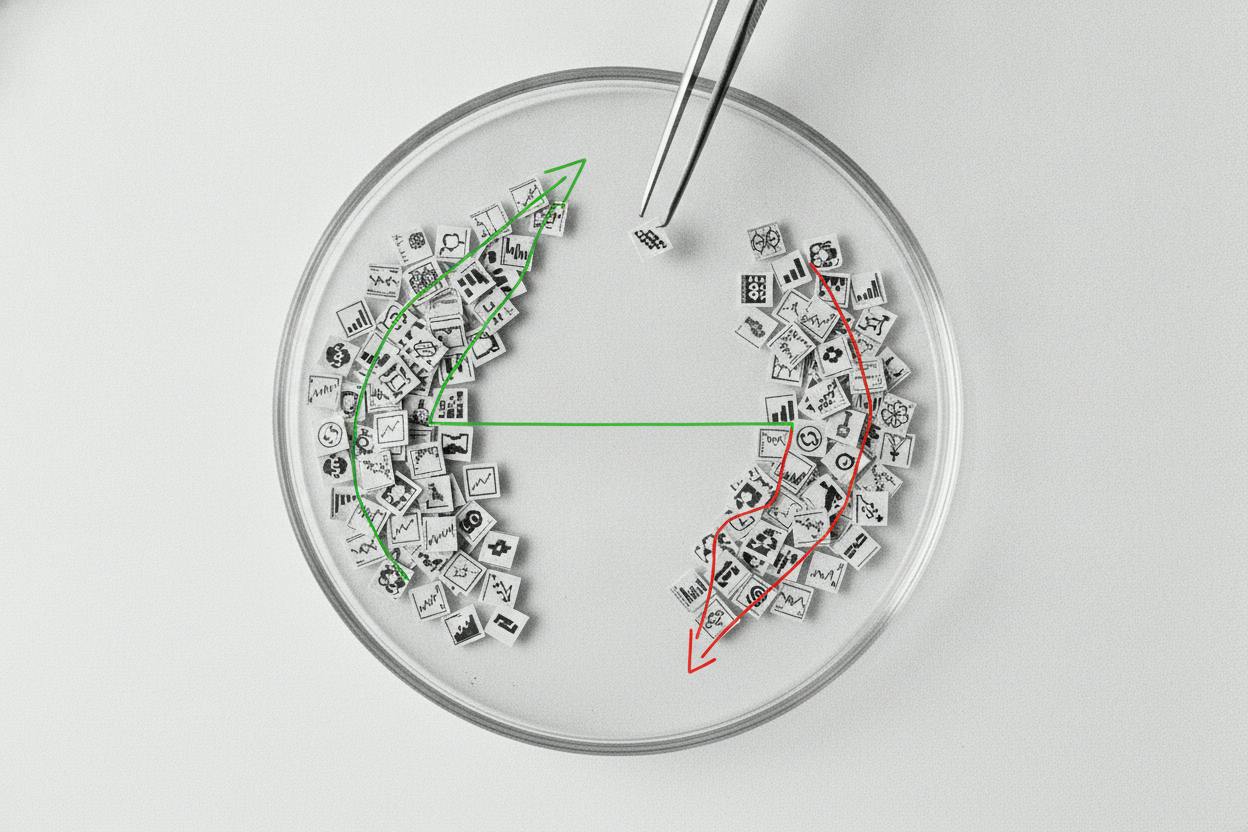
A 0.37% dip in the index can still hide an 8.5% single-stock drop. When the S&P Asia 50 ADR Index barely moves but individual ADRs swing wildly, it usually signals high “dispersion” — meaning winners and losers are canceling each other out at the index level. In such a tape, stocks inside the same basket tend to move less in sync, so the headline index return can understate the risk you're taking if your exposure is concentrated in a few names.
For everyday investors, this is a reminder that broad index proxies may still track “Asia beta,” but day-to-day portfolio results hinge more on company-specific volatility and selection than on the index print. If you own individual ADRs, it's worth paying attention to the news flow around each company rather than relying solely on the overall index direction.
As always, diversification can help smooth out the bumps. A basket of ADRs may still be subject to regional risks, but holding a range of sectors and geographies can reduce the impact of any single stock's sharp move.