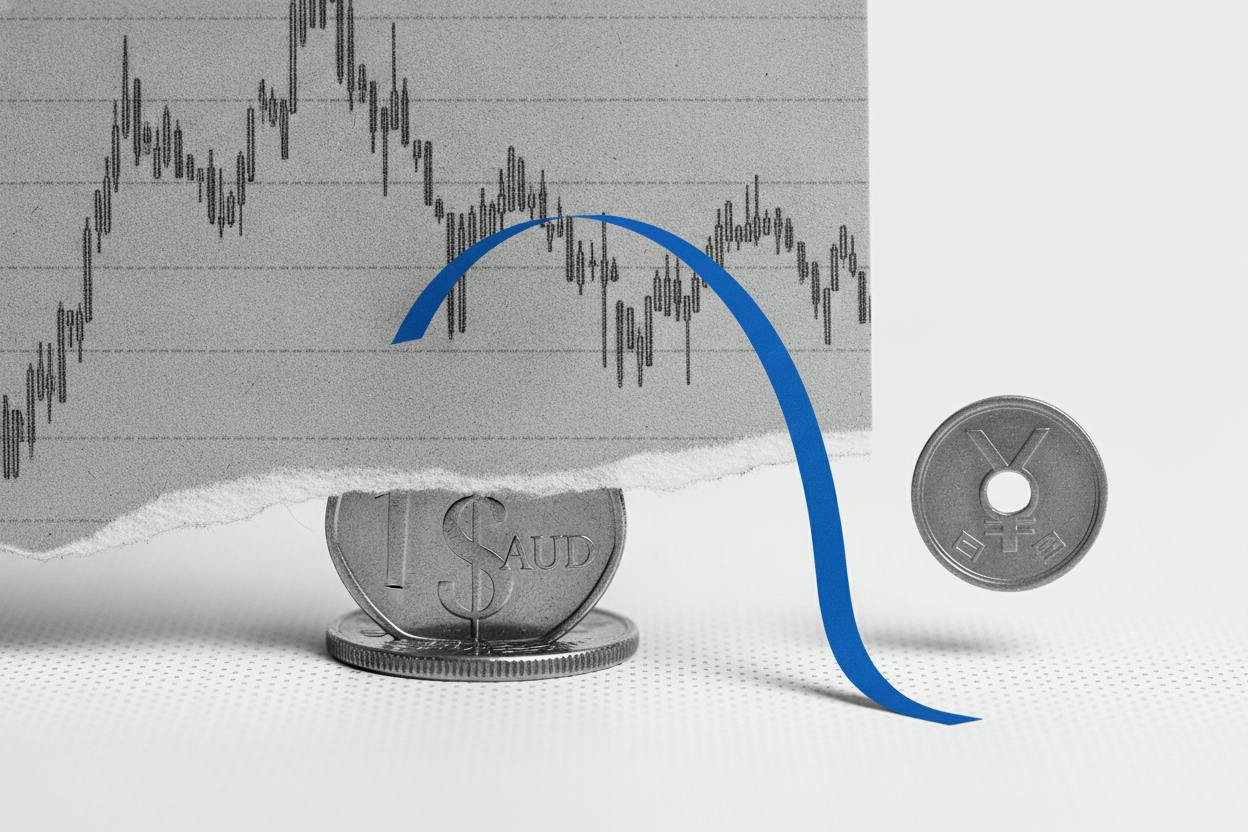
The Australian dollar held its ground near $0.7025 on Wednesday, caught between two opposing forces: a technology-driven selloff in global equities that sapped demand for riskier assets, and rising expectations that the Reserve Bank of Australia will lift interest rates again at its meeting next Tuesday.
For everyday investors, the standoff is a useful reminder that currency moves are rarely about one country alone. The Aussie is often described as a "risk" currency — a label that explains a lot about why it behaves the way it does.
Why the Aussie trades like a risk barometer
Currencies fall into rough categories based on how investors use them. The US dollar and Japanese yen tend to attract money when markets are nervous, because they are deep, liquid and seen as safe stores of value. The Australian dollar sits at the other end of the spectrum.
Australia's economy is closely tied to commodities, trade and global growth, so the currency often strengthens when investors are feeling confident and weakens when they are not. That means the AUD can fall even when there is no bad news coming out of Australia itself — simply because traders somewhere else are reducing their exposure to risk.
That is broadly what happened this time. Jitters linked to spending pressures at large technology companies helped knock the Aussie off a recent high, even as domestic news flow stayed relatively steady. The Japanese yen, meanwhile, held up better, reinforcing its role as a go-to funding currency and safe haven when equity markets wobble.
This is not an isolated pattern. Currency markets frequently take their cue from headlines around major tech names, because those companies now carry so much weight in global share indices that their fortunes can shift the entire market's mood.
The other side of the coin: RBA rate expectations
While risk sentiment was dragging on the Aussie, interest rate expectations were pushing in the opposite direction. Traders increased their bets that the Reserve Bank of Australia will raise rates again next Tuesday.
Interest rates and currencies are tightly linked. When a central bank raises rates, the assets denominated in that currency generally offer a higher yield, which can make them more attractive to global investors and support the currency. When rate cuts are expected, the opposite tends to happen.
The RBA's task is complicated. Like other central banks, it is trying to bring inflation back to target without tipping the economy into a sharp slowdown. Hiking again would signal that policymakers still see price pressures as too persistent to ignore — a message that can support the currency even as it weighs on borrowers.
It is worth noting that rate expectations can shift quickly. Markets price in probabilities rather than certainties, and a single data release or central bank comment can move those odds substantially. The Aussie's recent run to a five-week high came as RBA hike odds jumped sharply, showing how sensitive the currency is to shifting rate bets.
What it means for investors
For most everyday investors, the practical takeaway is not to trade the Aussie but to understand what its moves signal.
- Currency moves affect returns. If you hold international shares or funds, a weaker Australian dollar can boost your returns when overseas gains are converted back into local currency — and a stronger one can do the reverse.
- Rate expectations matter beyond Australia. Global markets are constantly repricing where central banks are heading. That affects bond yields, mortgage rates and the relative appeal of different currencies.
- Risk sentiment is a real driver. When equity markets sell off, currencies like the AUD often feel it first. Watching the Aussie can be a quick read on how much risk appetite is in the system.
It is also worth keeping an eye on the broader dollar picture. Moves in the US dollar often set the tone for everything else, and investors are watching upcoming US economic data for clues about the Federal Reserve's next steps.
Commodity prices are another input. Australia is a major exporter of iron ore, coal and other resources, so swings in energy and materials markets can feed directly into the currency. Recent moves in oil prices illustrate how quickly those cross-currents can shift.
What to watch next
The immediate focus is Tuesday's RBA decision. A hike would likely reinforce the rate-driven support for the Aussie, though its effect could be blunted if global equity markets remain unsettled. A decision to hold steady, on the other hand, could leave the currency more exposed to risk sentiment.
Beyond that, investors will be watching the tone of global tech earnings, the path of the US dollar and any fresh signals from major central banks. For now, the Aussie's steadiness near $0.7025 reflects a market that is genuinely torn — and that tension is unlikely to resolve itself until one of those forces wins out.