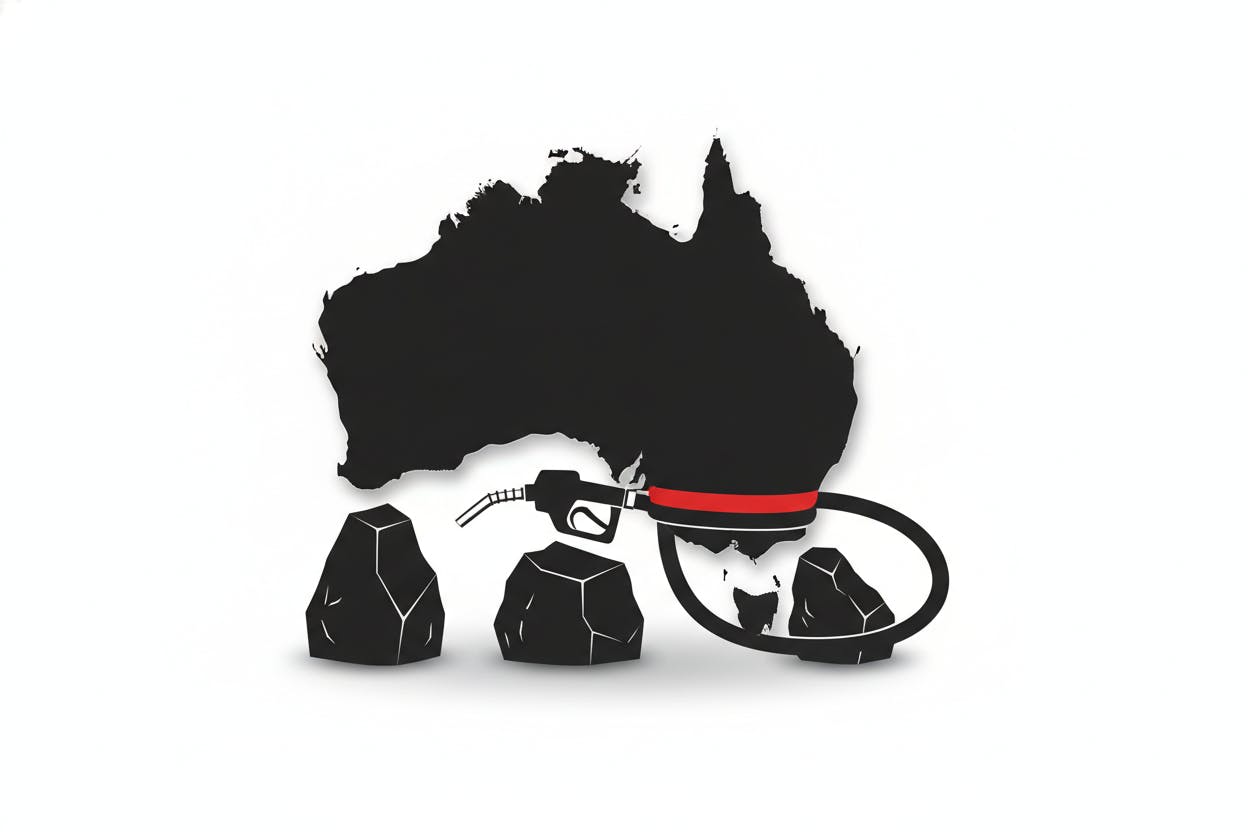
Australia's mining-heavy states kept the national economy moving in the March quarter, even as ANZ warned that growth is cooling and inflation is staying uncomfortably high. The divergence between resource-rich regions and the rest of the country is becoming a key theme for investors watching the Australian market.
What the Data Shows
In a Friday note, ANZ Research, the research arm of Australia and New Zealand Banking Group, said New South Wales, Western Australia, and Queensland did most of the heavy lifting in the March quarter, with South Australia also punching above its weight. But the bank expects the overall pace to fade: it forecasts year-over-year growth slowing to 1.1% in 2026, down from 2.5% in 2025.
The weak link is the consumer. ANZ's “Stateometer” points to household demand running below its long-run trend in every state, and the national numbers show why: total household consumption rose 0.5% in the quarter, but discretionary spending rose just 0.1%. That's happening as inflation hit 4.1% year-over-year in the first quarter, driven by higher fuel prices.
Fuel inflation is especially tricky because people can't easily avoid it, so it acts like a squeeze on real incomes. And ANZ noted those inflation readings largely came before the latest Middle East escalation, which means the next update could still reflect newer energy-price pressure.
Why It Matters for Investors
When fuel costs climb, households tend to protect essentials and cut back on optional spending, from apparel to dining out. That shift matters for listed consumer-discretionary companies because many of them have costs that don't fall much when sales slow (think rent, staff, and logistics). So even a small dip in volumes can translate into a bigger hit to profit margins.
Put differently, mining-heavy states can keep the headline economy looking steadier, while earnings risk builds in parts of the Australian stock market that depend on rate- and gas-pump-sensitive consumers. For context, Australia's Services PMI recently edged up to 50.5, but new orders and confidence slipped, suggesting the broader economy is losing momentum.
The Reserve Bank of Australia (RBA) faces a difficult balancing act. With inflation at 4.1%, it cannot cut interest rates to stimulate spending without risking even higher prices. Yet keeping rates high risks further squeezing consumers and businesses. As BofA recently noted, Australia's tight financial conditions could keep the RBA on hold for now.
What to Watch Next
Investors should keep an eye on two things. First, whether fuel prices continue to rise as Middle East tensions evolve, which would further pressure household budgets. Second, how consumer-discretionary companies report earnings in coming months. If discretionary spending remains weak, profit warnings could follow.
On the positive side, mining states benefit from strong demand for resources like iron ore and lithium, though Australia has warned that China's state-backed iron ore buyer could push prices lower, which would hit export revenues. Meanwhile, global mining plans, such as Brazil's Mining Plan 2050, aim to boost critical mineral output, potentially increasing competition for Australian producers.
For everyday investors, the key takeaway is that the Australian economy is increasingly two-speed: resource-rich states are holding up, but consumer-dependent sectors face headwinds. Diversification across sectors and geographies remains important, as does watching inflation and RBA policy closely.