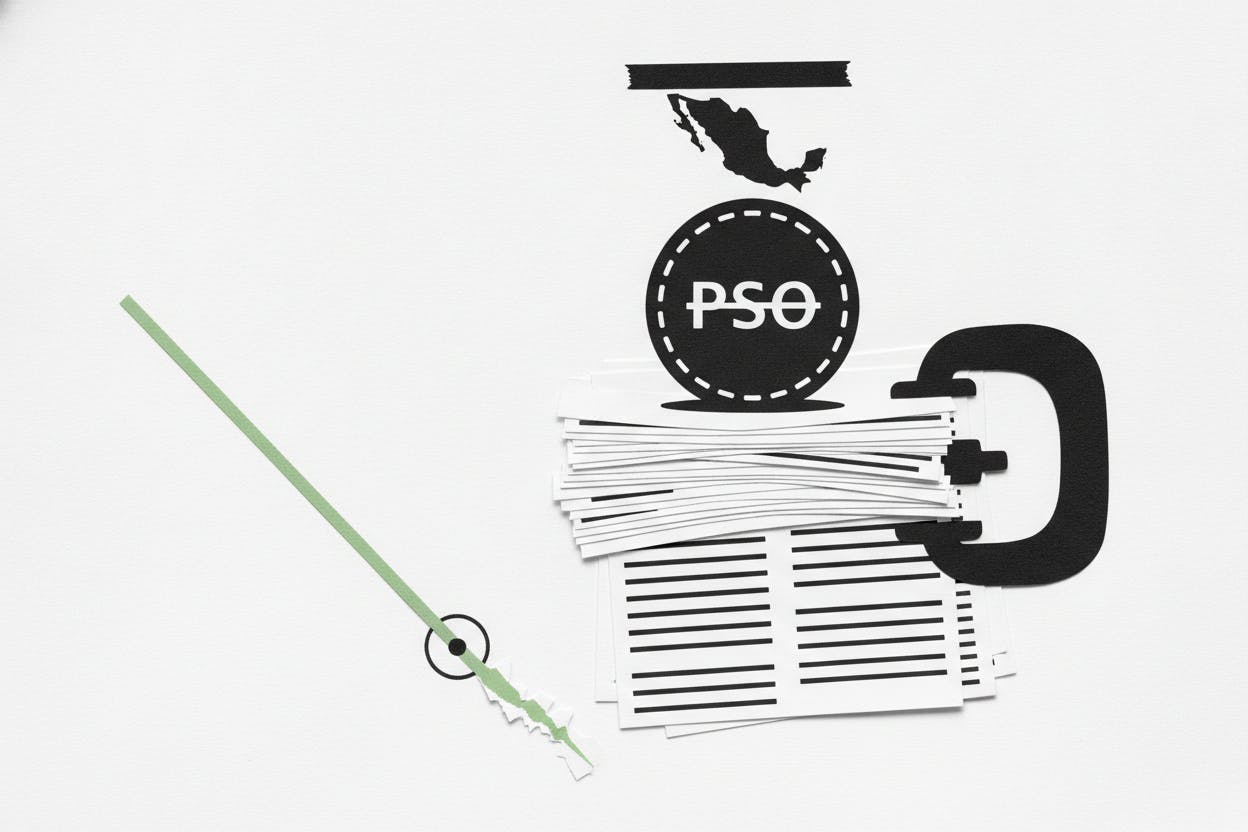
Mexico’s central bank, Banco de México (Banxico), has made it clear it is in no hurry to lower borrowing costs. Minutes from its latest policy meeting, released this week, showed a unanimous decision to hold the benchmark interest rate at 6.5%. The bank also signaled that further cuts are unlikely in the near term, even as headline inflation eased to 3.10% in the first half of July.
The minutes underscore a cautious tone among policymakers. While the recent inflation dip is welcome, Banxico’s board emphasized that the path back to its 3% target will be slow and uneven. According to the minutes, the bank does not expect inflation to sustainably return to 3% until the fourth quarter of 2027 — more than two years away.
Why the caution?
Banxico’s stance reflects a broader concern: the “last mile” of disinflation is often the hardest. Even as headline inflation has fallen, core inflation — which strips out volatile food and energy prices — remains stickier. The minutes noted that core inflation was 3.95% in the first half of July, still above the bank’s comfort zone. Policymakers specifically flagged services prices, which have been rising faster than goods prices, as a key risk.
Services inflation is notoriously difficult to bring down because it is tied to wages and domestic demand, rather than global commodity trends. If services prices continue to climb, it could keep overall inflation above target for longer. That explains why Banxico is reluctant to ease policy aggressively.
The decision to hold at 6.5% is also consistent with a global trend of central banks pausing after a period of tightening. The U.S. Federal Reserve, for example, has also held rates steady recently, as it weighs similar concerns about sticky inflation. For Mexico, the Fed’s stance matters because interest rate differentials influence capital flows and the peso’s value.
What this means for investors
For everyday investors, the key takeaway is that borrowing costs in Mexico are likely to stay elevated for a while. That has several implications:
- Savings accounts and CDs: Higher rates mean savers can still earn attractive yields on peso-denominated deposits. If you’re holding cash in Mexico, you may want to lock in current rates before any future cuts.
- Bonds: Mexican government bonds, known as bonos, offer relatively high yields compared to many developed markets. However, if inflation stays above target, the real return (after inflation) may be lower than it appears.
- Equities: Companies that rely heavily on borrowing may see their profit margins squeezed by high interest costs. On the other hand, banks and financial firms often benefit from wider net interest margins.
- Currency: A patient Banxico could support the peso, as higher rates tend to attract foreign capital. But global factors, such as oil prices and U.S. monetary policy, also play a big role.
It’s also worth noting that Banxico’s forecast for inflation to reach 3% only by late 2027 suggests that the era of ultra-low rates is not returning anytime soon. Investors should plan for a “higher for longer” environment in Mexico, similar to what many other central banks are signaling.
Broader context
Banxico’s caution is not unique. Central banks around the world are grappling with how quickly to cut rates after a historic tightening cycle. In the U.S., the Fed has held rates steady, and recent minutes showed officials debating the timing of future cuts. Meanwhile, China has also held its lending rates steady, focusing on fiscal stimulus instead. And in Europe, inflation remains a concern despite some cooling.
For Mexico, the domestic economy is also a factor. While inflation has eased, growth has been modest. Banxico’s decision to hold rates suggests it is prioritizing price stability over short-term growth support. That is a classic central bank trade-off, but it can be painful for borrowers and businesses.
Investors should also keep an eye on the global commodity markets, as oil prices can influence Mexican inflation and government revenues. Mexico is a major oil producer, and higher oil prices can boost export earnings but also feed into domestic fuel costs.
The road ahead
Banxico’s next policy meeting will be closely watched for any change in tone. For now, the message is clear: patience. The bank is willing to wait for inflation to convincingly move toward 3% before easing policy. That means the 6.5% rate is likely to stay for the foreseeable future.
For investors, this is a reminder to stay diversified and not assume that rate cuts are imminent. Fixed-income investors may still find opportunities, but equity investors should be selective, favoring companies with strong balance sheets and pricing power. As always, it’s wise to consult a financial advisor to tailor decisions to your own situation.