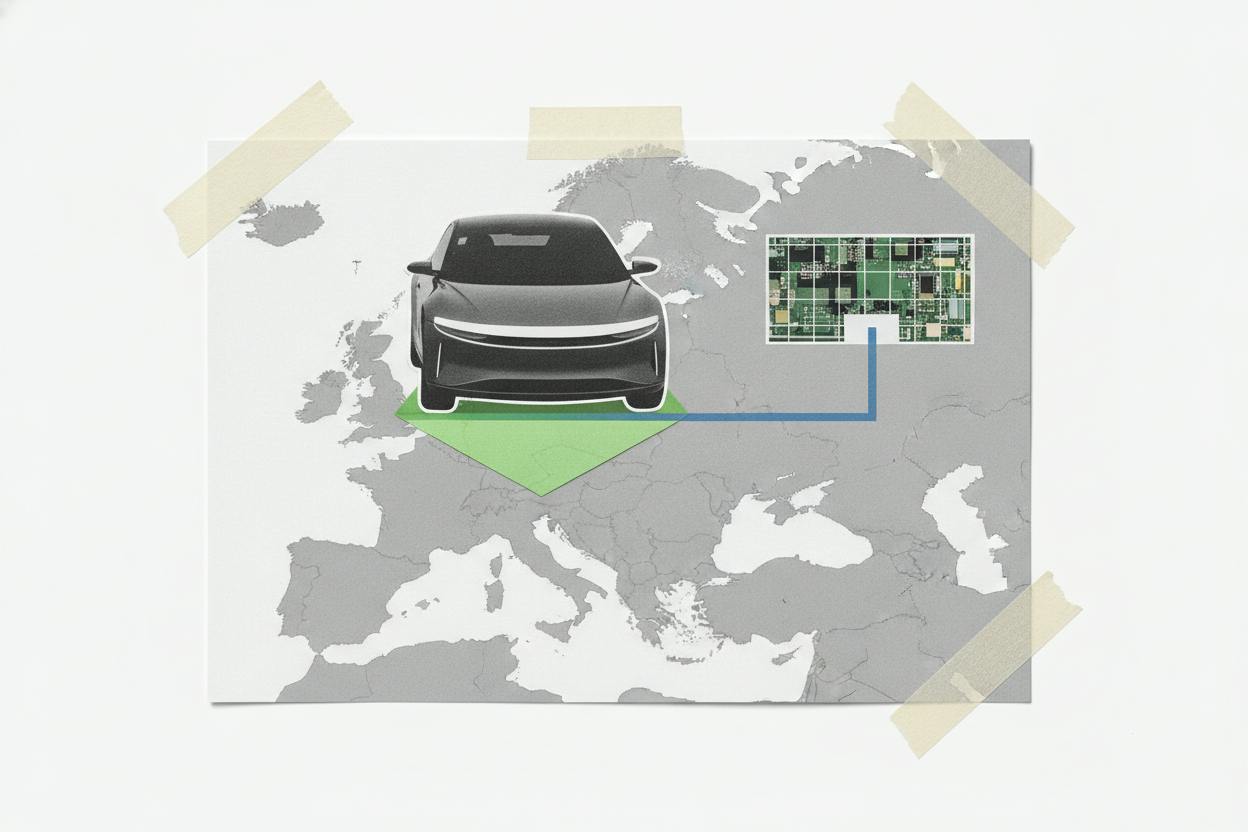
European ride-hailing giant Bolt and U.S. electric vehicle maker Lucid Group have announced a partnership to bring robotaxis to major European cities. Bolt says it plans to deploy 25,000 fully autonomous Lucid vehicles, a significant step toward commercial self-driving service in the region.
The announcement marks one of the largest concrete robotaxi commitments in Europe to date. While autonomous vehicle pilots have been running for years, this deal signals a move from testing to real-world deployment at scale.
What's in the deal?
Bolt, which operates ride-hailing services across Europe and Africa, will integrate the Lucid vehicles into its platform. The cars will be based on Lucid's upcoming Midsize platform, a more affordable architecture designed to compete with Tesla's Model 3 and Model Y. They will use Nvidia's Hyperion autonomous-vehicle system, which includes sensors, computing hardware, and software.
The vehicles are built for SAE Level 4 driving, meaning they can operate without human input, but only within pre-approved areas and under certain conditions. This is a higher level of autonomy than most current systems, which typically require a human driver to take over when needed.
Bolt's autonomous vehicle unit will be responsible for the software, safety protocols, and rider experience. The company says it will work with city partners to ensure safe and reliable service.
Why this matters for the robotaxi industry
Robotaxis have been a hot topic in the tech and auto industries, with companies like Waymo and Cruise leading in the U.S. and China's Baidu expanding rapidly. Europe has been slower to adopt, partly due to stricter regulations and fragmented markets.
This deal could change that. By partnering with a major ride-hailing platform, Lucid gains a distribution channel for its autonomous vehicles, while Bolt gets access to a fleet of high-tech cars without having to build them itself.
For Lucid, the partnership is a vote of confidence in its technology and a potential path to scale. The company has struggled with sales of its luxury Air sedan, and the Midsize platform is seen as crucial to its future growth. If the robotaxi deal materializes, it could provide a significant revenue stream.
For Bolt, the move positions it as a leader in European autonomous mobility, potentially competing with Uber and other rivals that are also investing in self-driving technology.
What it means for investors
For everyday investors, this news is a reminder that autonomous driving is moving from hype to reality. But it's important to keep expectations in check. Deploying 25,000 robotaxis is a massive undertaking, and the timeline is likely to be years, not months.
Regulatory hurdles remain a major factor. The European Union is still developing rules for autonomous vehicles, and each country has its own approval process. As EU rules loom, the rollout could face delays.
Investors should also consider the financial implications. Lucid will need to produce thousands of vehicles, which requires capital and manufacturing capacity. The company has been burning cash, and this deal could strain its resources.
On the other hand, successful deployment could open up a massive market. The global robotaxi market is projected to be worth billions of dollars in the coming decade, and early movers could capture significant share.
For those interested in the broader autonomous vehicle space, this news also highlights the role of suppliers like Nvidia, which provides the computing power for many self-driving systems. European markets have been relatively calm recently, but tech and auto stocks could see volatility as these deals unfold.
It's also worth noting that this is not the only autonomous vehicle news. Apollo's backing of AI hardware startups shows that investors are pouring money into the infrastructure needed for self-driving cars.
What to watch next
Investors should watch for several milestones: regulatory approvals in key European markets, production timelines for Lucid's Midsize platform, and any pilot programs that Bolt launches in specific cities.
Also watch for competition. Uber and other ride-hailing companies are likely to respond, and traditional automakers are also investing heavily in autonomous technology.
Finally, keep an eye on the financial health of both companies. Lucid's cash burn and Bolt's profitability will be key factors in whether this partnership succeeds.
In the meantime, the announcement is a positive sign for the autonomous vehicle industry, showing that companies are willing to make big bets on the future of mobility. But as with any emerging technology, there are risks, and investors should approach with caution.