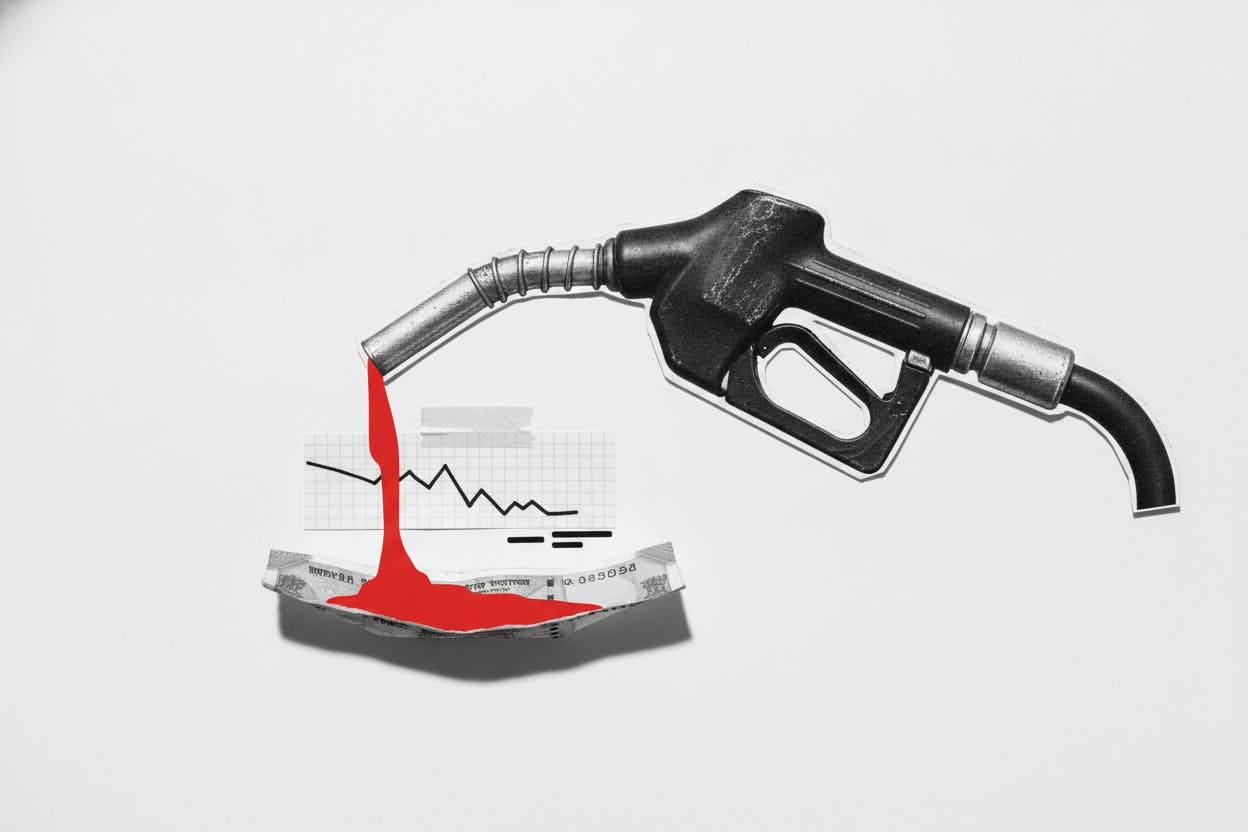
India's state-owned fuel retailer Bharat Petroleum Corporation Ltd (BPCL) has reported its first quarterly loss in 15 years, as a surge in global crude oil prices squeezed its fuel marketing margins. The company posted a net loss of 39.62 billion rupees (about $477 million) for the quarter ended June 30, compared with a profit in the same period last year.
The loss was driven by a roughly 45% rise in Brent crude oil prices, which pushed the cost of refined products above the prices BPCL could charge at the pump. Fuel marketing margins — the difference between what BPCL pays for crude and what it earns from selling petrol, diesel, and other products — turned negative during the quarter.
Why Did This Happen?
BPCL, like other state-owned fuel retailers in India, is subject to government pricing controls on key fuels such as petrol and diesel. When global crude prices rise sharply, these companies often cannot pass on the full increase to consumers, especially in an election year or when inflation is a concern. The result is a margin squeeze that can push profits into the red.
Brent crude, the international benchmark, averaged around $85 per barrel in the June quarter, up from about $58 a year earlier. That jump was fueled by supply cuts from OPEC+ producers, recovering global demand, and geopolitical tensions — including disruptions in the Strait of Hormuz, a key shipping chokepoint. For a more detailed look at how oil prices are affecting broader markets, see our earlier report: Brent Hits $92, India's Bonds and Rupee Under Pressure From Oil Shock.
BPCL's loss is also a reminder of how vulnerable oil-importing nations like India are to price shocks. India imports about 85% of its crude oil needs, so every dollar rise in the price of oil adds billions to the country's import bill and puts pressure on the rupee and bond yields. As we noted in Oil Rally Pushes Indian Bond Yields Higher, But RBI Support Caps Rise, the central bank has stepped in to stabilize markets, but the strain is evident.
What It Means for Investors
For everyday investors, BPCL's loss is a cautionary tale about the risks in commodity-linked stocks, especially those with government pricing constraints. While BPCL is a major player in India's energy sector, its profits are heavily influenced by factors beyond its control — global crude prices, government policy, and the pace of economic recovery.
Investors should watch for a few key things going forward:
- Crude oil prices: If Brent remains elevated, BPCL's margins could stay under pressure. However, if prices ease, the company could see a quick recovery. For context, other energy companies have fared better recently — Equinor Nearly Doubles Q2 Profit as Oil and European Gas Prices Surge shows how producers benefit from high prices, while refiners and retailers like BPCL suffer.
- Government pricing policy: Any move by the Indian government to allow more flexible pricing for fuel retailers would be a positive for BPCL. Conversely, continued caps could prolong the pain.
- Demand trends: India's fuel demand has been strong, but a slowdown in economic growth or a shift to electric vehicles could affect long-term volumes.
It's also worth noting that BPCL's loss is not unique. Across India, companies in sectors like fast-moving consumer goods (FMCG) have also faced margin pressure from rising input costs. As we reported in India's FMCG Giants Face Margin Squeeze as Input Costs Outpace Price Hikes, the broader theme of cost inflation is affecting many industries.
The Bigger Picture
BPCL's first quarterly loss in 15 years is a stark reminder of how quickly commodity cycles can turn. For investors, it underscores the importance of diversification and understanding the specific risks of each sector. While energy stocks can offer high dividends and growth during bull runs, they can also be volatile when conditions shift.
Looking ahead, all eyes will be on the next OPEC+ meeting and any signs of easing in global oil supply. If crude prices moderate, BPCL could bounce back. But if the rally continues, the company — and India's broader economy — may face more headwinds. For more on how oil prices are reshaping global markets, see Aussie and Kiwi Dollars Hold Ground as Oil Prices Reshape Rate Expectations.