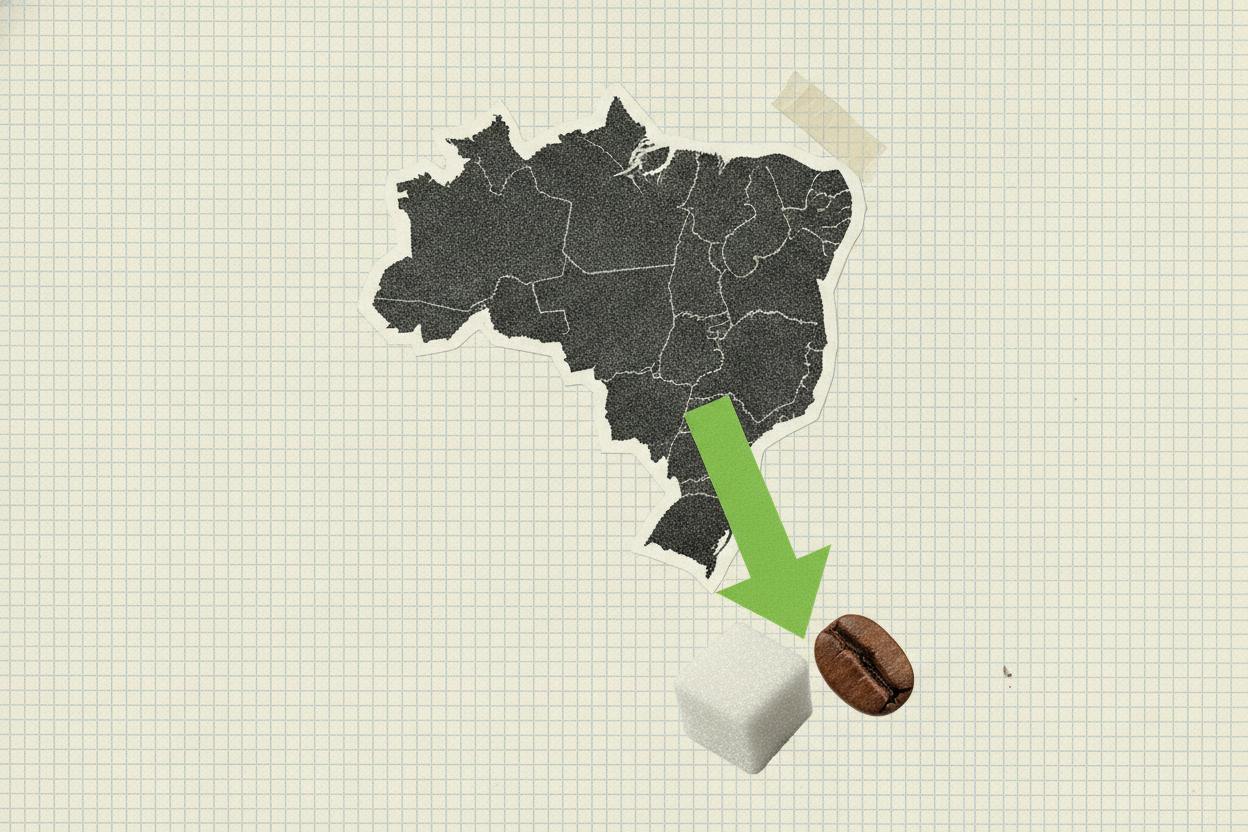
Sugar and coffee futures slid on Tuesday after Brazil's real weakened sharply against the US dollar, prompting exporters from the world's largest producer of both crops to sell more supply at lower dollar prices, according to Reuters.
ICE raw sugar fell 4.4% to 19.34 cents a pound, after briefly touching 19.31 cents, its lowest since early October. Arabica coffee dropped 3.4% to $2.9690 a pound. White sugar slipped 2.8% to $519.90 a metric ton, while robusta coffee eased 1.9% to $3,181 a metric ton, pressured by the start of Vietnam's harvest and rising exchange inventories.
Why a weaker real matters for commodities
Commodities like raw sugar and arabica coffee are priced globally in US dollars, but Brazilian producers pay for labor, transport, and other inputs in reals. When the real falls, each export dollar converts into more local currency, which can encourage exporters to ramp up sales while their margins look better at home.
That's exactly what traders pointed to here. A sugar industry consultant told Reuters the move was “100% the real,” adding that Brazil's production costs now look lower in dollar terms. In other words, Brazilian producers can accept lower dollar prices and still earn the same—or better—revenue back in reals.
This dynamic is a reminder that currency moves can hit food commodities fast because they change who can sell profitably. When the real weakens, Brazilian exporters often lock in sales sooner and hedge with futures and forward contracts linked to ICE prices. That can cap rallies in benchmarks like ICE raw sugar and ICE arabica until the currency stabilizes, even if there's no fresh change in crop headlines.
What it means for investors
For traders and companies exposed to sweeteners or coffee, this is a clear example of how exchange rates can matter as much as weather when prices suddenly swing. A 12% slide in Brazil's real can spark heavy selling in sugar and coffee futures, as seen today.
For everyday investors, the takeaway is that commodity prices are not just about supply and demand for the physical crop. Currency fluctuations, especially in major producing countries like Brazil, can drive short-term volatility. If you hold funds or stocks tied to these commodities, expect that currency news can move prices just as much as crop reports.
Investors should also watch how the real's weakness affects broader emerging market sentiment. Brazil is a major exporter of many commodities, and its currency moves can ripple through other markets. For context, Brazil's political events have previously rattled its markets, and currency swings often accompany such episodes.
For those tracking coffee and sugar specifically, the next focus will be on whether the real stabilizes or continues to slide. If the currency stays weak, Brazilian exporters may keep selling, keeping a lid on prices. Conversely, any rebound in the real could quickly reverse today's losses.
In the broader commodity complex, other markets are also reacting to supply and demand signals. For instance, copper prices have cooled as LME stockpiles rise, while rubber prices slipped on cheaper oil but remain supported by supply concerns. These moves show how diverse factors—from currencies to inventories—are influencing commodity prices globally.
For investors, the key is to understand that commodity markets are interconnected with currency markets. A move in the Brazilian real can have outsized effects on sugar and coffee, and similar dynamics play out in other commodities tied to major producing countries. Keeping an eye on exchange rates can provide valuable clues about where prices might head next.