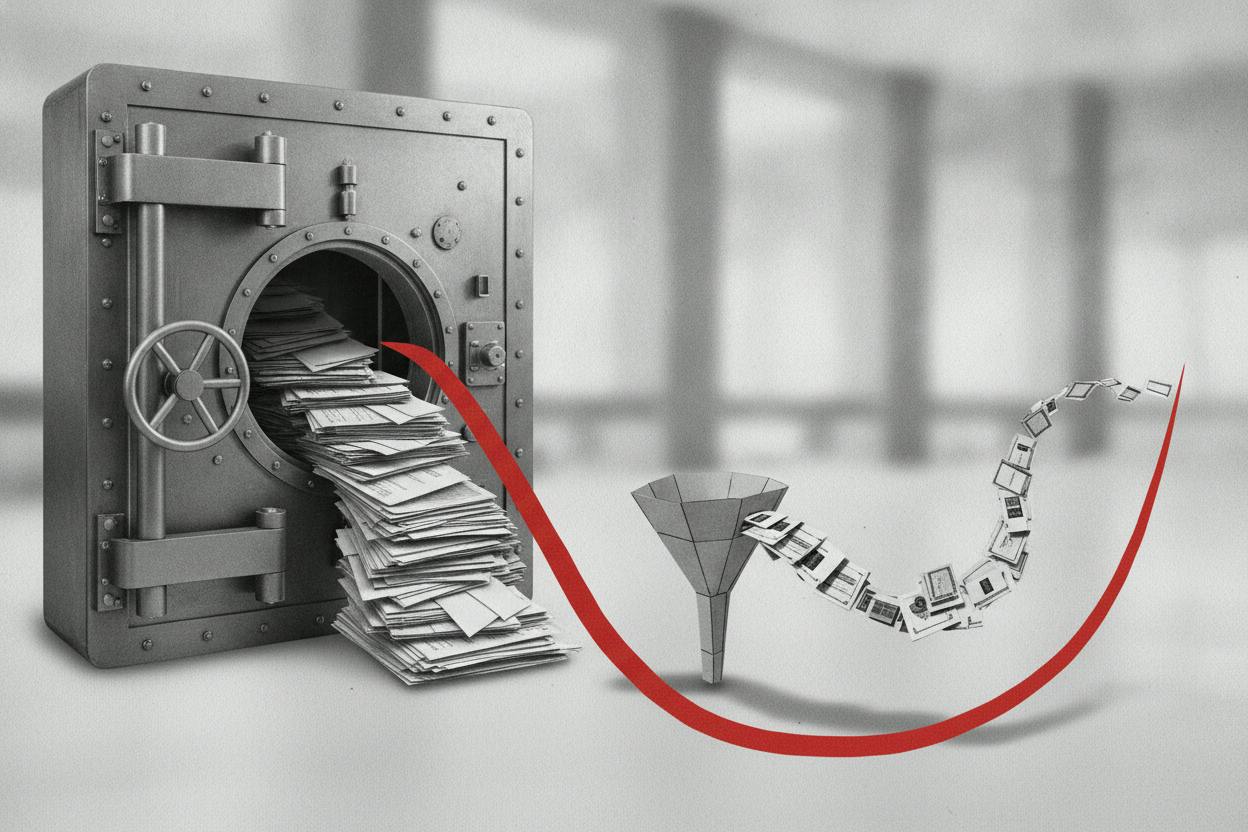
American businesses dialed back their borrowing from banks last quarter, according to the Federal Reserve's latest Senior Loan Officer Opinion Survey. The quarterly report, which polls lending officers across the country, showed demand for commercial and industrial loans cooled after holding up for more than a year. Banks also noted that some borrowers are shopping for cheaper funding outside the traditional banking system.
The survey is closely watched because it offers an early read on whether companies are investing, expanding, or pulling back. When loan demand falls, it can signal caution among business leaders — or simply that they've found a better deal elsewhere.
What the survey actually showed
This wasn't a case of banks slamming the credit window shut. Loan officers reported little change in lending standards for commercial and industrial loans to large and midsized firms. Standards did tighten for smaller companies, and banks remained more cautious with riskier borrowers. So the pullback appears driven more by weaker demand than by a sudden credit crunch.
Banks attributed the softer demand to two main factors: reduced spending on plant and equipment, and companies shifting their borrowing to other sources, including nonbank lenders. That second point is important. It helps explain why the survey can look weak even while official data showed equipment spending jumping at a 20.9% annualized rate last quarter. In other words, firms may still be investing — they're just financing it differently.
Nonbank lenders, sometimes called shadow banks, include private credit funds, fintech platforms, and other institutions that aren't subject to the same regulatory oversight as traditional banks. They've grown rapidly in recent years, offering companies alternative ways to raise capital. For many businesses, these lenders can be faster or more flexible, though often at a higher cost.
Why the Fed cares
The mix of cooler loan demand and steady standards for bigger firms was part of the backdrop when policymakers held short-term interest rates steady at their October 27th-28th meeting. The Fed has been trying to gauge whether its previous rate hikes are slowing the economy enough to bring inflation down without causing a sharp downturn.
The same survey showed mortgage and auto-loan demand weakening, while demand for credit-card borrowing posted its biggest increase in four years. That divergence suggests higher interest rates are landing unevenly across the economy. Households are pulling back on big-ticket purchases that require large loans, but leaning more on credit cards to cover day-to-day expenses.
For the Fed, this matters because it complicates the picture. If businesses are still investing but financing outside the banking system, the central bank's traditional tools may have less traction than expected. And if consumers are increasingly reliant on credit cards, that could signal financial stress down the road.
What it means for investors
For everyday investors, the survey offers a few key takeaways. First, the shift toward nonbank lenders is a trend worth watching. Companies like Blue Owl and other private credit firms have been growing rapidly, and their fortunes are tied to this migration of borrowing. If more businesses bypass banks, these lenders could see more deal flow — but also more competition and risk.
Second, the uneven consumer picture matters for bank stocks. Banks may earn more interest income from credit-card balances, but they also face higher risk of losses if households struggle to repay. Investors in financial stocks should watch delinquency rates and loan-loss provisions in coming quarters.
Third, the data reinforces the idea that interest rates may stay higher for longer. The Fed has signaled it wants to see more evidence that inflation is cooling before cutting rates. As long as that's the case, borrowing costs for businesses and consumers will remain elevated, which could weigh on economic growth and corporate earnings.
For anyone with a credit card balance, the survey is a reminder that revolving debt gets expensive fast when rates are high. Credit-card annual percentage rates typically move with the prime rate, which is tied to Fed policy, plus a margin that doesn't always shrink quickly. Paying down balances or consolidating debt at a lower rate can help, though it's always wise to consult a financial professional about your specific situation.
Looking ahead, investors will want to see whether loan demand stabilizes or continues to weaken. A sustained drop could signal a broader economic slowdown, while a rebound might suggest businesses are regaining confidence. The next survey, due in a few months, will offer more clues.