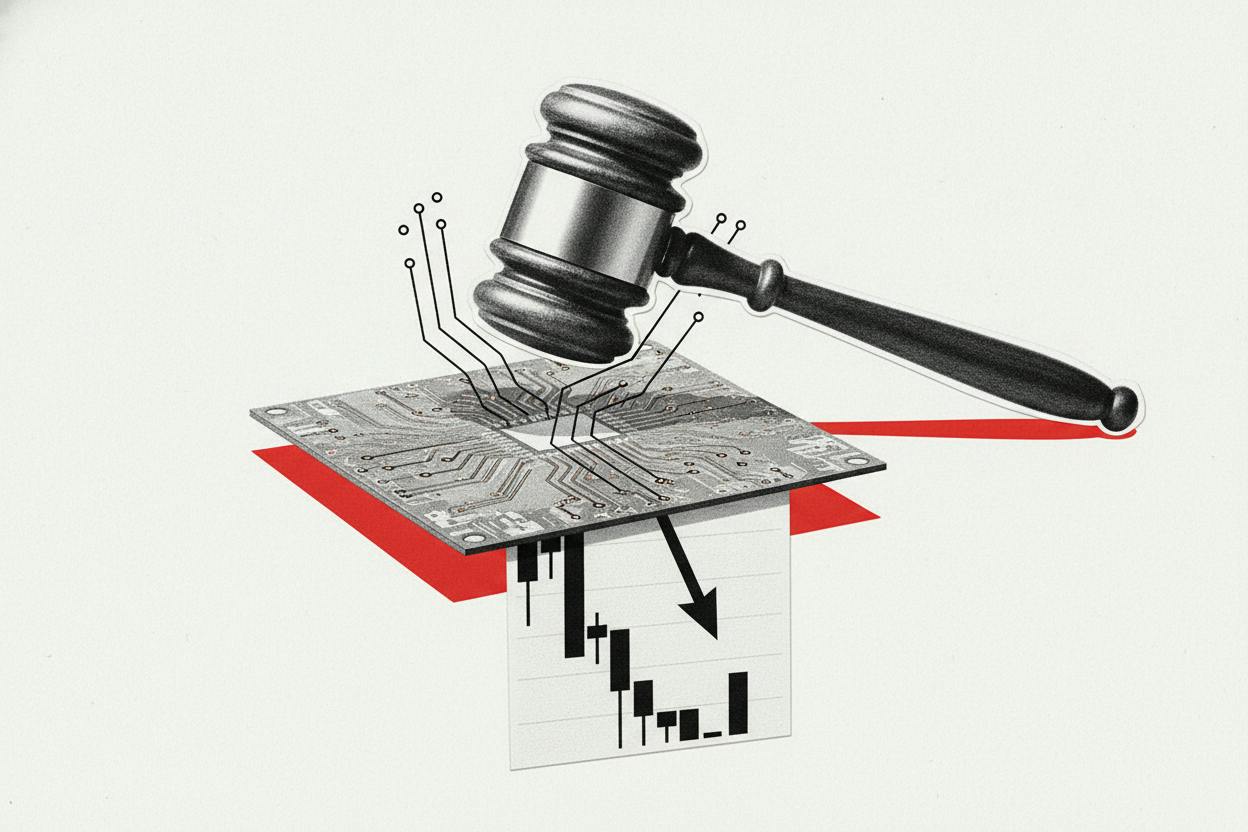
China has put the brakes on SoftBank's $5.4 billion acquisition of ABB's robotics business, a move that underscores how national-security reviews are increasingly focusing on data and intellectual property rather than just price. ABB, the Swiss-Swedish industrial giant, said Chinese regulators have told SoftBank that the deal cannot be cleared for its China operations, at least for now.
The two companies are still in talks, but the decision marks a significant hurdle for one of the year's most closely watched tech-industrial deals. The Financial Times reported that China's foreign-investment security review office is particularly concerned about what happens to robotics data generated in China and whether it could be sent overseas to help train artificial intelligence systems, including those tied to OpenAI, where SoftBank is a major investor.
Why data and IP are the sticking points
Robotics sits at the intersection of hardware and software. A factory robot isn't just a mechanical arm; it's a device that collects vast amounts of operational data—how it moves, how it's used, what it produces. That data can be incredibly valuable for training AI models that make robots smarter and more efficient. But it can also be sensitive, especially when it comes from factories in China.
Chinese regulators are reportedly weighing conditions that would keep some intellectual property inside the country, potentially by forcing the sale of certain assets to Chinese owners. That would effectively split the business into separate pieces, with a China-specific operation that has its own governance and data controls.
This isn't just about one deal. It's a signal to global dealmakers that any acquisition involving data-rich, AI-adjacent industrial assets with China exposure may face higher closing risk and more complex structures. As China's regulatory stance on such deals becomes clearer, companies will need to factor in the possibility of carve-outs, data-transfer limits, and other conditions that can change the economics of a deal.
What happens next?
When a regulator blocks an acquisition on national-security grounds, the usual next step is a re-cut of the deal. That could mean a China carve-out, where the Chinese operations are sold or ring-fenced, or limits on cross-border data transfers. Another option is a locally managed subsidiary with its own governance and data protections.
But these remedies come with costs. A "global" robotics business that was supposed to share customers, engineers, and datasets across borders would become a set of separately managed pieces. That could reduce the synergies SoftBank expected, potentially leading to renegotiated valuations or even a full rethink of the deal.
For ABB, the block is a setback. The company had agreed to sell its robotics unit to SoftBank as part of a broader strategy to focus on its core electrification and automation businesses. If the deal falls through or is significantly altered, ABB may need to find another buyer or continue running the unit itself.
What it means for investors
For everyday investors, this news is a reminder that cross-border deals are no longer just about price and strategy. Regulatory approvals can hinge on where data ends up and who controls it. That's especially true in sectors like robotics, AI, and semiconductors, where data is as valuable as the hardware.
Investors should watch for updates on whether SoftBank and ABB can restructure the deal to satisfy Chinese regulators. If they can't, the deal could be called off entirely, which would likely hit ABB's shares and could affect SoftBank's broader investment strategy.
This also fits into a larger trend of China tightening its grip on technology and data. From chip restrictions to data localization rules, Beijing is increasingly asserting control over what leaves the country. For companies with significant China operations, that means more regulatory complexity and potentially higher costs.
For now, the message to dealmakers is clear: if your target has a China footprint and a data angle, expect extra scrutiny. And for investors, it's a reminder that even the most promising deals can be derailed by factors that have nothing to do with the balance sheet.