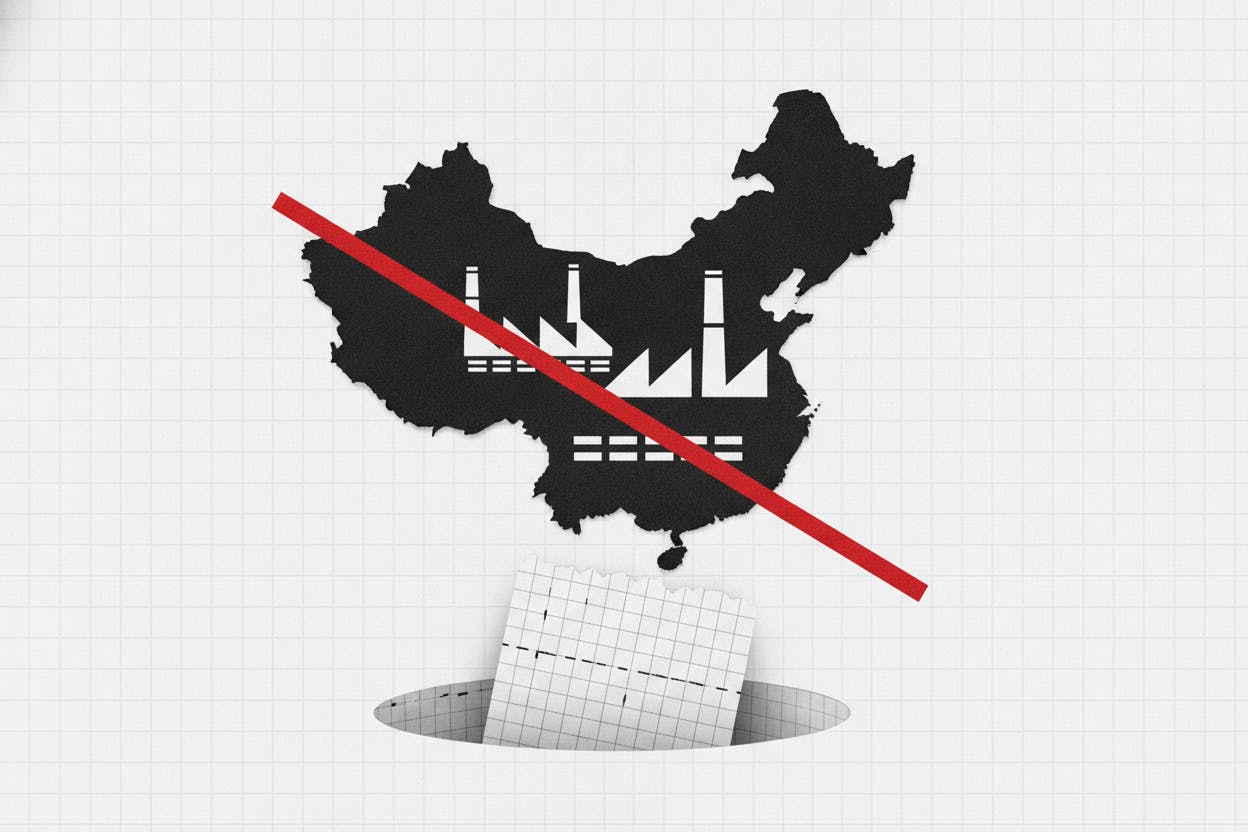
China's economic recovery hit a rough patch in July as both factory and services activity slipped back into contraction, according to official data released this week. The National Bureau of Statistics reported that its manufacturing purchasing managers' index (PMI) fell to 49.2 in July from 50.3 in June, dropping below the 50 threshold that separates expansion from contraction. The services gauge also dipped below 50, signaling that the slowdown is broad-based.
The weak spot was clearly demand. The new orders sub-index slid to 48.5 from 51.2 in June, and new export orders also contracted, suggesting that both domestic and overseas demand are losing momentum. For everyday investors, this is a reminder that China's post-pandemic recovery is uneven, and that the world's second-largest economy is still struggling to regain its footing.
What is the PMI and why does it matter?
The purchasing managers' index is a monthly survey of business conditions at factories and service providers. A reading above 50 indicates that activity is expanding compared with the previous month, while a reading below 50 signals contraction. It's one of the most closely watched indicators for China's economy because it provides a timely snapshot of business sentiment and demand.
The manufacturing PMI is particularly important because China is the world's largest manufacturer and a key link in global supply chains. When Chinese factories slow down, it can ripple through commodity markets, shipping rates, and the earnings of multinational companies that rely on Chinese production or sales.
The services PMI, meanwhile, tracks the health of China's consumer and business services sector, which includes everything from retail and restaurants to finance and logistics. A contraction there suggests that household spending and business activity are cooling, which could weigh on global growth and on companies with significant exposure to Chinese consumers.
Policymakers hint at more support
In response to the weakening data, top Chinese policymakers have signaled that more support could be on the way. This is a familiar pattern: when growth falters, Beijing typically rolls out stimulus measures such as interest rate cuts, infrastructure spending, or tax breaks to shore up the economy. Investors will be watching for concrete policy announcements in the coming weeks, as any new measures could provide a lift to Chinese stocks and to global markets that are sensitive to China's growth prospects.
The timing is also notable because it comes amid a broader global slowdown. Central banks in the US and Europe have been raising interest rates to fight inflation, which has dampened demand for Chinese exports. At the same time, China's property sector remains under pressure, and consumer confidence has been slow to recover. These headwinds make it harder for China to achieve its official growth target of around 5% for the year.
What it means for investors
For everyday investors, the contraction in China's PMI is a signal to be cautious about companies that rely heavily on Chinese demand. That includes not only Chinese firms but also global brands in sectors like luxury goods, autos, and technology. For example, L'Oreal's recent results showed that even as its mass-market brands grew, weakness in China's travel retail segment persisted. Similarly, Remy Cointreau noted continued softness in the US and China.
On the other hand, some companies are finding ways to thrive despite the slowdown. Generac reported strong results driven by the AI data center boom, and Cognizant lifted its profit outlook on the back of strong financial services revenue. These examples highlight that even in a weak macro environment, there are pockets of strength.
Investors should also keep an eye on how China's slowdown affects commodity prices. Copper, for instance, is often seen as a barometer of global economic health, and copper prices have slipped as China's demand outlook has softened. A prolonged contraction in China could put downward pressure on industrial metals and energy prices, which would affect commodity-focused stocks and funds.
What to watch next
The key question for investors is whether this contraction is a temporary blip or the start of a more prolonged slowdown. The upcoming data releases, including trade figures and retail sales, will provide more clues. Also, watch for any concrete policy response from Beijing. If the government announces significant stimulus, it could boost sentiment and lift Chinese stocks, as seen in the past.
For now, the PMI data is a reminder that China's recovery is not guaranteed. Investors with exposure to Chinese assets or to companies that depend on Chinese demand should consider the risks and stay diversified. As always, it's important to focus on long-term fundamentals rather than reacting to short-term data points.