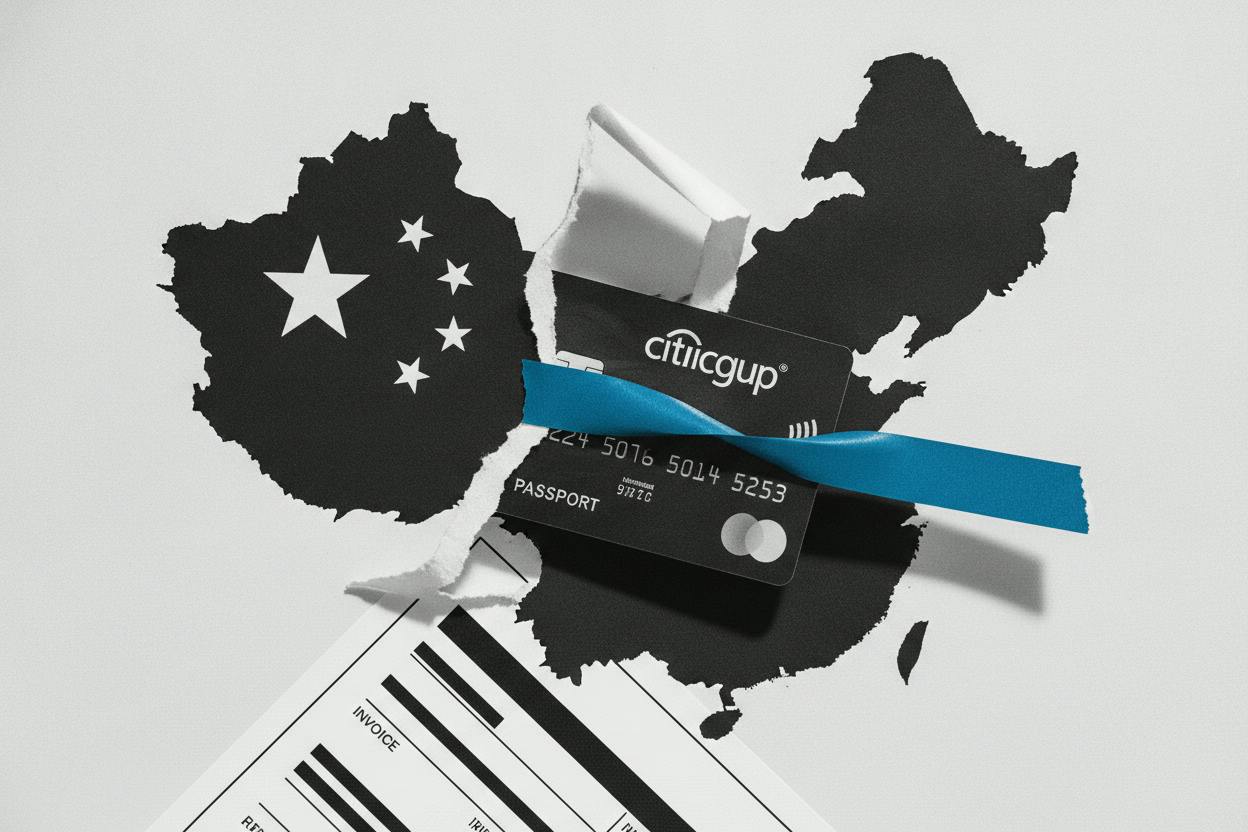
Citigroup is making a big bet on Chinese companies going global. At its annual China conference in Shanghai, executives laid out a strategy to become the bank of choice for Chinese manufacturers, builders, and tech firms as they expand overseas and increasingly settle trade in yuan.
The idea is simple: as more Chinese companies set up operations abroad, they will need help managing currency risk between the yuan and a wide range of other currencies, from Gulf currencies to Latin American ones. That creates demand for hedging—financial contracts that lock in exchange rates so profits don't get whipsawed when they are converted back home.
Why yuan invoicing matters
Citi also wants to make yuan invoicing more common. That means a Chinese exporter bills a foreign customer in yuan instead of dollars or euros. For Citi, this is valuable because it generates steady foreign-exchange (FX) "flow" business: repeated transactions and hedges tied to day-to-day trade, not one-off deal fees.
Reuters reported that some Chinese companies are going abroad because growth at home has slowed and competition is intense. That trend is likely to continue, giving Citi a growing pool of potential clients.
Citi is also courting Chinese banks by offering "plug-in" access to hedges in frontier and emerging-market currencies such as the Brazilian real and Nigerian naira, without those banks needing a branch in every market. This is a way to expand its reach without a large physical footprint.
The bank recently won a license for a fully owned securities business in China, a sign it wants to be closer to clients as Beijing pushes for more yuan use in trade. This move aligns with China's broader efforts to internationalize its currency.
What it means for investors
For markets, Citi's yuan view ties its trading results more tightly to China-linked hedging volumes. Citi's FX desk tends to do best when clients have a reason to hedge regularly. If more Chinese firms earn abroad and settle more trade in yuan, they face "translation risk"—the chance that currency swings change what foreign profits are worth back home—and that often leads to ongoing hedging programs using tools like options.
That matters because recurring hedges can turn China's overseas push into repeatable FX revenue. The flip side is sensitivity: if China's outbound expansion slows, or if companies cut hedging when volatility falls, Citi's FX and cross-border results could feel it more than they used to.
For everyday investors, this is a reminder that banks' trading revenues are not just about big one-off deals. A lot of it comes from steady, day-to-day business like currency hedging. Citi is betting that China's global push will provide that steady stream for years to come.
Investors should also watch how China's economy performs. If growth continues to slow, more companies may look abroad, which could benefit Citi. But if trade tensions or regulatory hurdles rise, the opposite could happen. The central bank's recent promises of support could influence the pace of outbound investment.
Citi's strategy also comes amid broader shifts in global trade. As US restrictions on tech exports to China evolve, Chinese firms may seek new markets, further boosting the need for cross-border banking services.
For now, Citi is positioning itself to be the bank behind China's global push. Whether that bet pays off will depend on how many Chinese companies actually expand abroad and how much trade shifts to yuan. But the potential for steady, recurring revenue is clear.