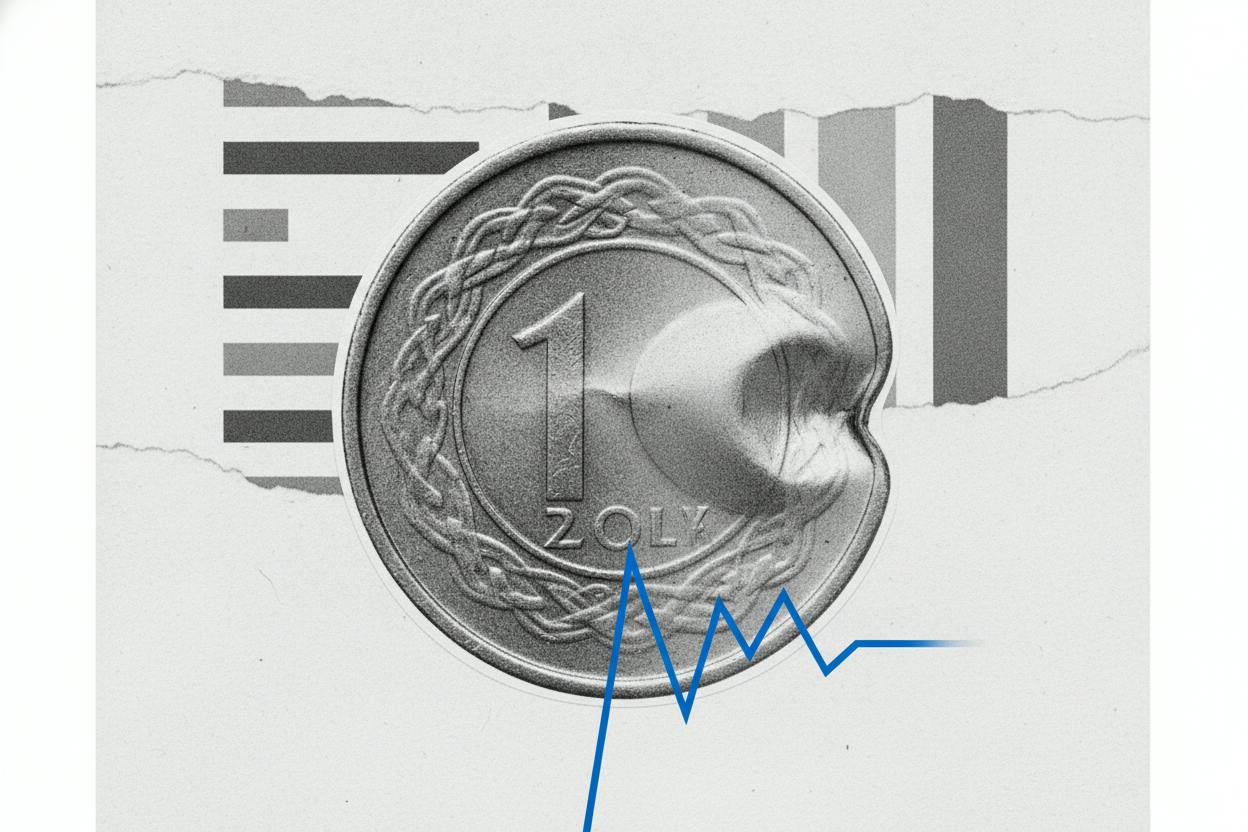
Bank Handlowy, the Polish lender controlled by Citigroup, reported a sharp drop in third-quarter profit on Thursday, but the result still came in ahead of what analysts had expected. The bank made 288.3 million zlotys (about $71 million) in net profit for July through September, down 39% from the same period a year earlier. A Reuters poll of analysts had forecast 278 million zlotys.
The headline decline masks a more mixed picture underneath. The bank's core lending business struggled, but other parts of the operation picked up the slack. Net interest income — the money a bank earns on loans and securities after paying out on deposits and other funding — fell 7% to 479.7 million zlotys. Lower interest rates and weaker investment returns squeezed the margin between what the bank earns on its assets and what it pays for funding.
Instead, the outperformance came from what bankers often call "markets" businesses. Trading gains and revaluations improved as customers stepped up their activity in foreign exchange. Fee and commission income rose 10% to 116.4 million zlotys, helped by brokerage and custody services.
The catch is on the cost side. Operating and administrative expenses jumped 46% to 247.7 million zlotys. Part of that increase reflects spending tied to phasing out the bank's retail systems as it shifts its focus toward institutional banking.
Why rate cuts squeeze banks
Bank Handlowy's quarter is a useful illustration of how interest rate cuts ripple through a bank's income statement. When a central bank lowers rates, the rates banks charge on new loans tend to fall faster than the rates they pay on deposits. That narrows the net interest margin, the spread that is the bread and butter of traditional lending.
In Poland, the central bank has been easing monetary policy, which puts pressure on lenders across the country. BNP Paribas Bank Polska also managed to beat third-quarter forecasts recently, despite facing a higher bank tax, showing that some Polish banks are finding ways to offset the rate headwind.
But not all revenue is created equal. Interest income is relatively predictable, tied to the stock of loans and deposits. Trading gains and fees, by contrast, depend on client volumes and market conditions, which can swing sharply from one quarter to the next. A strong quarter in FX trading or custody fees does not guarantee the same result next time.
What it means for investors
For investors in Bank Handlowy or other banks in similar situations, the key question is whether the bank can keep beating expectations even as its traditional lending engine cools.
The 46% jump in operating costs is a red flag that deserves attention. Some of that spending is linked to the bank's strategic pivot away from retail banking. Winding down retail systems is expensive in the short term, but the hope is that it leads to a leaner, more profitable institution over time. Investors will be watching whether those transition costs fade quickly enough to offset any continued pressure on lending margins.
The bank's ability to beat forecasts despite the profit drop shows that activity-driven revenue can provide a buffer. But that buffer is less reliable than steady interest income. If market volatility subsides or customer trading activity cools, the bank may have to rely more on cost control to protect its bottom line.
For everyday investors, the lesson is not about Bank Handlowy specifically, but about how banks can surprise in a falling-rate environment. A bank that beats expectations on the back of trading and fees is not necessarily in better shape than one that misses on interest income. It may simply be benefiting from a temporary boost in market activity.
As the bank continues its transition, the market will likely focus on two things: how quickly costs come down, and whether fee and trading income can hold up. If both go the right way, the bank could keep delivering results above consensus. If not, the profit drop could be more than a one-quarter blip.