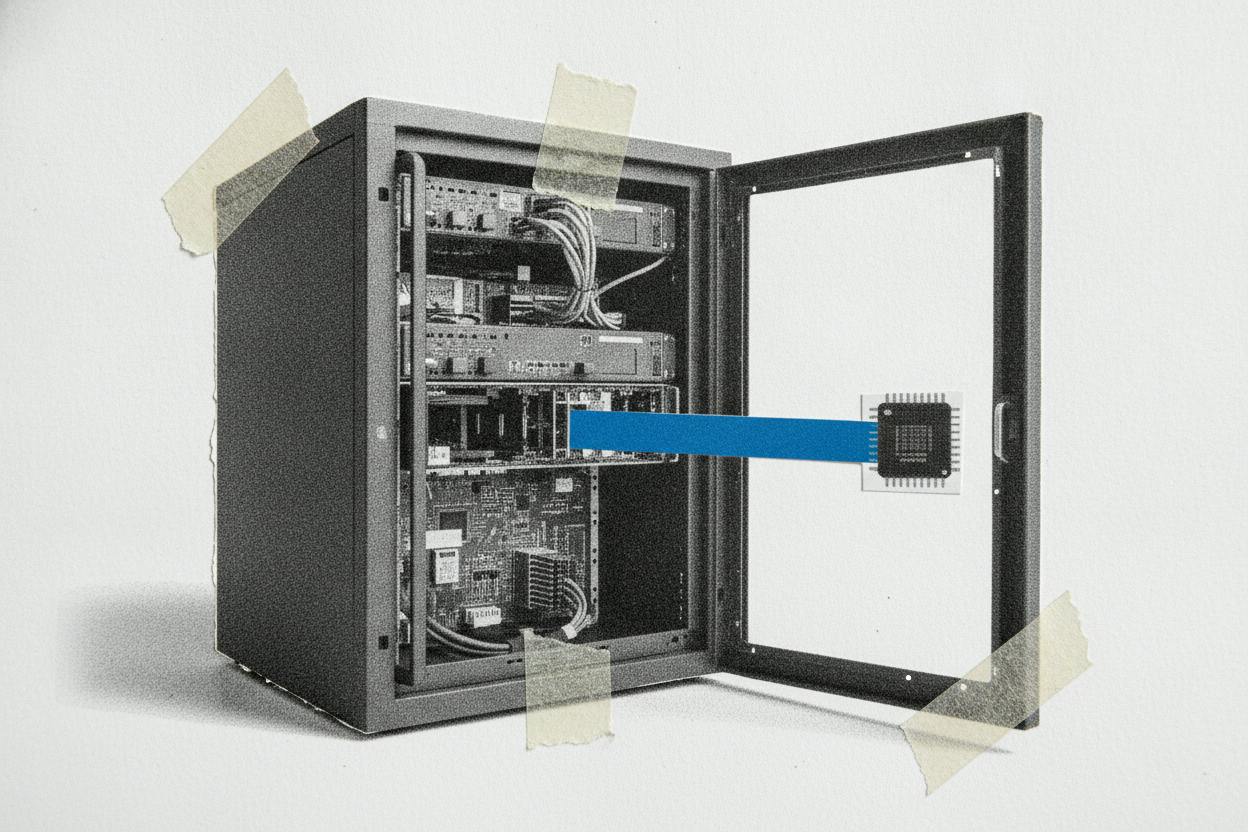
Startup D-Matrix has announced a plan to integrate its specialized AI inference chips into Nvidia's data-center server racks using Nvidia's NVLink Fusion interconnect. The company says systems compatible with this setup are expected to arrive in 2027.
The move is a notable step for D-Matrix, a relatively small player in a chip market dominated by Nvidia. By making its Raptor chips compatible with Nvidia's hardware ecosystem, D-Matrix is betting that customers will want more options for the second phase of AI computing: running models in production, a process known as inference.
What is inference and why does it matter?
Most of the attention in AI over the past few years has focused on training—the process of feeding massive amounts of data to a model so it learns patterns. That phase is compute-intensive and has driven huge demand for Nvidia's graphics processing units (GPUs).
But once a model is trained, it needs to be run live to answer questions, generate text, or power voice assistants. That's inference. It's a different kind of workload, often requiring low latency (the delay between a user's input and the model's response) and efficient power use, especially for applications like chatbots and real-time agents.
D-Matrix designs chips specifically for inference, aiming to offer an alternative to Nvidia's GPUs for these tasks. By using NVLink Fusion, D-Matrix's Raptor chips can be slotted into the same server racks that house Nvidia's GPUs, potentially making it easier for data-center operators to mix and match hardware without redesigning their infrastructure.
Why Nvidia's cooperation matters
Nvidia's dominance in AI chips is built not just on its processors but on the entire ecosystem around them—software, networking, and the physical racks that go into data centers. For a startup to succeed, it often needs to work within that ecosystem rather than against it.
By plugging into Nvidia's racks, D-Matrix is acknowledging that reality. The arrangement could give D-Matrix access to customers who already run Nvidia-based systems and are looking for more efficient inference options. It also signals that Nvidia is open to letting other chipmakers share its infrastructure, at least in areas where Nvidia's own products may not be the best fit.
This is not the first time Nvidia has opened its ecosystem. The company has been investing in and partnering with a range of AI startups, including backing Firmus in Malaysia and holding talks with Nscale for a major investment. Nvidia has also faced scrutiny over its market power, including a DOJ probe into its licensing deal with Groq, another AI chip startup.
What it means for investors
For everyday investors, this news is a reminder that the AI chip market is not a one-horse race. While Nvidia remains the dominant supplier for training, the inference segment is attracting new entrants who believe they can offer better performance or lower costs for specific tasks.
D-Matrix is a private company, so most investors can't buy its stock directly. But the development is relevant to anyone holding shares in Nvidia or in companies that build data centers, such as Zankore or NEXTDC. If inference chips become more diverse, it could affect pricing and margins across the AI hardware stack.
It also highlights the growing importance of inference in the AI story. As more companies deploy AI applications, the demand for running those models efficiently will likely increase. That could create opportunities for chipmakers that focus on this niche, even if they remain small compared to Nvidia.
For now, the timeline is distant—2027 is several years away. But the announcement shows that the competitive landscape for AI chips is evolving, and that even the biggest player in the market is preparing for a future where training is not the only game in town.