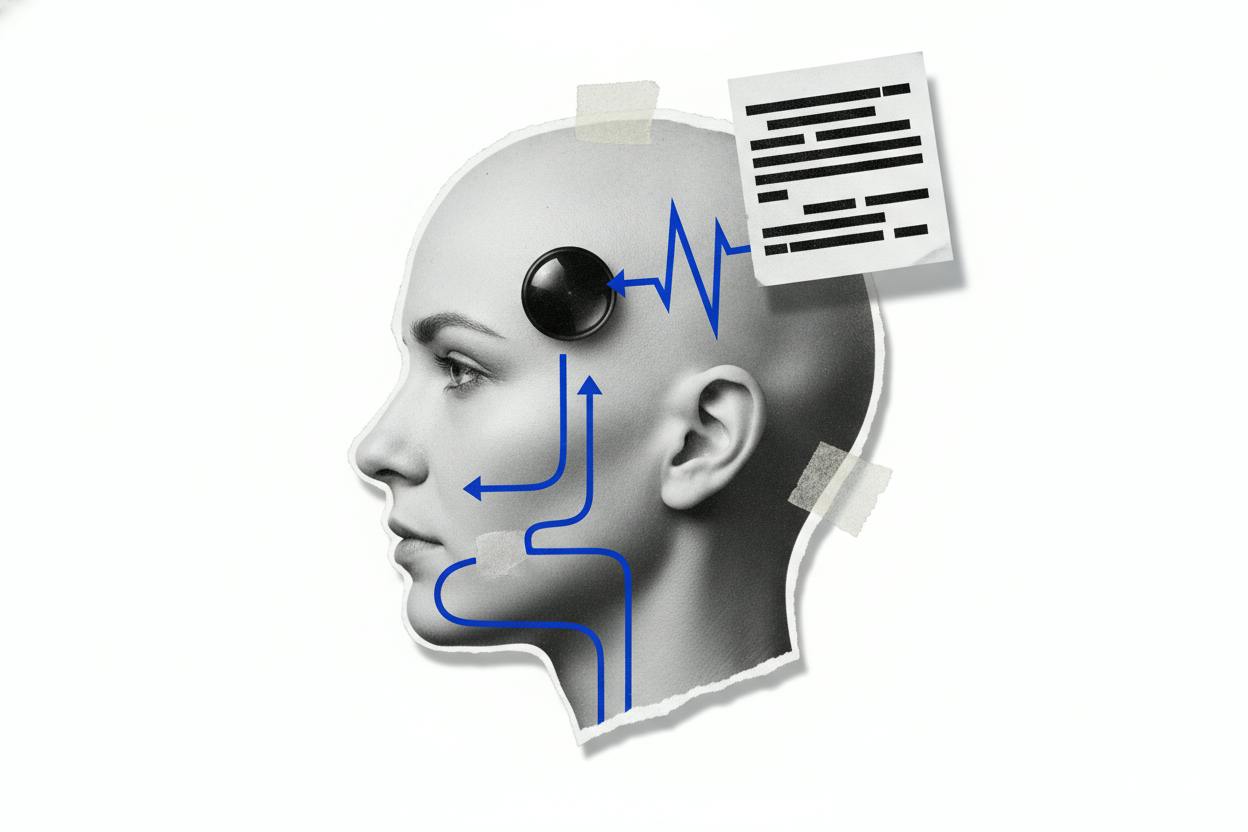
A new $900 wearable called Temple, created by Zomato co-founder Deepinder Goyal and promoted by Indian sports celebrities, is drawing sharp criticism from doctors who say its headline feature—real-time tracking of “brain blood flow”—is not backed by solid science.
The device, a small sensor worn on the side of the head, sells for 85,000 rupees (about $907). Its marketing highlights a “BrainFlow” metric along with other readouts tied to everything from heat loss to “cognitive and emotional” state. But several physicians, including Dr. Cyriac Philips and Dr. Sanjeev Bagai, argue that these claims lack peer-reviewed evidence and any clear medical clearance.
What is Temple and how does it work?
Temple is a wearable sensor that sticks to the temple area of the head. It is designed to be worn during daily activities, and its companion app displays various metrics in real time. The most prominent is “BrainFlow,” which the company suggests reflects blood flow in the brain. Other metrics reportedly relate to temperature, heat loss, and even emotional or cognitive states.
The device is not a medical device in the traditional sense—it has not been cleared by regulators like the U.S. Food and Drug Administration (FDA) or India’s Central Drugs Standard Control Organisation (CDSCO) for diagnosing or treating any condition. Instead, it is marketed as a wellness product, a category that often faces less regulatory scrutiny than medical devices.
This is not the first time a wellness wearable has made bold claims. Many consumer devices—from smartwatches that measure heart rate to rings that track sleep—have faced questions about accuracy and clinical validity. But the specific claim of tracking brain blood flow in real time is unusual and has caught the attention of the medical community.
Why doctors are pushing back
Doctors like Dr. Philips and Dr. Bagai have publicly stated that the claims made by Temple’s marketing are not supported by peer-reviewed studies. Peer review is the process by which independent experts evaluate research before it is published in a scientific journal. Without such validation, doctors say, consumers cannot be sure that the BrainFlow metric actually measures what it claims to measure.
“There is no evidence that this device can accurately measure brain blood flow,” said Dr. Philips in a recent interview. “It is concerning when a product makes such specific physiological claims without any published data.”
Dr. Bagai echoed similar concerns, noting that the lack of medical clearance means the device has not been tested for safety or efficacy in the way a medical device would be. He also warned that consumers might be misled into thinking the device can provide medical insights, when in reality it is a consumer gadget.
The backlash comes amid a broader trend of wellness wearables making increasingly sophisticated claims. While some devices have been validated for certain uses—like detecting irregular heart rhythms—others have been criticized for overpromising. The key difference is that validated devices typically have published clinical trials and regulatory approvals.
What it means for investors
For everyday investors, the Temple controversy is a reminder of the risks in the consumer health-tech space. Companies that launch products with bold health claims but little scientific backing can face reputational damage, regulatory action, or even lawsuits. That can hurt the stock price of publicly traded companies, though Temple itself is not publicly listed—it is part of a private venture by Deepinder Goyal, who is best known as the co-founder of Zomato, a publicly traded food delivery giant.
Investors in Zomato should note that Temple appears to be a separate venture, so the controversy may not directly affect Zomato’s financials. However, it could cast a spotlight on Goyal’s other business interests and potentially influence investor sentiment around his leadership.
More broadly, the episode highlights the importance of due diligence when investing in health-tech or wellness companies. Look for products with published clinical evidence, regulatory clearances, and transparent data. Companies that rely on celebrity endorsements rather than science may be riskier bets.
For those interested in the Indian market, the story also comes at a time when foreign investors are returning to Indian stocks, and the economy is showing resilience. But consumer confidence can be fragile, and a high-profile product controversy could have ripple effects in the broader wellness sector.
As with any investment, it’s wise to separate hype from substance. The Temple debate is a good example of why investors should ask tough questions about the science behind a product before putting money into a company that sells it.
The bottom line
Temple is a striking example of how consumer tech and health claims can collide. While the device may offer some interesting data, the lack of peer-reviewed evidence and medical clearance means its most dramatic claims should be taken with a grain of salt. For investors, the lesson is clear: when a product promises to measure something as complex as brain blood flow, demand proof.
As the story develops, watch for any regulatory response or additional scientific scrutiny. If Temple’s claims are debunked, it could set a precedent for how wellness wearables are marketed in India and beyond.