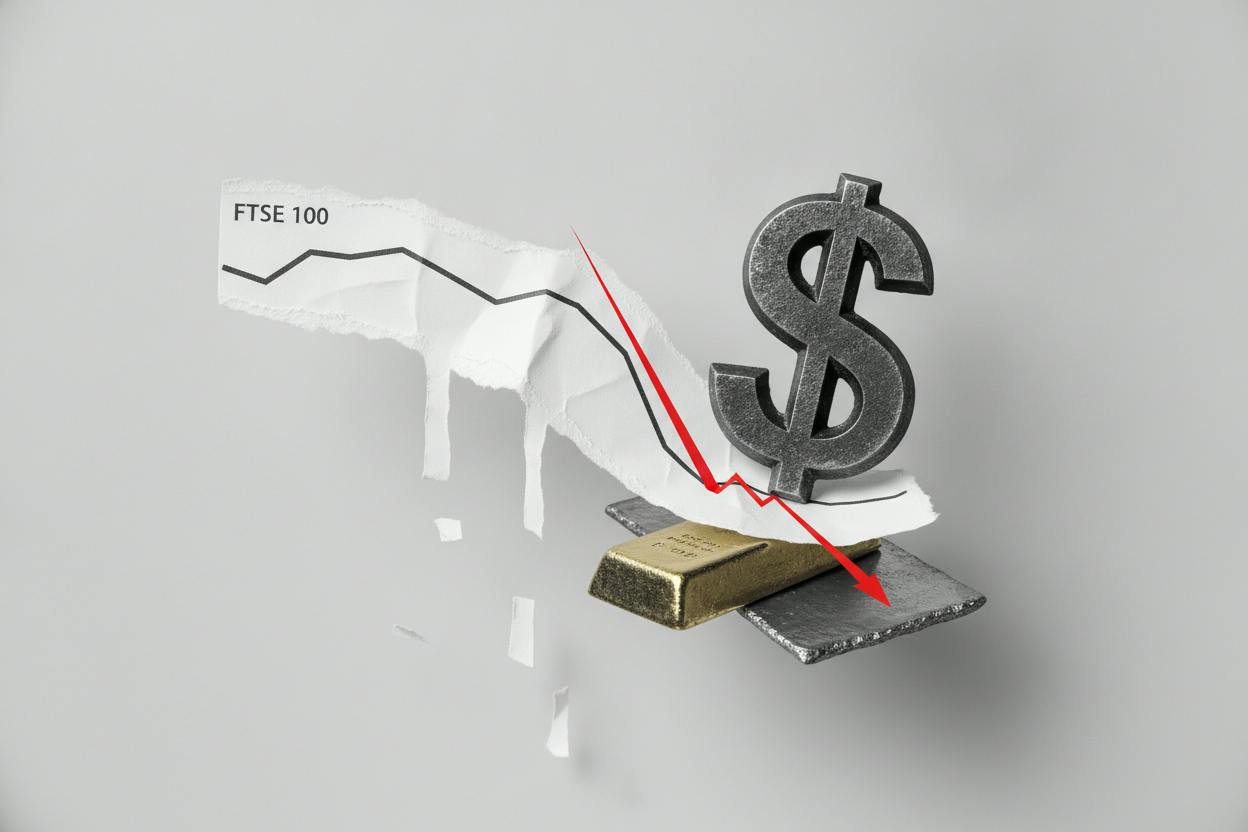
UK stocks are set to open lower on Tuesday, with FTSE 100 futures pointing to a 0.8% decline. The move comes as a firmer US dollar and growing expectations that the Federal Reserve will raise interest rates next month keep metals like gold and copper under pressure.
The pattern was already visible on Monday, when the FTSE 100 finished roughly flat. Gains in defensive consumer staples offset falls in miners, highlighting a split that investors are likely to see again today.
Why the dollar and rates matter for UK miners
The FTSE 100 has an outsized weighting in mining companies, many of which sell commodities priced in US dollars. When the dollar strengthens, those commodities become more expensive for buyers using other currencies, which can cool demand and push prices down. At the same time, higher US interest rate expectations tend to strengthen the dollar further and tighten global financial conditions.
Gold, which pays no interest, is particularly sensitive to rising yields. As bond yields climb, the opportunity cost of holding gold increases, making the metal less attractive. Gold has been hovering near its lowest level in more than a year, and the latest rate expectations are adding to that pressure.
Copper has also extended its losses. Soft economic data from China, the world's biggest buyer of the metal, has raised concerns that industrial demand could slow. That adds to the bearish outlook for the commodity and for the miners that produce it.
A market split in two
The combination of a strong dollar and higher rate expectations is pushing investors to separate the UK market into two distinct camps. On one side are rate-sensitive, commodity-linked stocks like miners, which tend to suffer when the macro backdrop turns against them. On the other are steadier, domestically focused defensives such as consumer staples, which can hold up better when growth expectations wobble.
This split means that headline index moves can mask what is happening underneath. A flat or slightly lower FTSE 100 can hide a sharp divergence between the miners dragging the index down and the defensives propping it up.
For everyday investors, the key takeaway is that a strong dollar and higher US rates are a double headwind for dollar-priced metals. They make commodities pricier for non-US buyers and tighten financial conditions more broadly. When gold and copper prices weaken, analysts often trim revenue and cash-flow forecasts for diversified miners that benchmark to those prices. Because of the FTSE 100's heavy mining presence, that earnings reset can pull on the whole index, even if other sectors are doing fine.
What to watch next
Investors will be watching for any further moves in the dollar and in US rate expectations, as well as any new data from China that could affect copper demand. The recent slide in gold and the pressure on copper are part of a broader trend in commodities, which have been sensitive to the dollar's strength.
For those with exposure to UK equities, the message is that the FTSE 100 is not a single, uniform market. It is a collection of very different businesses, and the forces that hurt miners may not hurt consumer staples in the same way. Understanding that split can help investors make sense of why the index moves the way it does.
As always, past performance is not a guide to future returns, and markets can change quickly. But for now, the dollar's strength and the prospect of higher US rates are the dominant themes for UK stocks, and they are likely to keep metals and miners under pressure.



