Germany's 10-year government bond yield fell to 3.40% on Tuesday, dropping 6.5 basis points, as a technology-led wave of risk aversion sent investors scrambling for the safety of euro-area government debt. The move lower in yields — which rise when bond prices fall and fall when prices rise — came as jitters over crowded artificial intelligence infrastructure trades rippled through global markets, according to Reuters.
The shorter end of the curve moved in tandem. Germany's 2-year yield slid to 3.06%, reflecting a broad-based bid for top-rated euro debt. European bonds also took their cue from an overnight decline in US Treasury yields, a reminder of how tightly linked global fixed-income markets have become.
Why Bunds Are the Euro Area's Safe Haven
German government bonds, known as Bunds, are widely regarded as the benchmark safe asset for the euro zone. When investors get nervous — whether because of equity market turbulence, geopolitical uncertainty or concerns about corporate debt — they tend to shift money out of stocks and lower-rated credit and into Bunds. That extra demand pushes bond prices higher and yields lower.
This time, the trigger was a reality check on the AI trade. Investors have poured enormous sums into companies tied to AI infrastructure — data centers, chipmakers, power suppliers and the firms financing them — on the expectation of years of explosive growth. When that narrative wobbles, as it did overnight, the reaction can be swift and broad, because so many portfolios are now concentrated in the same handful of names.
It is worth noting that a Bund rally does not necessarily signal deep economic pessimism. Sometimes it simply means investors want safety that day. The distinction matters for how you read the move.
The Real Story: France's Premium Over Germany
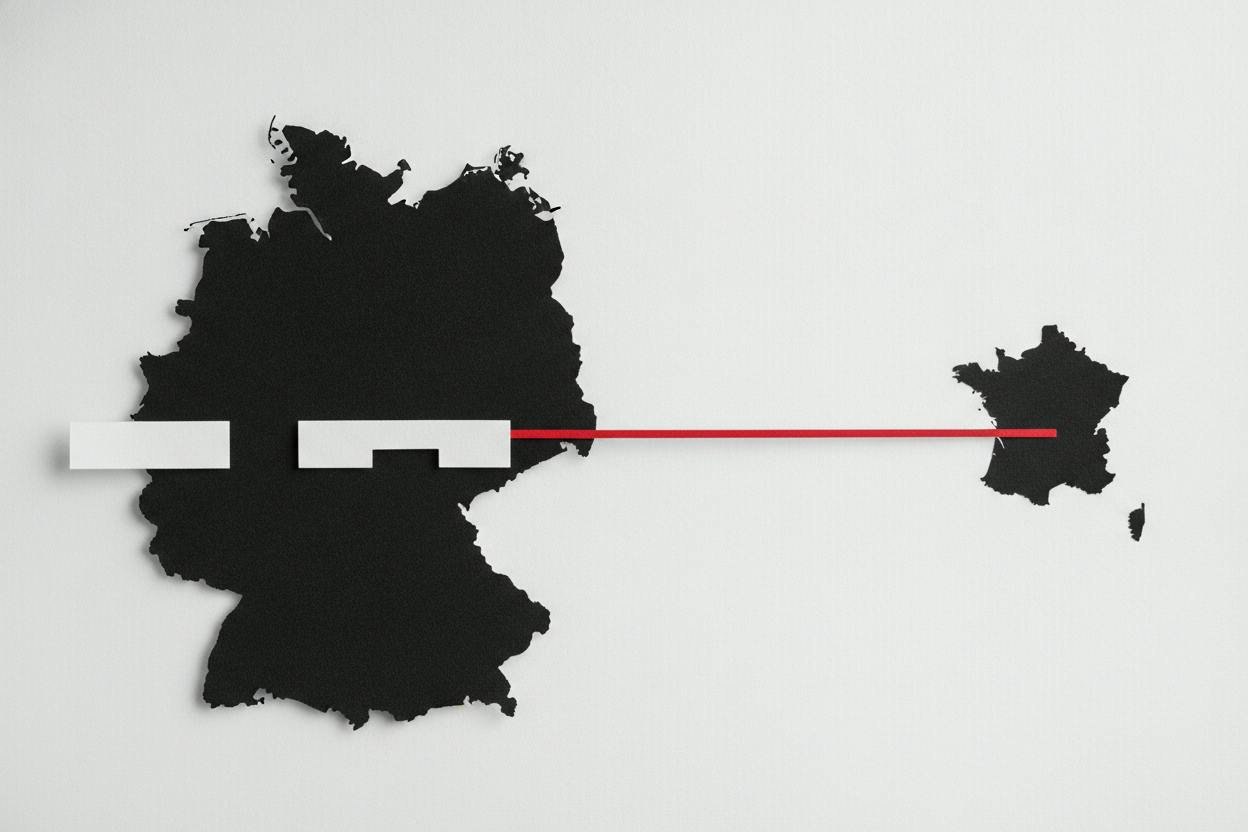
While Germany's benchmark yield drew the headlines, the more telling signal was in the spreads — the gap between what different euro-area governments pay to borrow. French bonds continued to carry a large premium over German Bunds, with the France-Germany spread hovering around 142 basis points. That is down from 158.67 basis points in early October, which Reuters said was the widest since November 2011.
In plain terms, France still has to pay roughly 1.42 percentage points more than Germany on comparable debt. That gap is the market's way of demanding extra compensation for holding French bonds, reflecting concerns about the country's budget position and political backdrop. Italian spreads were also in focus, though they have been more stable in recent months.
This is what bond watchers call "fragmentation" risk — the danger that borrowing costs drift apart across the euro area, even when the bloc's benchmark yield is falling. The European Central Bank has tools to counter excessive fragmentation, but persistent gaps can still affect how investors price risk across the region.
What It Means for Investors
For everyday investors, there are a few practical takeaways.
- Bond yields and prices move in opposite directions. If you hold a bond fund, falling yields can mean rising prices in the short term — but also lower income if you reinvest.
- Spreads are a stress gauge. The France-Germany gap is the cleanest read on euro-area cohesion right now. If it stays sticky or widens again, that can matter for French banks, euro-area credit pricing and how investors judge the bloc's fiscal unity.
- Safe-haven flows can mask underlying stress. A Bund rally can look reassuring, but it does not mean every euro-area government is suddenly borrowing cheaply.
The AI trade's wobble is also a reminder of how concentrated equity markets have become. When a single theme drives so much of the gains, any crack in the story can trigger a broad risk-off move — and government bonds are often the first place that money runs. Investors watching this space may want to keep an eye on debt concerns around AI infrastructure, which have been flagged as a potential weak link in the trade.
Globally, the picture is similarly interconnected. The overnight dip in US Treasury yields that helped pull European yields lower reflects the same flight-to-quality dynamic. For context on how US rates are moving, see our coverage of the dollar slipping as Treasury yields tumble.
What to Watch Next
Investors will be watching two things closely. First, whether the AI-related selloff deepens or fades — a sustained unwind could keep pressure on risk assets and support Bunds. Second, whether the France-Germany spread narrows or widens. A widening gap would suggest markets are growing more concerned about French fiscal policy, which could spill over into euro-area credit more broadly.
For now, the message is mixed: safe-haven demand is strong enough to pull Germany's benchmark yield lower, but not strong enough to erase the premium investors demand from other euro-area governments. That tension — between a rally in the safest bonds and persistent gaps elsewhere — is likely to define the next phase of European fixed-income trading.