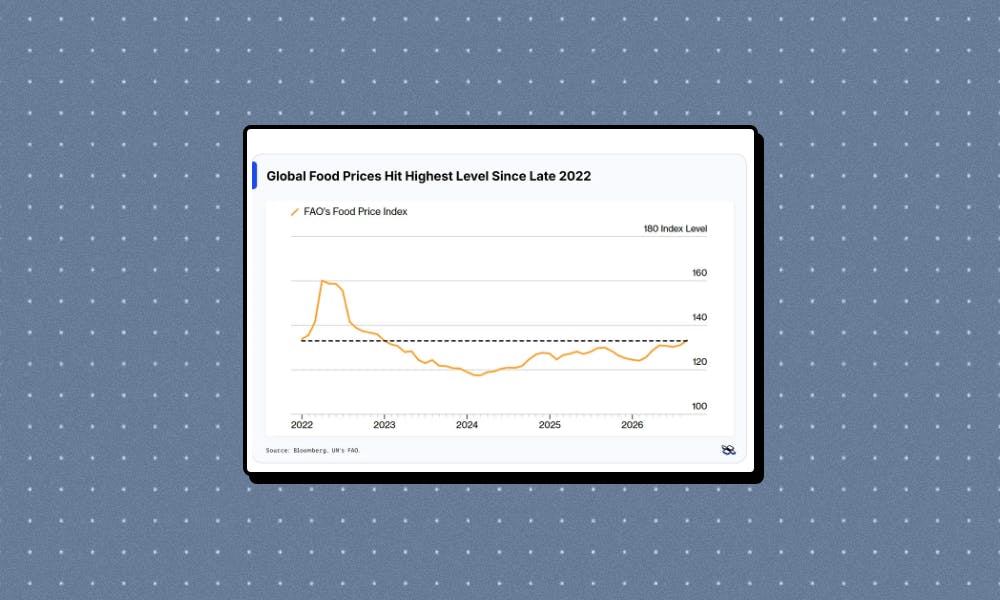
If you've noticed your grocery bill creeping up, you're not alone. Global food prices have been heating up again, with the UN's food-price index jumping 1.9% in August from July — its highest level since the end of 2022. The rise was broad-based, touching every major commodity group, but sugar was the standout, surging 11.9% in a single month. Wheat also climbed 2.6%, leaving it a hefty 15% above where it stood a year ago.
The renewed pressure is a reminder that food inflation, which many hoped was fading, hasn't gone away. For everyday investors, it's worth understanding what's driving these moves and how they might ripple through the economy and your portfolio.
Why food prices are climbing again
The current spike isn't coming from a single source. Instead, several forces are converging at once, making the situation harder to untangle.
One major factor is escalating conflict around the Black Sea, a critical shipping route for grain. Ukrainian farmers, who are major exporters of wheat and corn, are finding it harder to get their harvests to global markets. Disruptions to shipping routes and infrastructure can quickly translate into higher prices for buyers worldwide, as supply tightens.
Meanwhile, Europe's harvests have been hit by extreme heat. With crops damaged, the region may need to lean more heavily on imports, adding to global demand just as supply is constrained. That combination — weaker supply and stronger demand — is a classic recipe for higher prices.
And there's another wildcard: the potential return of a powerful El Niño. This climate pattern can bring drought to some farming regions and floods to others, threatening crop yields across the globe. While it's too early to know exactly how severe it will be, weather risks are unlikely to disappear anytime soon.
What this means for your grocery bill
For most people, the most immediate impact of rising food prices is at the supermarket. When commodity prices go up, food manufacturers and retailers often pass those costs along to consumers. That means you might see higher prices for bread, pasta, and anything with sugar — from soft drinks to baked goods.
It's important to note that not all food price increases hit the shelf right away. Companies often hedge their costs or use long-term contracts, which can delay the impact. But if commodity prices stay elevated, those increases eventually show up in the prices you pay.
For investors, the key question is whether this is a temporary blip or the start of a longer trend. If food prices keep climbing, it could feed into broader inflation, which central banks are watching closely. Higher inflation could influence interest rate decisions, affecting everything from mortgage rates to bond yields. Indeed, recent reports from the Federal Reserve's Beige Book have noted cooling prices but lingering risks, and food is one of those risks.
Investor implications
For everyday investors, rising food prices can have several knock-on effects. First, they can squeeze the profit margins of food producers and retailers who may not be able to pass on all their cost increases. On the other hand, companies that produce or trade agricultural commodities could benefit from higher prices.
Second, food inflation can influence central bank policy. If inflation stays sticky, the Federal Reserve and other central banks may keep interest rates higher for longer. That can weigh on stock valuations, particularly for growth companies that are sensitive to borrowing costs. It can also keep bond yields elevated, as we've seen in recent market moves where bond yields eased as energy prices cooled — but food could be the next factor to watch.
Third, there's the broader economic picture. Higher food prices can act like a tax on consumers, leaving them with less money to spend on other goods and services. That could slow economic growth, which is something investors should keep in mind when assessing the health of the economy.
What to watch next
Investors will be watching several things in the coming weeks and months. The path of the Black Sea conflict will be crucial — any resolution could ease supply concerns, while further escalation could push prices higher. Weather forecasts, especially around El Niño, will also be closely monitored. And the next UN food-price index reading will show whether August's jump was a one-off or the start of a trend.
For now, the message is clear: food prices are heating up again, and that has implications for both your wallet and your portfolio. While it's too early to say how long this will last, staying informed can help you make better decisions. As always, it's wise to keep a diversified portfolio and avoid making hasty moves based on short-term price swings.
If you're interested in how other commodities are faring, you might also look at cocoa prices surging or the recent slide in cattle futures — both are part of the broader food inflation story.