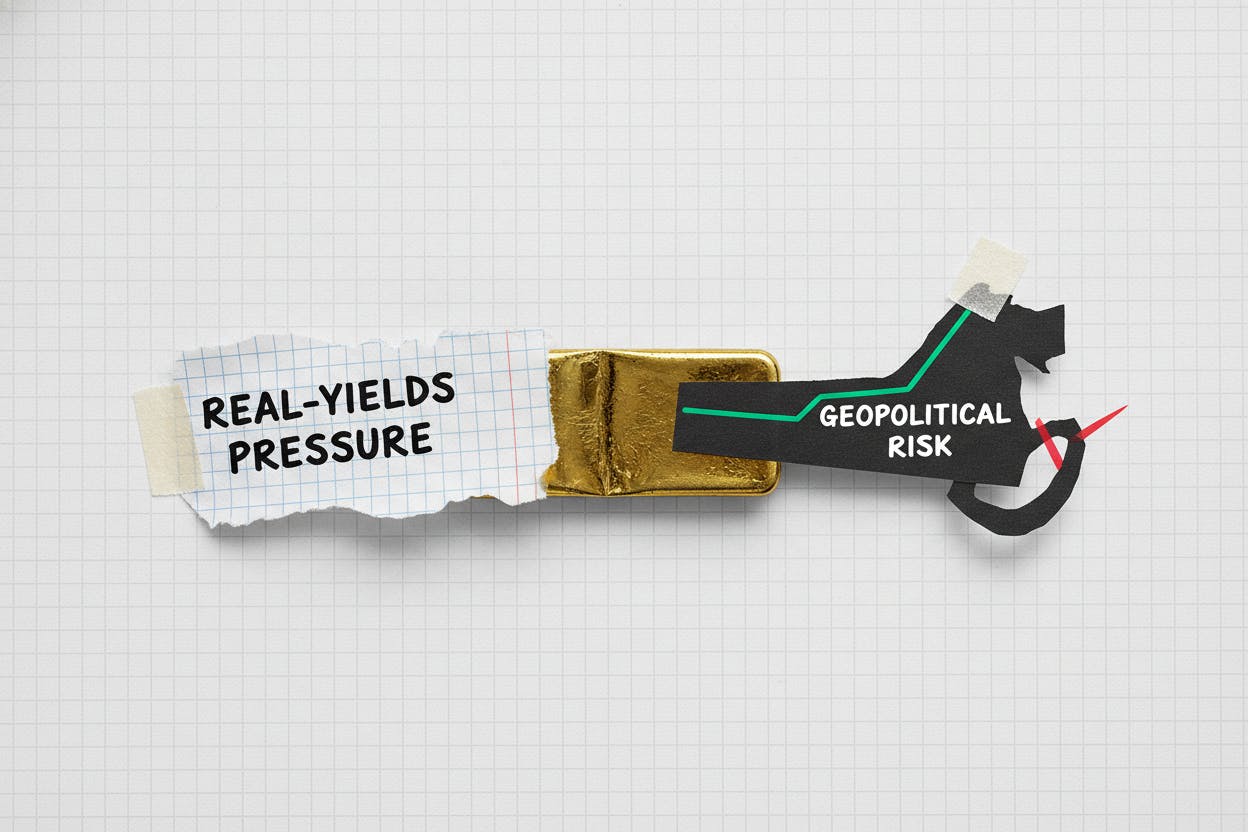
Gold prices are hovering near $4,096 an ounce, putting the metal on track for its best month since February. The move marks a potential end to a five-month losing streak, as investors weigh two competing forces: the outlook for US interest rates and fresh geopolitical tensions in the Middle East.
What's driving gold higher?
Gold has been caught between two forces: interest rates and uncertainty. After the Federal Reserve kept rates unchanged at its latest meeting, traders have scaled back expectations for another hike in September. According to CME Group's FedWatch tool, the probability of a September hike has fallen to 63% from about 80% just a few weeks ago.
That shift matters because higher rates raise the opportunity cost of holding gold, which pays no interest or dividend. When rates are expected to stay lower for longer, gold becomes relatively more attractive compared with yield-bearing assets like bonds.
At the same time, geopolitical risks are adding a safe-haven bid. A reported drone strike on gas vessels in Egypt's port of Damietta has stoked concerns about the security of shipping routes around the Suez Canal. The canal is a critical chokepoint for global trade, and any disruption can ripple through energy markets and investor sentiment. The US-Iran conflict, which has simmered for months, now appears to be flaring up again in a region that is vital to the world's oil supply.
Why the Suez Canal matters for gold
The Suez Canal is one of the world's busiest waterways, handling a significant share of global container traffic and energy shipments. When tensions rise in the region, traders often rush to safe-haven assets like gold, fearing that a broader conflict could disrupt supply chains and push up inflation.
In this case, the reported attack on gas vessels adds a new layer of uncertainty. Energy prices have already been volatile, and any escalation could feed into higher costs for businesses and consumers. For gold, that creates a dual tailwind: geopolitical fear boosts demand for safety, while the potential for higher inflation could erode the real returns on cash and bonds, making gold more appealing.
However, gold's path is not one-way. If the Fed were to signal a more aggressive stance on rates, the metal could quickly give back its gains. The central bank's next moves will be closely watched, especially with inflation still above its 2% target.
What it means for investors
For everyday investors, gold's recent strength is a reminder of its role as a portfolio diversifier. When markets are uncertain and rates look set to stay elevated, gold can act as a hedge against both geopolitical shocks and inflation. But it's not a guaranteed winner—gold prices can be volatile, and they are heavily influenced by central bank policy and the dollar.
Investors who already hold gold or gold-related funds may see some relief after a tough stretch. Those considering adding exposure should weigh the metal's long-term track record against the current environment. As always, it's wise to think about how gold fits into a broader, diversified portfolio rather than chasing short-term moves.
Related coverage: energy stocks have been climbing even as oil prices dip, and tankers are rerouting to avoid the Strait of Hormuz via the Red Sea. Meanwhile, emerging markets have stumbled as the Fed holds firm and oil prices climb.
Looking ahead
The next few weeks will be critical for gold. Traders will parse every piece of economic data for clues about the Fed's next move, and any escalation in the Middle East could send prices higher. The metal's ability to hold above the $4,000 level will be a key test of its momentum.
For now, gold is enjoying its best month since February, and the forces that have been holding it back—higher rates and a strong dollar—are showing signs of easing. Whether that trend continues depends on a delicate balance between monetary policy and geopolitics.