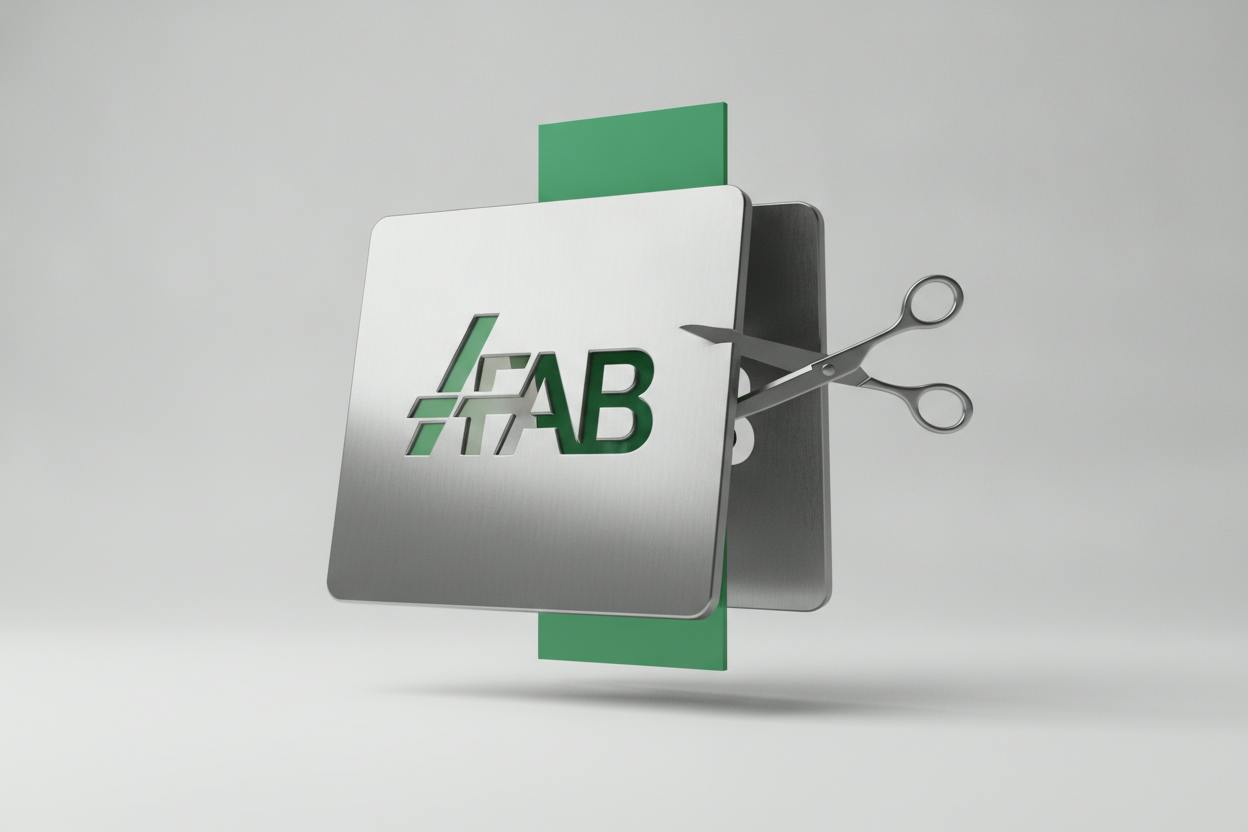
Gulf stock markets opened mostly lower on Monday as escalating Saudi-Houthi tensions rattled investor sentiment, but the UAE's largest lender, First Abu Dhabi Bank (FAB), defied the trend with a sharp jump after unveiling a major capital raise.
Saudi Arabia's benchmark index slipped after the kingdom reported that debris from intercepted ballistic missiles fell in the Mecca region. The escalation also drew attention to the Bab el-Mandeb Strait, a critical Red Sea shipping lane, raising concerns about potential disruptions to global trade and energy flows.
The risk-off mood spread across the region. Dubai's index ticked down as real estate heavyweight Emaar Properties fell, while Qatar's market dropped as some stocks reacted to an MSCI index reshuffle. Abu Dhabi, however, bucked the trend, driven entirely by FAB's surge.
FAB's rights issue: what it means
FAB said it plans to raise up to 15 billion dirhams (about $4.08 billion) by issuing roughly 1.1 billion new shares at 13.52 dirhams each—a discount of about 30% to the prevailing market price. This type of offering, known as a rights issue, gives existing shareholders the option to buy new shares first, typically to maintain their ownership percentage.
The move is a significant capital raise for the bank, which is a dominant player in the UAE banking sector. The deep discount is designed to attract participation, but it also raises questions about dilution for current shareholders.
FAB received an early vote of confidence when its top shareholder, Mubadala, an Abu Dhabi state-backed investor, committed to taking up its full pro-rata allocation. That commitment effectively pre-supports a large chunk of the raise, reducing the risk that the deal struggles to find buyers.
What it means for investors
For investors, the immediate focus is on the mechanics of the rights issue. Deep-discount rights issues often pull a stock toward an "implied" post-deal level, because the market prices in the dilution. Existing holders face a choice: either put up additional cash to keep their stake broadly intact, or end up owning a smaller slice of the company once the new shares are issued.
That dynamic means FAB's near-term share price may hinge less on daily geopolitical headlines and more on deal specifics—such as how many shareholders take up their rights, the timing of the issuance, and how the bank plans to use the extra capital.
Mubadala's backing is a key positive. By committing to its full allocation, it reduces the chance the deal fails to clear, which can take pressure off the share price even though the headline is technically dilutive. It also means Abu Dhabi's index can be driven by this one transaction while the rest of the region trades on risk sentiment.
For everyday investors, the takeaway is that corporate actions like rights issues can create short-term volatility, but they are not necessarily a signal about a company's long-term health. FAB's capital raise could be aimed at funding growth, strengthening its balance sheet, or preparing for regulatory requirements—common reasons for such moves.
Meanwhile, the broader Gulf market remains sensitive to geopolitical developments. The Saudi-Houthi tensions are a reminder that the region's markets can be swayed by events beyond corporate fundamentals. Investors should watch for any further escalation that could affect shipping routes or oil prices, as those would have wider implications for the regional economy.
As the trading day progresses, market participants will likely keep an eye on how FAB's rights issue is received and whether the geopolitical situation stabilizes. For now, the divergence between Abu Dhabi and the rest of the Gulf highlights how a single corporate event can overshadow broader market sentiment.