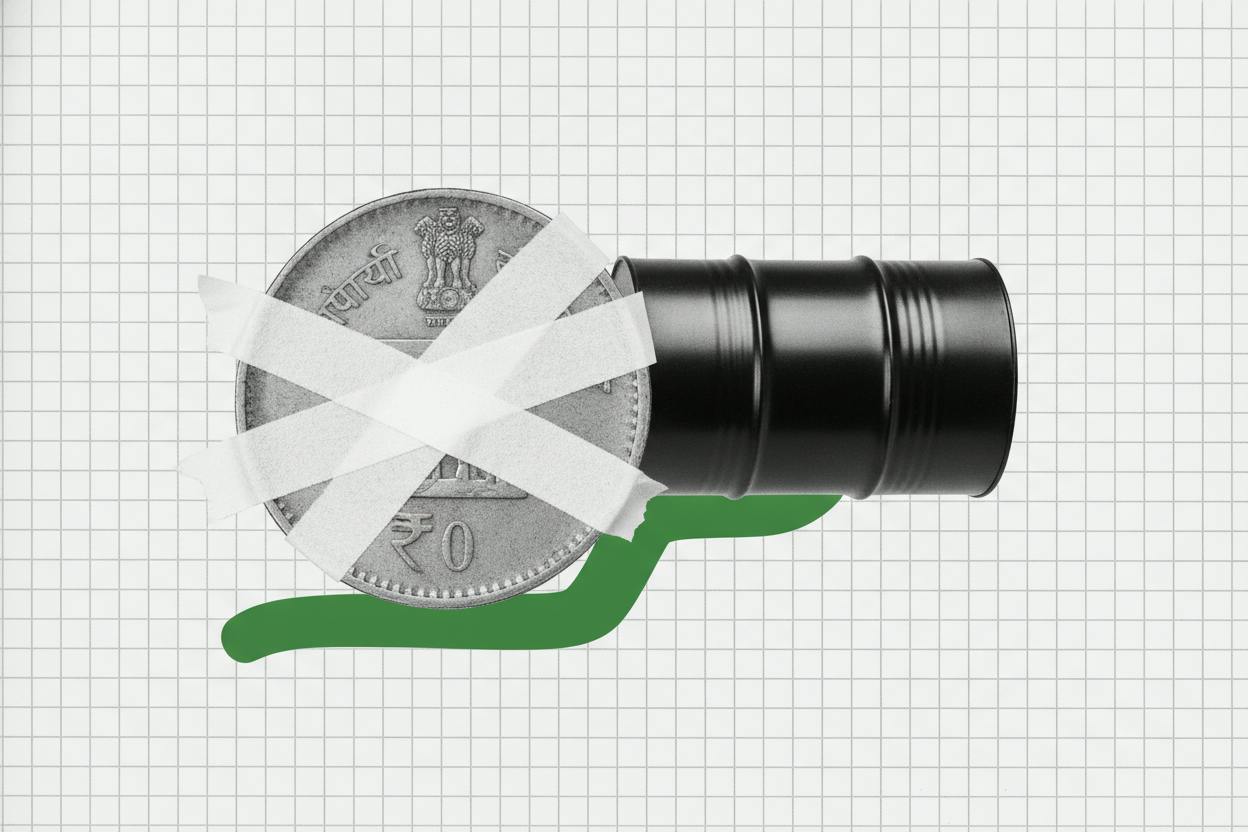
The International Monetary Fund has a message for India: stop leaning so hard on the rupee. In a media briefing in Mumbai, Krishna Srinivasan, the IMF's Asia-Pacific director, argued that the exchange rate should be the "first line of defense" when oil prices spike, rather than the Reserve Bank of India (RBI) selling dollars to keep the currency steady.
The comment comes as global oil prices have been volatile, and India—one of the world's largest importers of crude—feels the pinch every time the cost of a barrel climbs. When oil gets more expensive, India's import bill rises, putting pressure on the current account deficit and, ultimately, on the rupee.
Why a weaker rupee can help
At first glance, a falling rupee sounds like bad news. It makes imports costlier, which can feed into inflation and squeeze consumers. But the IMF's point is that a weaker currency also does important adjustment work. When the rupee depreciates, imported goods become more expensive relative to domestic ones, nudging spending toward local alternatives. That shift can help rebalance the economy without the central bank having to burn through its foreign exchange reserves.
In other words, letting the rupee move is a way of letting the market absorb the shock. Heavy intervention—selling dollars to prop up the currency—can delay that adjustment and deplete reserves, which are a buffer against future crises.
The IMF's advice is not new in economic theory, but it carries weight because India has historically been cautious about letting the rupee swing too freely. The RBI often steps in to smooth volatility, and in times of stress, it has sold significant amounts of dollars to defend the currency. Srinivasan's remarks suggest the fund believes that approach may be too costly in the long run.
What this means for investors
For everyday investors, the debate over the rupee is not just an academic one. A weaker rupee can affect everything from the price of imported electronics and fuel to the returns on foreign investments. If the RBI were to follow the IMF's advice and intervene less, the rupee could become more volatile, which would ripple through Indian markets.
Companies that rely heavily on imports—such as oil refiners, airlines, and tech firms that buy components abroad—could see their costs rise. On the flip side, exporters, including IT services companies and pharmaceutical makers, often benefit from a weaker currency because their goods and services become cheaper for foreign buyers.
For investors holding Indian stocks or bonds, the key is to watch how the RBI responds. If it signals a shift toward less intervention, expect the rupee to be more sensitive to global oil price moves. That could mean more short-term turbulence but also a more sustainable external position over time.
The IMF's comments also come at a time when India's markets are in the spotlight. The country has seen a wave of IPO activity, including Jio Platforms' record $3.2 billion IPO, which drew strong demand. But oil price spikes have weighed on Indian stocks, as seen in the recent drag on the market. A more flexible rupee could add another layer of complexity for investors navigating these crosscurrents.
The bigger picture
The IMF's advice is part of a broader conversation about how emerging markets should manage external shocks. Many economists argue that flexible exchange rates act as a shock absorber, allowing the economy to adjust without resorting to painful interest rate hikes or capital controls. India's central bank has generally favored a managed float, intervening to prevent excessive volatility, but the IMF's push suggests it sees room for more flexibility.
That said, the RBI has its own priorities, including controlling inflation and maintaining financial stability. A sharp depreciation of the rupee could make imports costlier and push up consumer prices, which would complicate the central bank's inflation targeting. So any shift toward less intervention would likely be gradual and conditional on the broader economic environment.
For now, the IMF's remarks are a signal, not a policy change. But they highlight a tension that investors should keep an eye on: the trade-off between a stable currency and a resilient economy. As oil prices remain a wildcard, how India manages its exchange rate will be a key story to watch.
In the meantime, investors can take comfort in the fact that India's foreign exchange reserves remain substantial, providing a cushion against external shocks. The question is how long the RBI will be willing to use them.