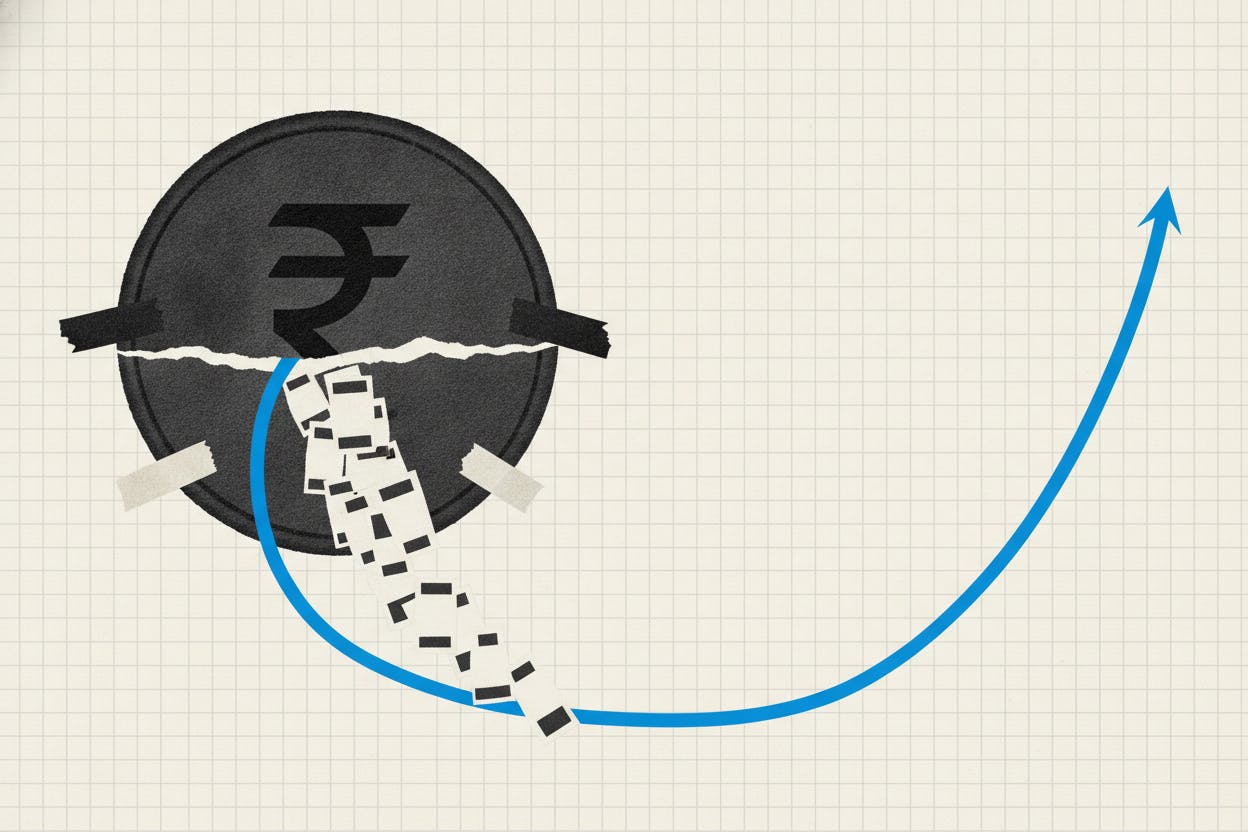
India's balance of payments has flipped back into the red. New data from the Reserve Bank of India (RBI) shows the country's current account recorded a deficit of $4.2 billion in the April-to-June quarter, a sharp reversal from the $6.5 billion surplus posted in the previous three months.
The current account is a broad measure of a country's transactions with the rest of the world. It tracks not just trade in goods and services, but also income flows like remittances and investment earnings. A deficit means the country is spending more foreign currency than it is earning—essentially borrowing from abroad to cover the gap.
What drove the swing?
The RBI attributed the move to a wider goods trade deficit, as rising commodity prices pushed up the cost of imports. India is a major importer of crude oil and other raw materials, so when global prices climb, the import bill swells. That dynamic outweighed continued strength in remittances—money sent home by Indians working overseas—which kept rising during the quarter.
Services exports, including IT and business outsourcing, also remained a bright spot, but they were not enough to offset the goods shortfall.
The shift is not entirely unexpected. Economists had anticipated that the surplus in the March quarter—which was helped by softer commodity prices and strong services exports—would prove temporary. The new data confirms that view.
What economists expect next
Analysts at ICRA, a domestic credit-rating agency, project the deficit will widen over the next couple of quarters. They estimate the current account deficit for the full fiscal year (April 2024 to March 2025) will land at around 0.9% of gross domestic product (GDP).
That level is modest by historical standards. India has run much larger deficits in the past—sometimes exceeding 4% of GDP—which put pressure on the rupee and forced the central bank to tap its foreign exchange reserves. A deficit of under 1% is generally considered manageable, especially if it is financed by stable inflows.
One reason for comfort: the RBI has introduced fresh foreign-currency deposit schemes aimed at attracting dollar inflows from non-resident Indians (NRIs). These schemes offer attractive interest rates and are designed to bolster the country's foreign exchange buffer. Economists say such measures could help finance the deficit without putting undue strain on the currency.
India's foreign exchange reserves remain substantial, and the central bank has been active in managing volatility. In recent months, the RBI has also used currency swaps to support the rupee, as noted in our coverage of India's record FX forward book.
What it means for investors
For everyday investors, the return to a current account deficit is not necessarily a red flag, but it is worth watching. A widening deficit can put downward pressure on the rupee, which in turn can affect imported inflation—especially for oil and other commodities. That could influence the RBI's interest rate decisions.
A weaker rupee can also impact companies that rely heavily on imports or have foreign-currency debt. On the flip side, exporters and IT services firms often benefit from a softer currency, as their earnings in dollars translate into more rupees.
Equity markets tend to react more to capital flows than to the current account itself. Foreign investors have been returning to Indian stocks, with $3.1 billion flowing in during August. That kind of inflow helps finance the current account gap and supports the rupee.
Still, if commodity prices keep climbing or global demand weakens, the deficit could widen more than expected. That would make India more dependent on foreign capital, leaving it vulnerable to sudden shifts in investor sentiment.
For now, the consensus is that the deficit remains manageable. The RBI's deposit schemes and healthy foreign inflows provide a cushion. But as always, investors should keep an eye on global commodity prices and the trajectory of the rupee.
The broader context: India's economy continues to grow at a healthy clip, and a modest current account deficit is often a sign of strong domestic demand. The key is whether the deficit stays within comfortable bounds—and whether the financing remains stable.