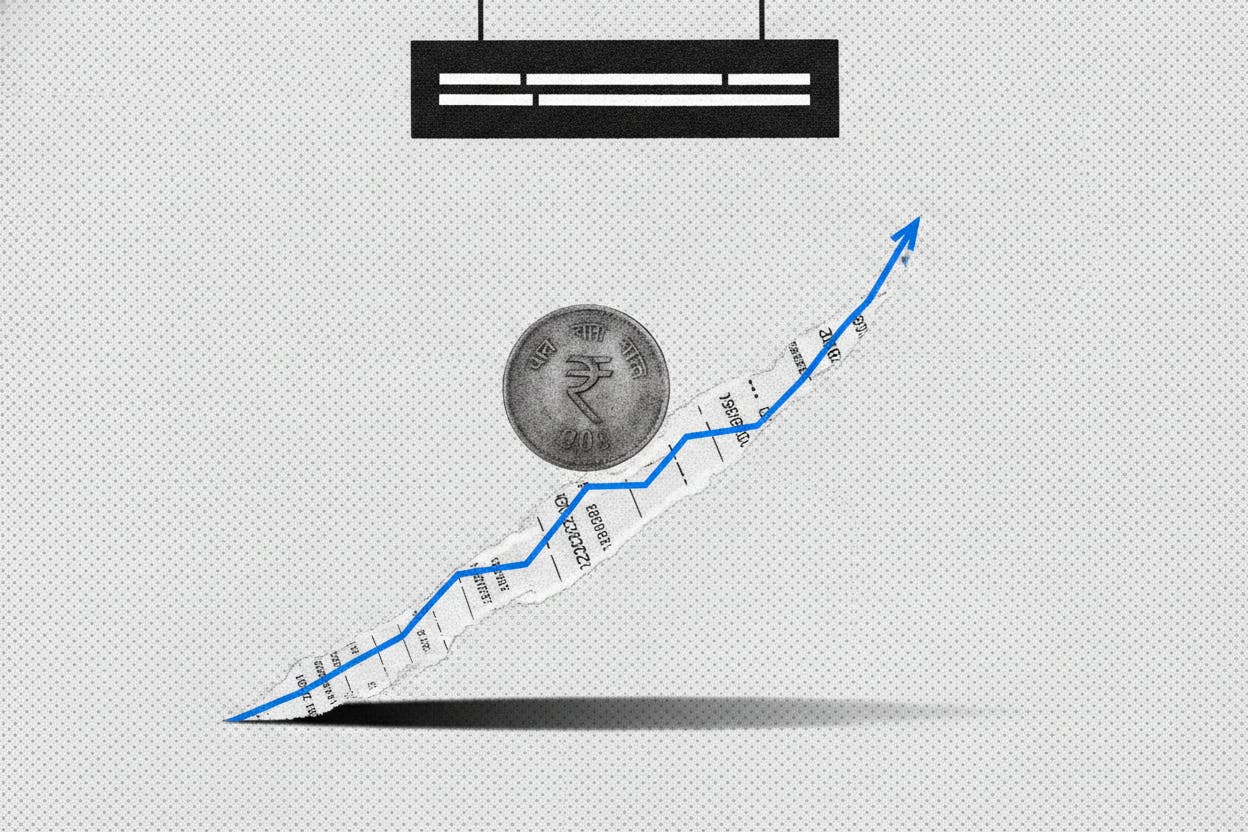
The Indian rupee fell to its weakest level in nearly three weeks on Tuesday, closing down 0.6% at 95.2475 per dollar. The decline came as US Treasury yields rose, making dollar-denominated assets more attractive to global investors, and as traders looked ahead to comments from incoming Federal Reserve Chair Kevin Warsh.
What drove the rupee lower?
The move was not isolated to India. Several Asian currencies also slipped as US yields climbed, drawing capital toward the dollar. A stronger dollar typically puts pressure on emerging-market currencies like the rupee, as investors seek higher returns in US assets.
Traders said the Reserve Bank of India (RBI) likely intervened early in the session, selling dollars through state-run banks to slow the rupee's decline. However, that support faded later in the day, allowing the currency to settle near its lows. The RBI has a history of stepping in to smooth volatility, and its record forward position of $106.7 billion has helped keep the rupee relatively steady in recent months.
The dollar also got a lift from ongoing US-Iran talks, which can sway expectations for oil supply and, in turn, inflation. Any disruption to oil flows from the Middle East tends to push crude prices higher, which can feed into inflation and strengthen the dollar further. This dynamic has been a recurring theme for currency markets, as seen in the recent pause in Asia's AI rally amid dollar strength and Iran tensions.
What it means for investors
For everyday investors, a weaker rupee has mixed implications. On the one hand, it can make imports more expensive, potentially raising costs for companies that rely on foreign goods and services. This can feed into domestic inflation and affect consumer prices. On the other hand, a weaker rupee can benefit exporters, as their goods become cheaper for foreign buyers.
The key factor to watch is the trajectory of US interest rates. If the Fed signals a more aggressive path under new leadership, US yields could rise further, putting additional pressure on the rupee. Conversely, if the Fed strikes a dovish tone, the dollar could weaken, giving the rupee some breathing room.
Investors should also keep an eye on oil prices. India imports most of its crude oil, so any spike in oil costs can widen the trade deficit and weigh on the rupee. The US-Iran talks are a wild card here, as any deal could increase oil supply and lower prices, while a breakdown could have the opposite effect.
For those with exposure to Indian equities, currency moves matter. A falling rupee can dent returns for foreign investors, who may pull money out of Indian stocks if they expect further depreciation. This can weigh on indices like the Nifty 50, which recently rose on falling oil prices but could face headwinds if the rupee continues to slide.
Broader market context
The rupee's decline comes amid a broader trend of dollar strength. The US dollar index, which measures the greenback against a basket of major currencies, has been supported by resilient US economic data and expectations that the Fed will keep rates higher for longer. This has been a headwind for emerging-market currencies across Asia.
In addition to the rupee, other Asian currencies like the sterling have also slipped against the dollar recently, as traders anticipate key US jobs data. The broader theme is that any sign of US economic strength tends to boost the dollar, putting pressure on currencies in the region.
For Indian investors, the RBI's ability to manage the rupee will be crucial. The central bank has a range of tools at its disposal, including direct intervention in the spot and forward markets, as well as adjusting interest rates. However, these tools have limits, and sustained dollar strength could test the RBI's resolve.
Looking ahead, all eyes will be on Fed Chair Kevin Warsh's comments for clues on the future path of US monetary policy. If he signals a more cautious approach, the dollar could ease, giving the rupee a chance to recover. But if he reinforces expectations of further rate hikes, the rupee could face additional pressure.