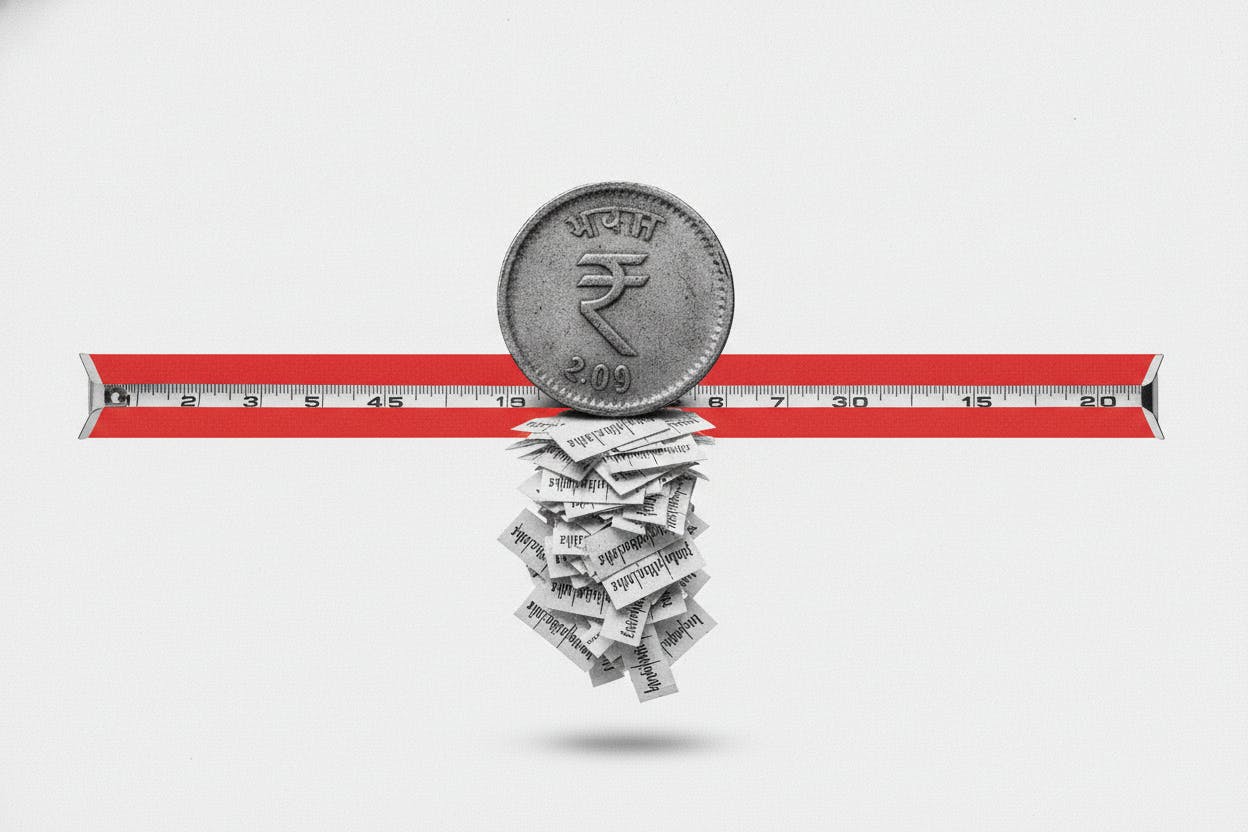
The Indian rupee held steady near 94.68 per US dollar on Wednesday, as traders watched the Reserve Bank of India (RBI) continue to intervene in currency markets. New data showed the central bank's net forward US dollar sales hit a record $106.7 billion in May, a tool the RBI has used to keep the rupee from weakening sharply without draining its spot reserves.
A forward contract is essentially a promise to exchange currencies at a future date at a pre-agreed rate. By selling dollars in the forward market, the RBI can support the rupee without immediately reducing its headline foreign-exchange reserves, which stood at $672.59 billion in mid-June. This approach helps avoid the visible depletion of reserves that would occur if the central bank sold dollars directly in the spot market.
How the RBI's Forward Book Works
The RBI's large forward position acts as a buffer against sharp rupee depreciation. When the rupee comes under pressure—often due to global dollar strength or capital outflows—the central bank can step in through state-run banks to sell dollars in the forward market. This smooths the currency's movement and signals to traders that the RBI is willing to defend a certain level, currently around 95 per dollar.
However, the trade-off is significant. A big forward "short dollar" position creates a future obligation: when those contracts mature, the RBI must either deliver the dollars or roll the deals over. If market conditions move against the central bank—for example, if the rupee weakens further—rolling over the contracts becomes more expensive. That cost tends to show up first in the forward market as higher swap points, which are the extra charges embedded in hedging dollars for a future date. This pressure does not usually cause an immediate jump in the spot rate, but it does make currency hedging pricier for market participants.
What It Means for Investors
For everyday investors, the immediate impact is on the cost of doing business or investing across borders. Import-heavy companies, such as those in oil, electronics, or machinery, often hedge their dollar exposure by buying forward contracts. With the RBI sitting on the other side of a huge chunk of dollar hedges, forward pricing can stay "stretched," meaning the cost of protecting against a weaker rupee rises. This can eat into profit margins for importers and reduce returns for foreign investors who hedge currency risk.
"If traders treat 95 per dollar as a near-term line the RBI won't easily let break, the spot market can look unusually stable," said Vivek Rajpal, a strategist at JB Drax Honore. "But stability isn't free. The release valve only eases when fresh dollar inflows let the RBI retire forwards instead of rolling them."
That is why markets are watching foreign direct investment (FDI) and portfolio flows as closely as the rupee's 95 level. If enough dollars come into India through equity investments or corporate inflows, the RBI can use those dollars to settle its forward contracts, reducing the size of its forward book and easing the pressure on hedging costs. Until then, the central bank's record forward position will keep the spot rupee calm but make currency hedging more expensive.
Broader Market Context
The rupee's stability comes against a backdrop of global dollar strength, partly driven by expectations that the US Federal Reserve will keep interest rates higher for longer. This has put pressure on emerging-market currencies, including the rupee. Meanwhile, Indian bonds have been in focus as traders await a decision on whether Bloomberg will include India's FAR (Fully Accessible Route) debt in its global bond indices. Such an inclusion could attract significant foreign inflows, which would help the RBI manage its forward book. For more on that, see our article on Indian Bonds Edge Higher as Traders Eye Bloomberg Index Decision on FAR Debt.
Elsewhere in Asia, currency markets have been mixed. The Australian and New Zealand dollars slid as Fed rate expectations outpaced local central banks, a trend that also affects the rupee indirectly through broader dollar demand. For details, check out Aussie and Kiwi Dollars Slide as Fed Rate Expectations Outpace Local Central Banks.
What to Watch Next
Investors should keep an eye on two key indicators. First, the RBI's weekly foreign-exchange reserve data, which will show whether the central bank is using spot reserves to supplement its forward intervention. Second, the flow of foreign portfolio investment into Indian equities and bonds. If inflows pick up, the RBI may be able to reduce its forward book, which would lower hedging costs and potentially allow the rupee to strengthen modestly. Until then, the rupee is likely to remain range-bound near 95 per dollar, with the RBI's record forward position acting as both a shield and a source of hidden costs.