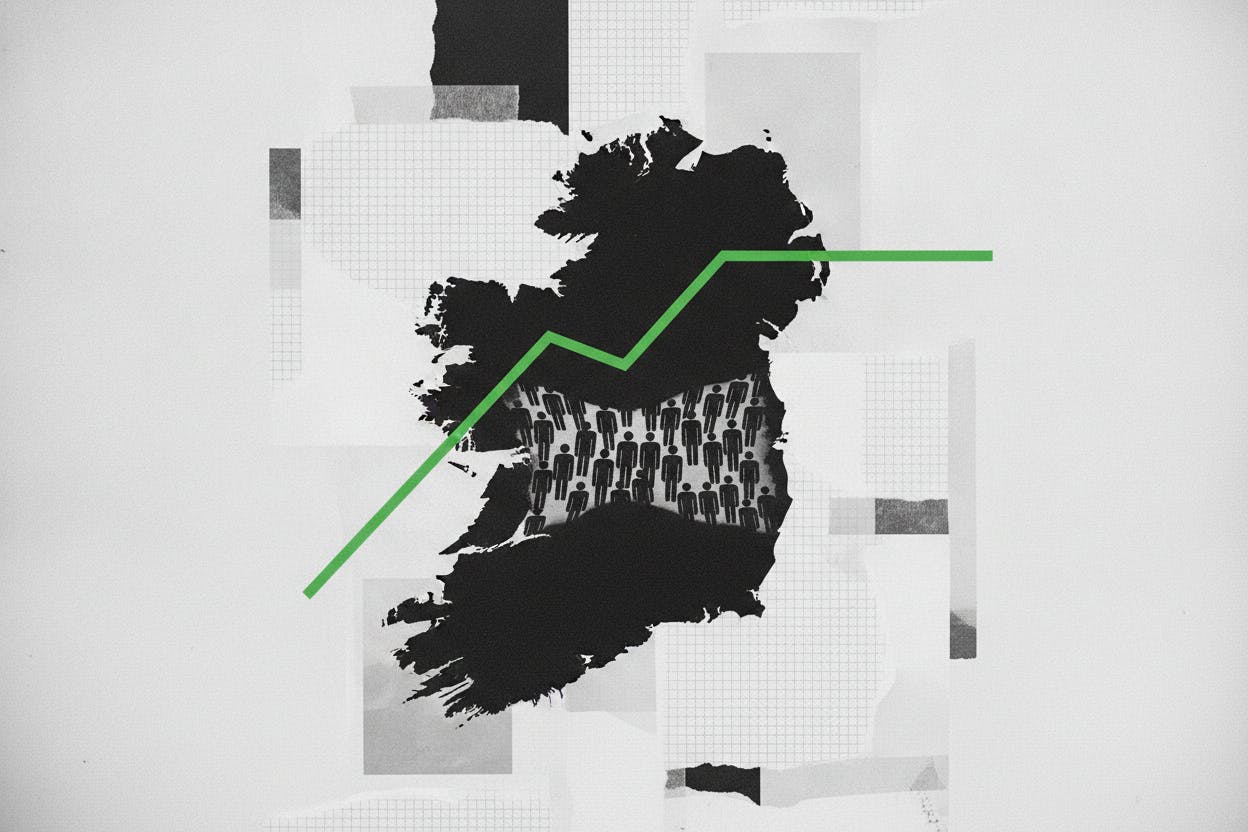
Ireland's services companies reported another month of solid growth in August, according to the latest AIB S&P Global purchasing managers' index (PMI). The headline index edged up to 55.4 from 55.1 in July, signalling a slightly faster pace of expansion. But beneath the headline, one number stood out: employment barely moved.
Purchasing managers' indexes are widely watched surveys that ask businesses whether activity, orders, and hiring are rising or falling compared with the previous month. A reading above 50 means the sector is expanding; below 50 means it is contracting. So a 55.4 reading points to comfortably positive conditions, though not a boom.
What's driving the growth?
The August report showed stronger growth in new business, with both domestic and export orders picking up. Firms also reported firmer sentiment, with confidence improving to its best level in about a year and a half. That suggests business leaders are feeling more optimistic about the months ahead, even as the global economy faces headwinds from higher interest rates and geopolitical uncertainty.
The services sector is a huge part of Ireland's economy, covering everything from finance and technology to hospitality and professional services. So a sustained expansion here is a good sign for overall economic momentum. The pickup in new orders, in particular, suggests demand remains resilient among both local customers and overseas buyers.
The hiring puzzle
The one soft spot in the report was employment. After several months of adding staff, services firms essentially kept headcount flat in August. That is unusual during a period of growth, and it suggests companies are choosing to meet extra demand by stretching their existing teams rather than taking on new workers.
There are a few possible reasons. Labour shortages have been a persistent issue in Ireland, especially in skilled roles. Firms may also be cautious about committing to permanent hires while the economic outlook remains uncertain. And with wage costs rising, some businesses may be reluctant to expand payrolls until they are more confident that the growth will last.
This pattern is not unique to Ireland. Recent data from the United States also showed a sharp slowdown in private hiring, as ADP figures revealed a marked cooling in August. That suggests a broader trend of employers becoming more cautious about adding staff, even as activity holds up.
What it means for investors
For investors, the key takeaway is that Ireland's services sector is still growing, which supports the broader economy and corporate earnings. The improvement in new orders and confidence is a positive signal for companies with exposure to Irish services, from banks to tech firms.
But the flat employment reading is worth watching. If hiring remains stalled while demand keeps rising, firms may eventually hit capacity constraints, which could cap growth or push up costs. It could also signal that businesses are not yet convinced the recovery is durable enough to justify expanding their workforces.
The PMI data also feeds into the wider picture for the European economy, where services have been a relative bright spot compared with manufacturing. Ireland's services sector is closely tied to multinational activity, so its performance is often seen as a bellwether for foreign investment and export demand.
Investors should keep an eye on whether the hiring picture improves in the coming months. A sustained pickup in employment would suggest companies are confident enough to invest in growth. If hiring remains flat, it could be a sign that the expansion is running on borrowed time.
For now, the August PMI offers a reassuring snapshot: growth is intact, confidence is rising, and the services engine is still humming. The question is whether that engine can keep running without adding more fuel.