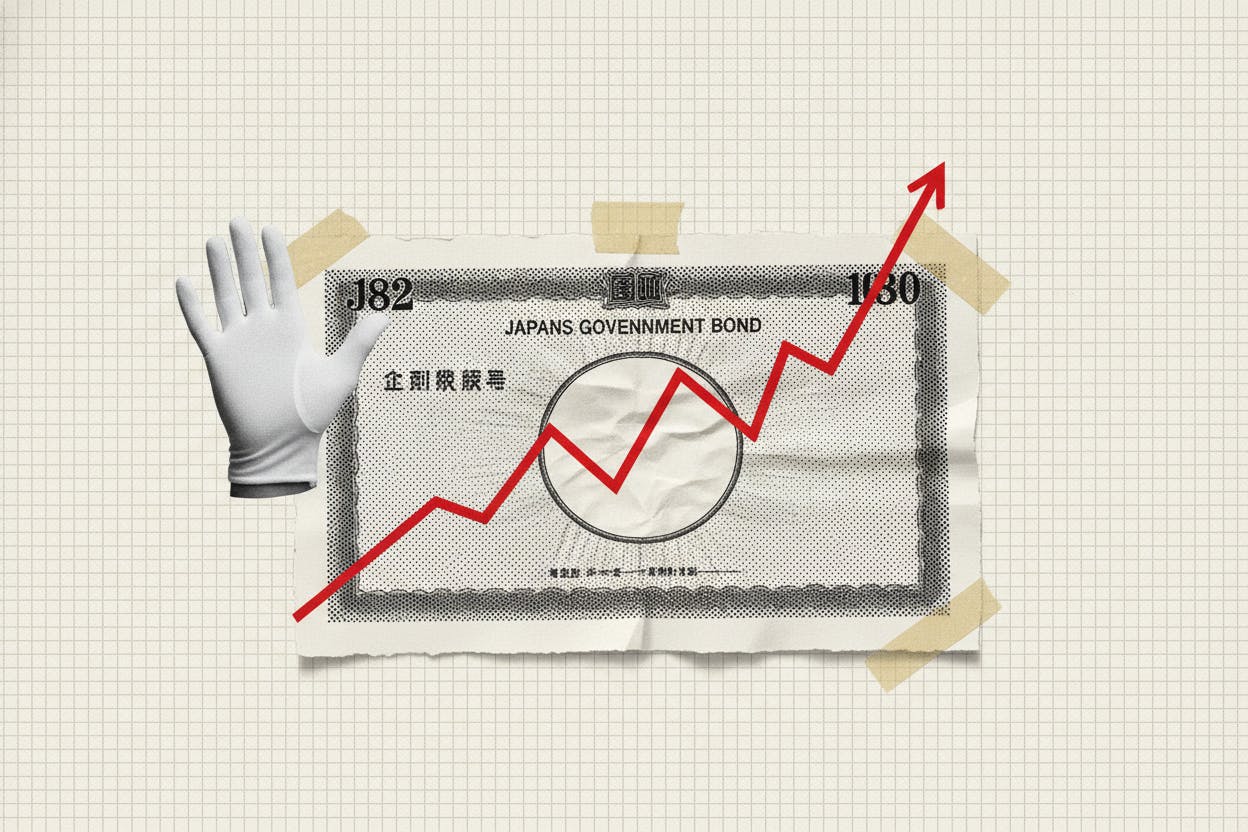
Japan's 10-year government bond yield crossed the 3% mark this week for the first time in nearly three decades, a milestone that signals a profound shift in how investors view the world's third-largest economy. The last time yields were this high, Japan was still grappling with the aftermath of its asset bubble, and the internet was in its infancy.
The move is not a sudden panic, according to strategists who spoke to Reuters. Instead, they describe it as a "buyers' strike" — a situation where investors are simply unwilling to buy long-term Japanese debt at current prices, demanding higher yields as compensation for the risks they see ahead.
Why yields are climbing
Bond yields move inversely to prices. When investors sell or refuse to buy, prices fall and yields rise. The current pressure on Japan's 10-year yield comes from a combination of factors that have been building for months.
First, inflation fears have resurfaced. Higher oil prices and fresh geopolitical tensions — particularly in the Middle East — have revived worries that inflation could stay stickier than central banks hoped. As oil above $90 pushes global bond yields to fresh highs, Japan is not immune to the global repricing of risk.
Second, the supply of government debt is growing. Japan has one of the largest public debt burdens in the world, and the government continues to issue new bonds to fund spending. Heavier issuance means more supply, which typically pushes prices down and yields up unless demand keeps pace.
Third, expectations about the Bank of Japan's (BOJ) policy are shifting. For years, the BOJ has kept interest rates ultra-low and capped bond yields through aggressive buying. But with inflation now above its 2% target and wage growth picking up, markets are betting the central bank will eventually normalize policy. Any hint of a rate hike makes long-term bonds less attractive, as Japan's capex uptick boosts the case for a BOJ rate hike this month.
What a 'buyers' strike' means
The term "buyers' strike" is telling. It suggests that the move is not driven by forced selling or a rush for the exits, but rather by a collective decision among investors to hold back. They are waiting for yields to go even higher before they commit their money.
This dynamic is common in bond markets when uncertainty is high. Investors worry that inflation will erode the real return of fixed-income investments, so they demand a higher "term premium" — the extra yield required to hold a long-term bond instead of rolling over short-term debt.
Globally, the same forces are at play. Oil's surge to $91 lifts long-term Treasury yields on inflation fears, and Europe's gas prices hit 3-1/2-year highs as bond yields near 15-year peaks. Japan's move is part of a broader trend of rising long-term yields across developed markets.
What it means for investors
For everyday investors, a 3% yield on Japan's 10-year bond is a double-edged sword. On one hand, it means that Japanese government bonds — long considered a safe but low-return asset — now offer a more meaningful income stream. For retirees or conservative investors, that could be attractive.
On the other hand, rising yields can hurt other assets. Higher yields on government bonds often pull money away from stocks, as investors can earn a decent return without taking on equity risk. In Japan, the stock market has been on a strong run, but Japan's Nikkei and Topix diverge as investors rotate from AI to autos, showing that the market is not monolithic.
Rising yields also increase borrowing costs for companies and the government, which can slow economic growth. For Japanese companies that have enjoyed cheap capital for years, a higher cost of debt could squeeze profit margins.
For global investors, the move is a reminder that the era of ultra-low interest rates is ending. Central banks, including the BOJ, are gradually stepping back from the extraordinary measures they adopted after the 2008 financial crisis and the pandemic. As they do, bond yields are normalizing — and that process can be bumpy.
Looking ahead
The key question is whether the 3% level will hold or if yields will push even higher. Much depends on the BOJ's next moves. If the central bank signals a more hawkish stance, yields could climb further. If it pushes back against market expectations, we might see a pullback.
Investors will also watch inflation data and oil prices. Oil above $90 and rising yields hit Southeast Asian stocks, a sign that the ripple effects are already being felt across the region.
For now, the "buyers' strike" suggests that investors want more compensation for the risks they see. Whether they get it will depend on how the BOJ and global markets respond in the coming weeks.



