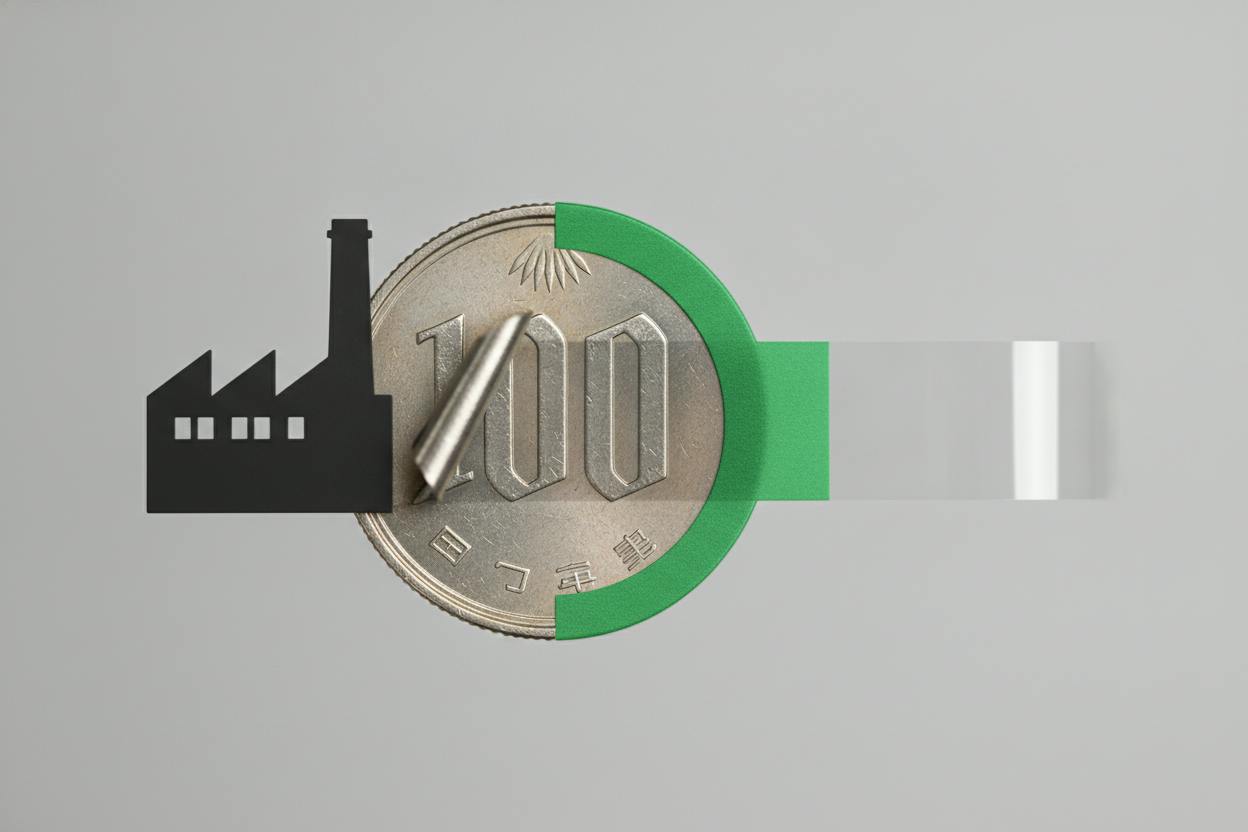
Japan is preparing a roughly 100 billion yen (about $670 million) subsidy package to accelerate the mass production of perovskite solar cells, a next-generation solar technology that promises to be lighter and more flexible than traditional silicon panels. According to Nikkei Asia, the Ministry of Economy, Trade and Industry (METI) plans to support two companies—Ricoh and Choshu Industry—through fiscal year 2029, with the aim of starting commercial production in 2027.
What are perovskite solar cells?
Perovskite solar cells are a newer type of photovoltaic technology that uses a class of materials with a specific crystal structure. Unlike the bulky, rigid silicon panels that dominate rooftops and solar farms today, perovskite cells can be made extremely thin, lightweight, and even flexible. That opens up possibilities like integrating solar power into building windows, vehicle surfaces, or portable electronics.
However, the technology has a major hurdle: manufacturing it reliably at scale. While small perovskite cells work well in the lab, producing large sheets without defects—and ensuring they last for decades—has proven difficult. That's why government support is seen as crucial to bridging the gap between pilot projects and commercial factories.
How the subsidy is structured
METI's support would be structured as matching money. Ricoh and Choshu Industry are expected to invest at least as much as the government, with the combined funds going toward building mass-production facilities. This "match" model is common in industrial policy: it lowers the effective cost of a project for private companies while ensuring they have skin in the game.
The two firms are pursuing different technical routes. Ricoh is working on flexible, film-type cells made with inkjet printing—a process that could allow for low-cost, roll-to-roll manufacturing. Choshu Industry, meanwhile, is developing "tandem" cells that stack a perovskite layer on top of a conventional silicon cell, which can boost overall efficiency by capturing more of the solar spectrum.
Japan's target is to begin mass production in 2027. Panasonic is reportedly planning its own glass-based perovskite cells for 2029, suggesting a staggered timeline across the industry.
Why this matters for investors
For investors, the most market-moving detail is the matching structure. When public funding is tied to private spending and earmarked for factories, it can lower the effective up-front bill and, just as importantly, reduce early downside if ramp-up takes longer than planned. That "de-risking" can make first-of-a-kind plants easier to approve, which raises the odds that pilot technology becomes real volume on something like the 2027 timetable.
It also helps explain why investors quickly treated the story as near-term commercial optionality for the closest names—Ricoh and Choshu Industry first, with Panasonic's later 2029 pathway watched as a follow-on signal. For a company like Ricoh, which is better known for office equipment, a successful perovskite business could become a meaningful new revenue stream. For Choshu Industry, a smaller player, the subsidy could be transformative.
But investors should keep expectations in check. Perovskite technology is still unproven at scale, and even with government backing, there's no guarantee that production costs will fall enough to compete with established silicon panels. The global solar market is also highly competitive, with Chinese manufacturers dominating supply chains. Japan's push is partly about energy security and technological leadership, not just commercial returns.
Broader context
This move fits into a wider pattern of governments using subsidies to support strategic industries. Japan has been particularly active in recent years, from chip manufacturing to wage growth policies. The country is also grappling with energy security concerns, as it imports most of its fossil fuels. Boosting domestic solar manufacturing could reduce that dependence.
The announcement comes as Japan's stock market has been volatile, with the Nikkei index sliding recently on concerns about higher interest rates and AI spending. A successful perovskite industry could provide a new growth area for Japanese tech firms, but it's a long-term bet.
For everyday investors, the key takeaway is that government subsidies can create opportunities, but they also carry risks. The companies involved may see short-term share price bumps on news like this, but the real test will be whether they can deliver on their production targets. As with any emerging technology, it's wise to watch how the industry develops before making any decisions.
What to watch next
Investors will be watching for several milestones: whether METI formally approves the subsidies, how quickly Ricoh and Choshu Industry can build their factories, and whether they hit the 2027 production target. Also worth tracking is Panasonic's progress on its glass-based cells, which could signal whether the technology is ready for mainstream use.
In the meantime, the broader solar sector remains a dynamic space, with earnings reports from major Japanese electronics firms offering clues about how traditional players are adapting to new energy technologies. And for those interested in the energy transition, major oil companies are also investing heavily in future energy systems, showing that the race for clean energy is global.
Japan's perovskite push is a clear signal that the country wants to be a leader in next-generation solar. Whether it pays off for investors will depend on execution—and on whether the technology can live up to its promise.