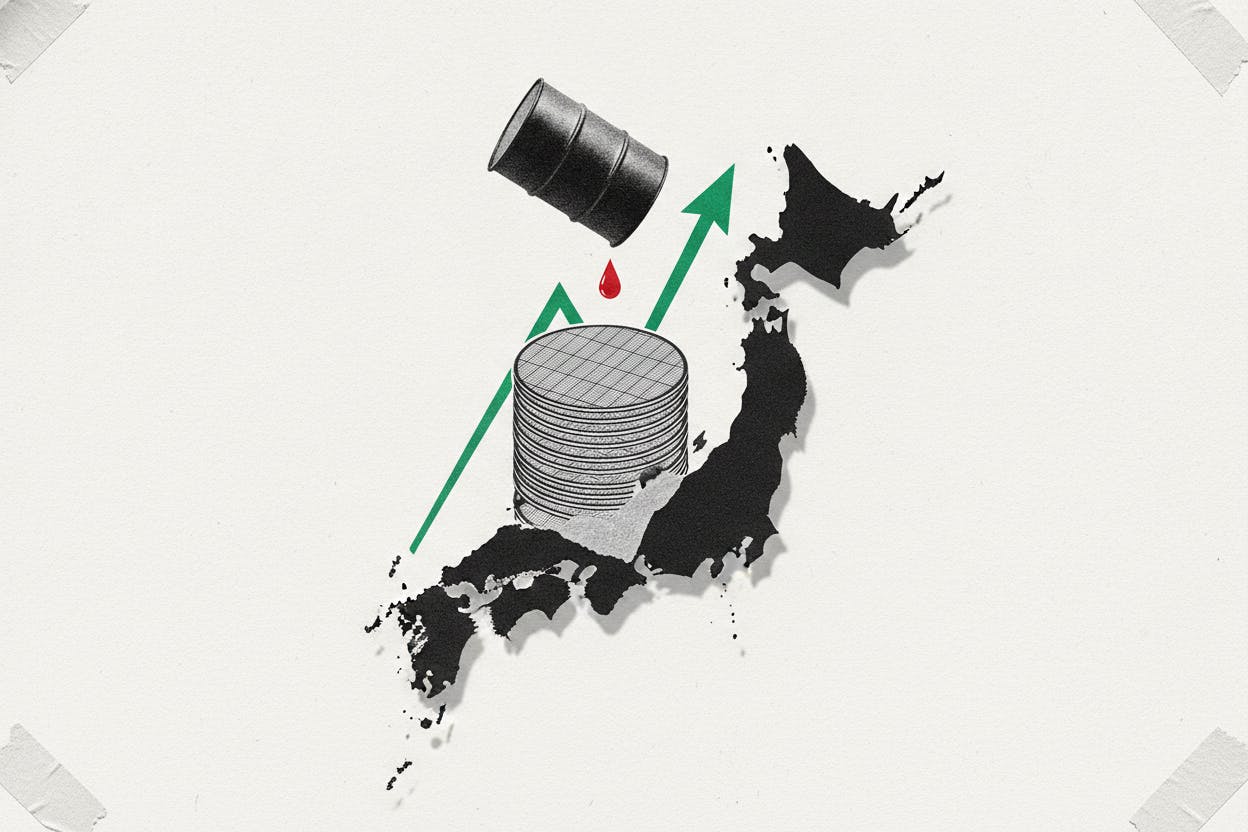
Japan's Cabinet Office struck a slightly more optimistic tone in its June monthly economic report, saying exports and consumer spending are starting to improve even as it warned that escalating tensions in the Middle East could push up prices and darken the outlook.
The government kept its headline assessment that the economy is "recovering moderately," but it upgraded several key components. It softened its language on households, noting that private consumption now shows signs of picking up, based on more recent data than was available in May. Exports also got a clearer lift: the government said shipments are starting to improve, crediting global spending on artificial intelligence infrastructure for boosting demand for chip-related exports.
AI Demand Lifts Japan's Export Engine
Japan's export sector has been a bright spot in an otherwise mixed economic picture. The government's upgrade reflects a surge in demand for semiconductors and chip-making equipment used in AI data centers, a trend that has benefited Japanese manufacturers like Tokyo Electron and Advantest. This aligns with broader global investment in AI, though some analysts have warned that the spending spree could lead to an investment bust if demand fails to materialize as expected. For context, the Bank for International Settlements recently flagged that hyperscalers' $1 trillion AI spending spree risks an investment bust, a cautionary note for investors watching Japan's tech-heavy export sector.
The yen's persistent weakness has also played a role. A weaker yen makes Japanese exports cheaper abroad, boosting the value of overseas earnings when repatriated. However, it also raises the cost of imported energy and raw materials, squeezing households and small businesses. The yen recently hit a 40-year low against the dollar, stoking inflation fears and complicating the Bank of Japan's path toward normalizing interest rates.
Consumer Spending Shows Signs of Life
Private consumption, which accounts for more than half of Japan's economy, has been a weak spot for months as rising prices outpaced wage growth. The government's upgrade suggests that recent data, possibly including retail sales and service sector activity, points to a modest recovery. This could be tied to the end of pandemic-era restrictions and a rebound in tourism, but the outlook remains fragile.
Japanese retail investors have been sitting on a record 16 trillion yen in cash as the Nikkei wobbles, indicating caution among households. If consumer spending continues to improve, it could encourage more of that cash to flow into the economy and markets, but the risk of renewed inflation from Middle East disruptions could quickly reverse the trend.
Middle East Risks Cloud the Outlook
The government's warning about Middle East tensions is not new, but it has become more urgent as conflicts in the region threaten to disrupt oil supplies and push up global energy prices. Japan imports nearly all of its oil from the Middle East, making it highly vulnerable to price spikes. Higher energy costs would feed into inflation, eroding household purchasing power and complicating the Bank of Japan's efforts to manage monetary policy.
Recent market moves reflect this sensitivity. For instance, gold retreated and the dollar strengthened as Middle East tensions eased, while UK stocks dipped on renewed geopolitical fears. Japan's bond yields have also risen as the yen plunged, stoking inflation fears. Investors are watching for any escalation that could send oil prices sharply higher.
What It Means for Investors
For everyday investors, Japan's upgraded economic view is a cautiously positive signal, but it comes with clear caveats. The AI-driven export boom is a genuine tailwind for Japanese tech stocks and the broader market, but it is concentrated in a few sectors. The pickup in consumer spending could support domestic-focused companies, but it is still tentative.
The biggest risk remains the Middle East. Any disruption to oil supplies would hit Japan harder than many other developed economies, given its energy import dependence. That could push up inflation, force the Bank of Japan to reconsider its ultra-loose monetary policy, and weigh on the yen further. Investors should watch oil prices and BOJ policy signals closely.
Overall, Japan's economy is showing signs of life, but the path ahead is uncertain. The government's report is a reminder that global forces—from AI demand to geopolitical tensions—are shaping the outlook for Japanese assets.