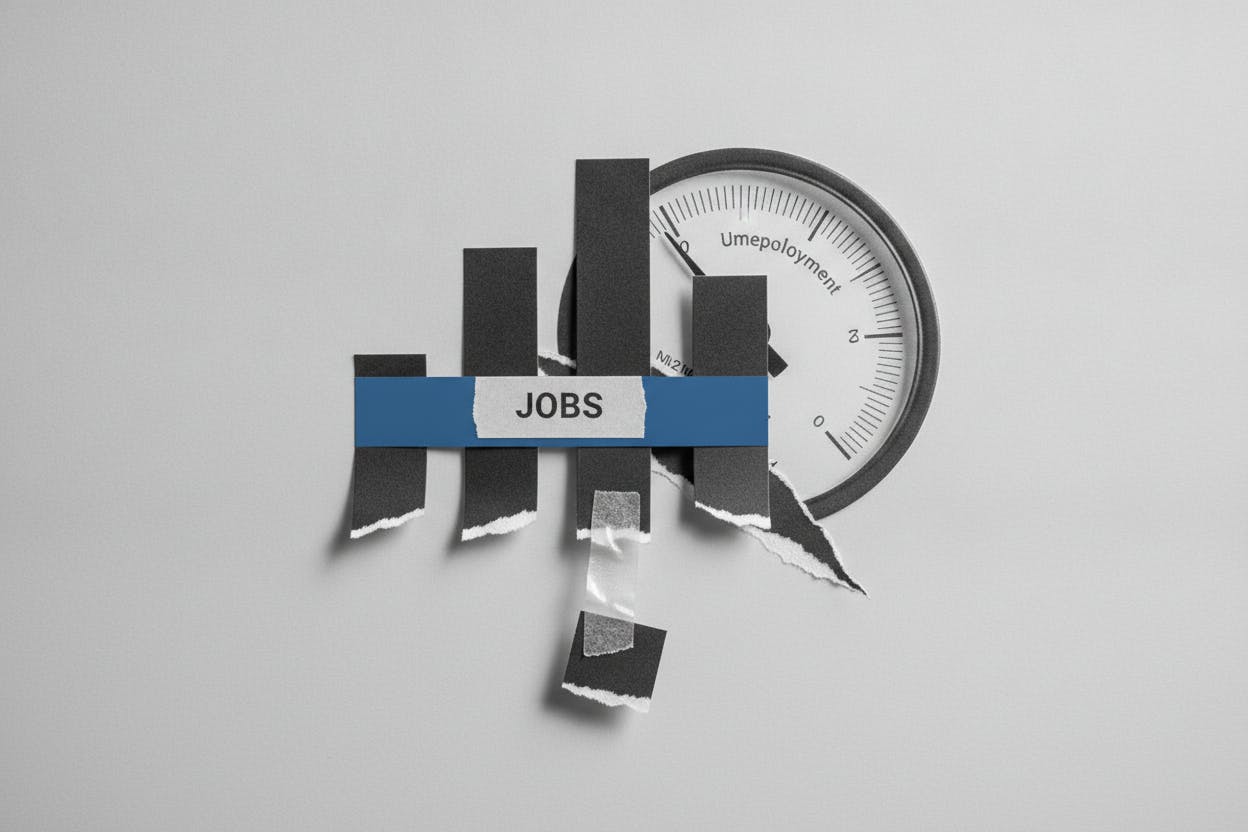
The June jobs report delivered a surprise for markets on Friday, with nonfarm payrolls rising by just 57,000 — well below the consensus estimate. Adding to the disappointment, job gains for the prior two months were revised downward, suggesting the labor market is cooling faster than many had anticipated.
Yet the report wasn't uniformly weak. The unemployment rate ticked down to 4.2%, and average hourly earnings rose 0.35% month over month, beating forecasts. That combination — fewer jobs but lower unemployment and faster wage growth — left investors parsing what the data means for the economy and for Federal Reserve policy.
What the Numbers Show
The headline payroll figure of 57,000 is a sharp deceleration from the pace of hiring seen earlier this year. Revisions to prior months subtracted a further chunk from the total, painting a picture of an employment engine that is losing steam. The labor force participation rate slipped to 61.5%, indicating that some workers are dropping out of the job market entirely, which can help explain why the unemployment rate fell even as hiring slowed.
Wage growth, however, remained sticky. A 0.35% monthly gain translates to an annualized pace that keeps pressure on employers' costs and could feed into broader inflation. For the Federal Reserve, which has been watching the labor market for signs of overheating, this mixed signal complicates the path forward.
Context: A Broader Slowdown
The June jobs data arrives against a backdrop of other softening indicators. Earlier this week, the ISM Manufacturing Index dipped to 53.3, showing that US factory growth slowed in June, though employment in that sector held steady. Meanwhile, European stocks edged lower earlier in the week as the AI rally paused, with traders bracing for exactly this kind of data.
The labor market has been a key pillar of the economic expansion, supporting consumer spending and corporate profits. A sustained slowdown in hiring could signal that the economy is losing momentum, especially as high interest rates continue to weigh on interest-sensitive sectors like housing and manufacturing.
What It Means for Investors
For everyday investors, the June jobs report is a reminder that the economic picture is rarely black and white. Slower job growth could be interpreted as a sign that the Fed's rate hikes are finally cooling the economy, which might reduce the need for further tightening. That would be a positive for bond prices and could support stock valuations, particularly in rate-sensitive sectors.
On the other hand, rising wages — if they persist — could keep inflation elevated, forcing the Fed to maintain higher rates for longer. That scenario tends to pressure growth stocks and companies with high debt loads. The drop in labor force participation is also worth watching, as a shrinking pool of available workers can constrain economic output over time.
Investors should also consider the sector-level implications. Industries that rely heavily on consumer spending, such as retail and hospitality, may face headwinds if hiring slows further. Meanwhile, companies with strong pricing power and efficient operations could be better positioned to navigate a cooling labor market.
Looking Ahead
The mixed jobs data sets the stage for the next Federal Reserve meeting, where policymakers will weigh whether to hold rates steady or signal a shift. Markets will also be watching upcoming inflation reports and corporate earnings season for further clues about the economy's direction. Bank stocks have been rallying on expectations of strong earnings, but a softer labor market could test those forecasts.
For now, the June report suggests that the economy is entering a more uncertain phase — one where growth is slowing but inflation pressures haven't fully abated. Investors should brace for continued volatility as the data evolves.