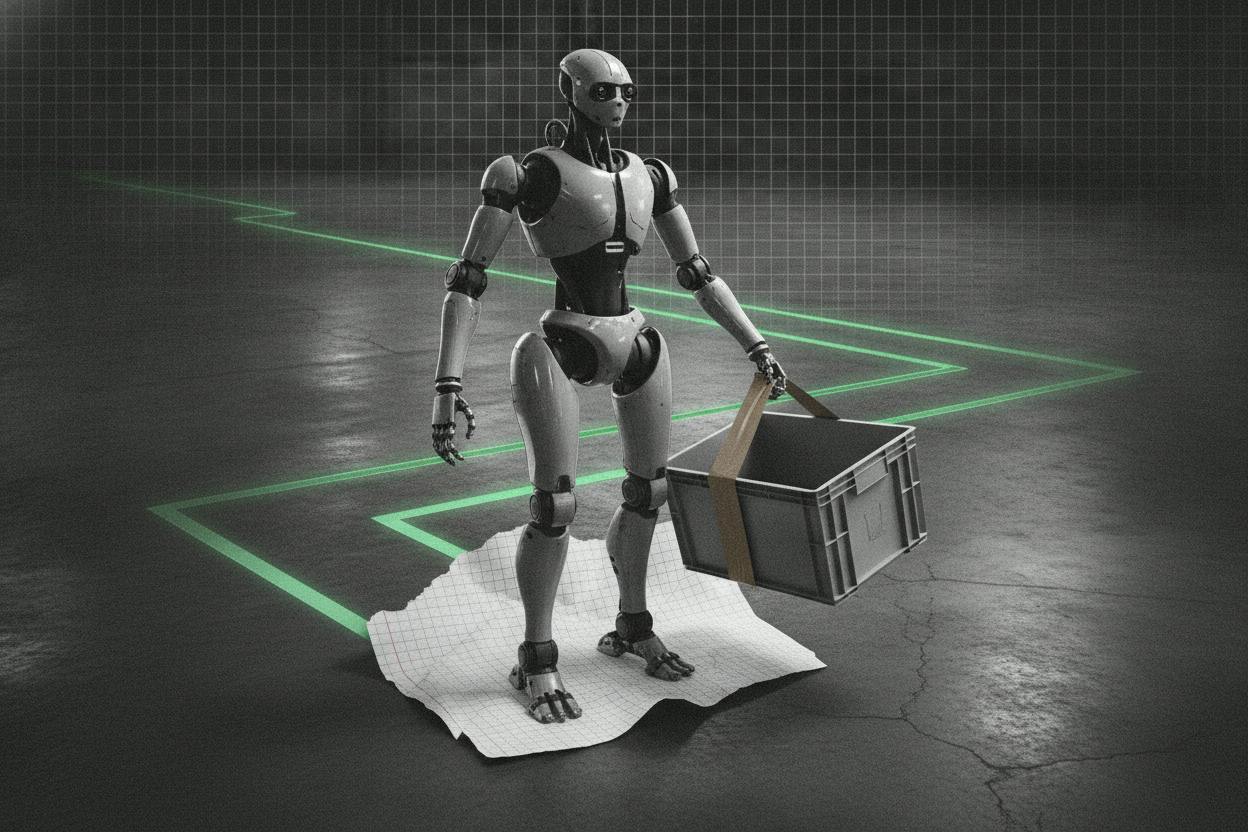
Kawasaki Heavy Industries, the Japanese industrial giant known for motorcycles and heavy machinery, says its AI-powered humanoid robot, Kaleido, could begin working in factories as early as fiscal 2030. According to a report from Nikkei Asia, the company is already pitching the machine to automotive and semiconductor companies, with initial roles focused on site patrols and moving parts around warehouses.
The announcement turns a long-running research project into a concrete timetable, giving potential customers a reason to start planning pilot programs. But for investors, it also signals that Kaleido is a long-dated bet rather than a near-term revenue driver.
What is Kaleido?
Kawasaki has been developing Kaleido since 2015. The robot is designed as a factory-floor helper, starting with relatively simple, repetitive tasks like patrolling facilities and transporting components. The company envisions it eventually taking on more complex work, but the initial focus is on jobs that are currently done by human workers in environments that are often messy and unpredictable.
The robot runs on what Kawasaki calls a “physical AI” platform, built with technology from Noetra, a Tokyo-based startup that Kawasaki has invested in. This platform is meant to help the robot handle real-world conditions—things like uneven floors, moving obstacles, and changing lighting—that are easy for humans but notoriously difficult for machines.
Kawasaki is not alone in chasing humanoid robots. Other companies, including energy firms testing humanoids at their sites and healthcare companies planning AI nursing robots, are exploring similar technology. The broader push reflects a growing belief that humanoid robots could eventually fill labor gaps in industries facing worker shortages.
Why the 2030 target matters
The fiscal 2030 timeline is significant because it gives the project a clear milestone. For potential customers—like automakers and chip manufacturers—it means they can start thinking about pilot projects and integration plans. For Kawasaki, it turns a vague research effort into a product roadmap that investors can track.
However, the market is likely to treat this as a long-term story, not a near-term earnings catalyst. When a product’s first deployment is penciled in for “around fiscal 2030,” the immediate financial impact is mostly research and development spending. The upside, if any, will come only if the robot clears successive capability gates and proves it can work reliably outside lab demos.
That puts the focus on intermediate signals. Investors will be watching for signed pilot agreements with auto or chip plants, evidence that Kaleido can perform consistently in real factory environments, and progress on the Noetra-linked AI platform. These are the kinds of proof points that can turn a concept into a commercial product.
What it means for investors
For Kawasaki shareholders, Kaleido is a small part of a much larger industrial conglomerate. The company’s core businesses—aerospace, energy systems, and precision machinery—are far bigger revenue drivers. So even if Kaleido succeeds, its financial contribution will likely be modest for years.
Still, the robotics push fits a broader trend in Japan and globally. Japanese companies have been investing heavily in automation and robotics to address an aging workforce and labor shortages. The Nikkei index has been sensitive to these industrial and economic shifts, and robotics is often seen as a key growth area.
For everyday investors, the takeaway is simple: Kaleido is a promising technology, but it is not a reason to buy or sell Kawasaki stock today. The real test will come over the next few years, as the company moves from promises to pilots. If Kaleido can prove itself on real factory floors, it could become a meaningful part of Kawasaki’s future. If not, it will remain an interesting experiment.
As with any long-dated technology bet, the key is to watch the milestones, not the hype. For now, the 2030 target gives investors a date to mark on their calendars—and a reason to keep an eye on Kawasaki’s progress.