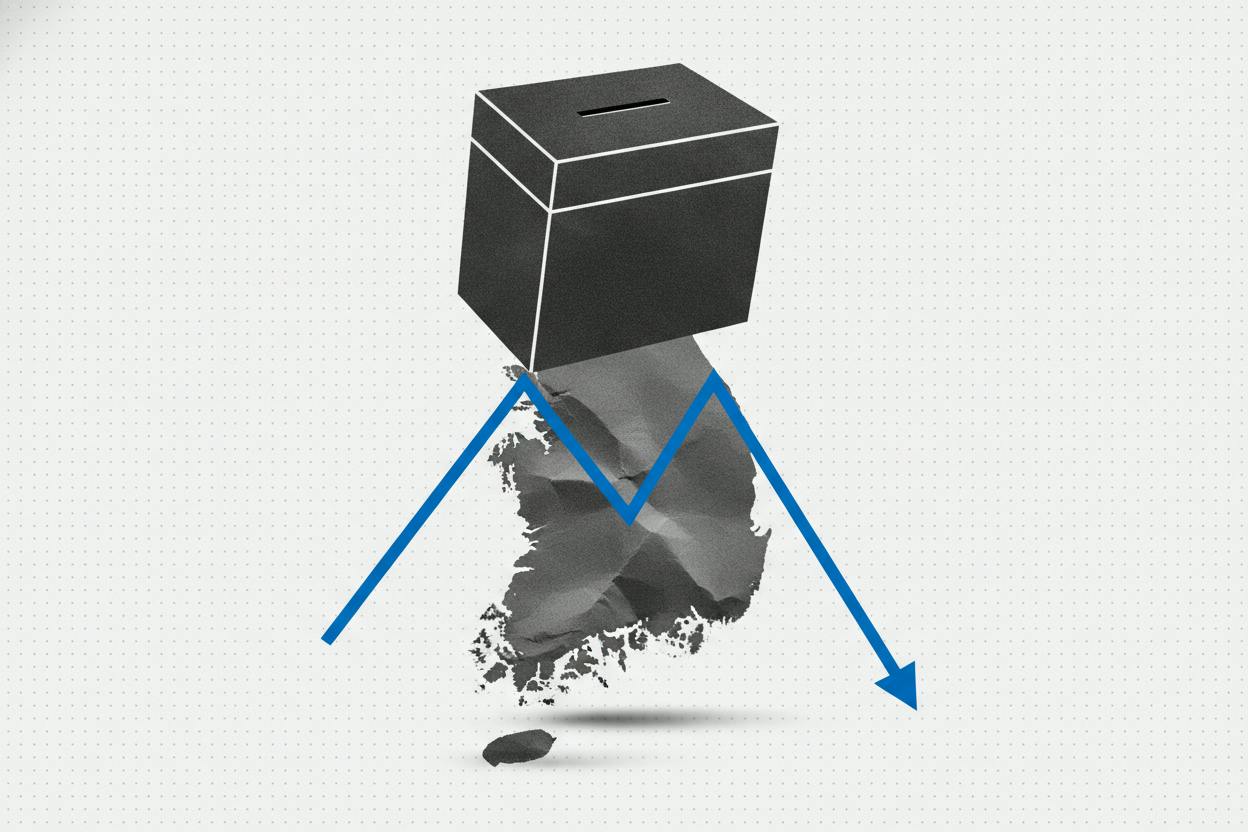
South Korean stocks staged a dramatic reversal on Wednesday, with the benchmark KOSPI index swinging from a gain of more than 2% in early trading to a 1.38% decline by the close. The about-face came as investors around the world kept a close eye on the US midterm elections, a political event that often sends ripples through global markets.
The day's early optimism, fueled partly by strength in US semiconductor stocks, quickly faded. Foreign investors sold roughly 1 trillion won (about $700 million) of Korean shares, and heavyweight chipmakers Samsung Electronics and SK Hynix—two of the largest companies on the KOSPI—turned lower, dragging the index down with them.
Why Korea reacts so sharply to US politics
Korea's stock market is often described as a real-time barometer of global investor sentiment. Because the country is heavily export-dependent and its index is dominated by tech and manufacturing giants, it tends to move quickly when international conditions shift. Political events in Washington, such as midterm elections, can therefore have an outsized impact on Seoul trading.
Midterms determine control of the US Congress, which in turn shapes the country's fiscal policy, regulatory agenda, and overall economic direction. For global investors, the results can signal whether the US government will be able to pass major legislation or face gridlock. That uncertainty often leads to caution, and Korea's market, with its high liquidity and sensitivity to global trade, is one of the first places that caution shows up.
On Wednesday, traders were watching the usual signposts: US stock futures, Treasury yields, and the value of the US dollar. As those indicators moved, so did sentiment in Seoul. Early strength in US chip names had lifted Korean semiconductor stocks, but as the day wore on and the election picture remained unclear, the rally lost steam.
What this means for everyday investors
For ordinary investors, the KOSPI's swing is a reminder that global events can move markets quickly, and that even a single day's trading can be volatile. The index's reversal from a 2% gain to a 1.38% loss shows how quickly sentiment can shift when investors are waiting on a major political outcome.
Foreign selling of about 1 trillion won is a significant amount, and it highlights how international money flows can influence Korean stock prices. When foreign investors pull back, it often puts pressure on the index, especially on large-cap names like Samsung and SK Hynix.
For those with exposure to Korean stocks—either directly or through exchange-traded funds (ETFs)—it's worth understanding that this market can be more volatile than some others. Political events in the US, China's economic data, and global trade tensions can all move the KOSPI, sometimes sharply.
It's also important to note that the midterm results themselves are not the only factor. Investors will be watching how the new Congress approaches issues like trade policy, corporate taxes, and tech regulation. Any surprises could lead to further swings in global markets, including Korea.
What to watch next
As the midterm results continue to come in, traders will likely keep a close eye on US stock futures and the dollar. A clear outcome could provide some stability, while a contested or delayed result might extend the uncertainty.
In Korea, the focus will also be on the tech sector. Samsung and SK Hynix are bellwethers for the global semiconductor industry, and their performance often reflects broader demand for chips. Any news about chip orders, pricing, or new product launches could influence the market in the coming days.
For a broader perspective on how midterms have historically affected US stocks, you can read about the post-midterm winning streak and whether it might continue this year. Meanwhile, the recent rally in chip stocks on the Nasdaq shows how interconnected global tech markets are.
Investors should also keep an eye on other markets that are sensitive to US politics, such as the pound's movements as traders await the Bank of England's rate decision, and US financial stocks, which often react to election outcomes.
Ultimately, Wednesday's reversal is a reminder that markets are driven by expectations and uncertainty. For long-term investors, short-term swings like this are often just noise. But for those who trade actively, understanding the global backdrop is crucial.
As always, it's wise to avoid making hasty decisions based on a single day's move. Instead, focus on your investment goals and time horizon. The KOSPI's volatility is a feature of the market, not a bug—and it's something that investors in Korean equities should be prepared for.