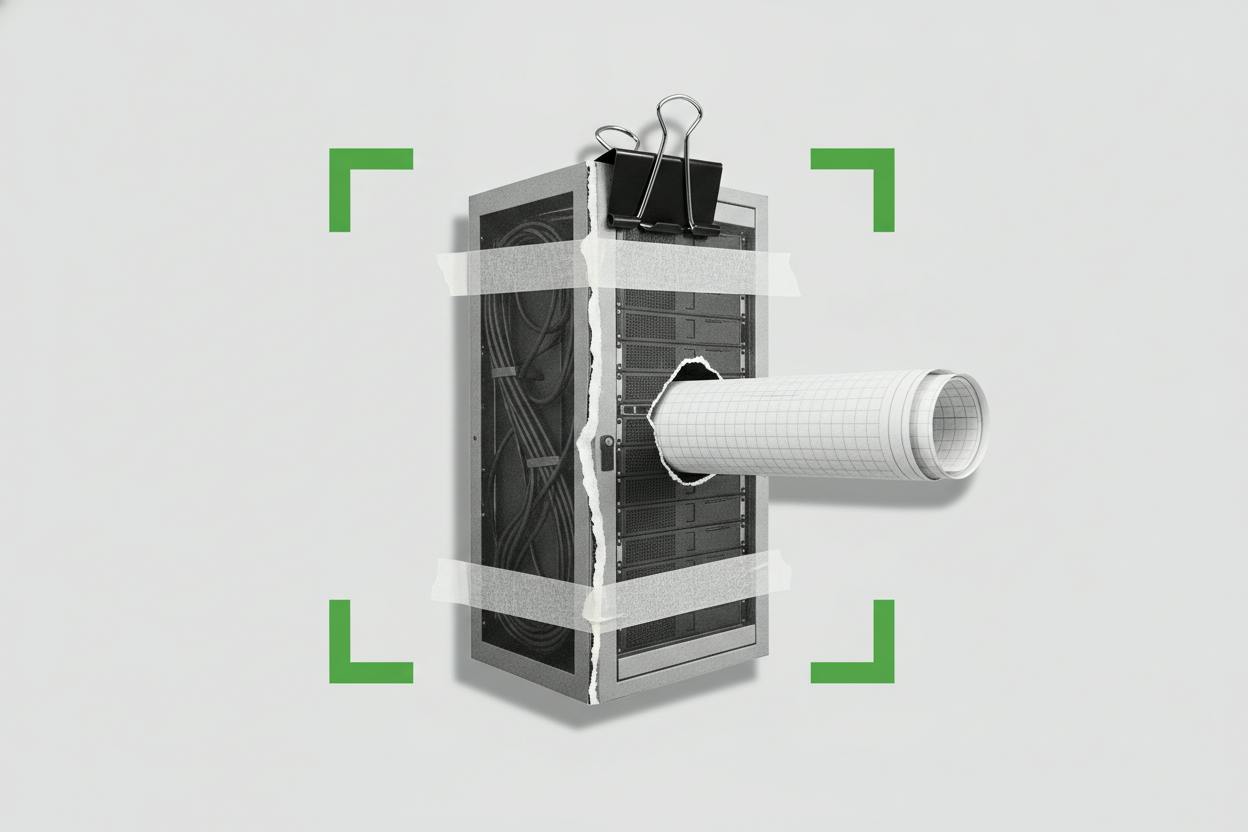
South Korea's GS E&C has signed a memorandum of understanding (MoU) with LS Electric, LG Uplus, and Honeywell to standardize how data centers are designed and built. The agreement, reported by the Korea Times on Monday, aims to cut redundant work and speed up delivery of these critical facilities.
Data centers are the physical backbone of the digital economy, housing the servers that power everything from cloud computing to artificial intelligence. But building them is notoriously complex, involving multiple disciplines—electrical, mechanical, networking, and structural—that often work in silos. That fragmentation leads to rework, delays, and cost overruns.
What the partnership involves
The MoU focuses on standardizing engineering early in the project lifecycle. By aligning design specifications and construction methods from the outset, the partners hope to eliminate the back-and-forth that typically occurs when different teams interpret requirements differently.
GS E&C is a major South Korean construction and engineering firm, while LS Electric specializes in power equipment and automation. LG Uplus is one of the country's largest telecom operators, bringing expertise in network infrastructure. Honeywell, a global conglomerate, contributes building automation and safety systems.
Together, they cover the key components of a data center: power distribution, cooling, networking, and building management. Standardizing these elements could make future projects more predictable and faster to complete.
Why data center construction is under pressure
The demand for data centers has surged in recent years, driven by the growth of cloud services, streaming, and especially artificial intelligence. AI workloads require massive computing power, which in turn requires vast amounts of electricity and cooling. This has led to a global building boom, but also to bottlenecks in construction capacity and supply chains.
In South Korea, the push is particularly acute. The country is a hub for technology and has seen rapid growth in data center investments. However, projects often face delays due to complex permitting, labor shortages, and the technical challenges of integrating new systems with existing infrastructure.
Standardization is seen as a way to address these issues. By using proven designs and components, builders can reduce the risk of errors and shorten the time from groundbreaking to operation. This is especially important for AI data centers, which need to come online quickly to meet surging demand.
Other players in the region are also racing to build AI-ready facilities. For instance, SK and AWS are competing to build an AI data center in Ulsan, but labor issues could affect the timeline. Similarly, Oracle has said its OpenAI data center expansion is fully funded after a $20 billion raise, highlighting the scale of investment flowing into this sector.
What it means for investors
For everyday investors, this agreement is a signal that data center construction is becoming more industrialized. That could have several implications.
First, it may reduce costs for companies building data centers, which could improve their profit margins. Lower construction costs might also translate into lower prices for cloud services, benefiting consumers and businesses that rely on them.
Second, faster delivery times mean that capacity can come online sooner, potentially easing the supply crunch that has driven up prices for data center space. This could affect real estate investment trusts (REITs) and other companies that own or operate data centers.
Third, the partnership highlights the growing importance of standardization in the tech infrastructure sector. Companies that can execute efficiently may gain a competitive edge, while those that lag could struggle to keep up with demand.
It's also worth noting that this is not an isolated trend. Across the globe, data center developers are looking for ways to streamline construction. For example, CtrlS is investing $1.08 billion in a data center in Bihar, targeting a 2029-2030 launch, showing the long-term nature of these projects.
However, investors should be cautious about reading too much into a single MoU. The agreement is a first step, and actual implementation will take time. The partners will need to develop common standards, test them, and convince other players in the industry to adopt them. There's also the question of whether standardization can keep pace with rapidly evolving technology, especially in AI, where hardware and software requirements change quickly.
Still, the move is a positive sign for the industry's ability to scale. As AI firms gain more influence on Wall Street, the pressure to build infrastructure quickly will only intensify. Partnerships like this one could be a blueprint for how to meet that demand.
For now, investors should watch how this collaboration develops and whether it leads to tangible projects. If successful, it could set a precedent for other markets, potentially reshaping the global data center construction landscape.