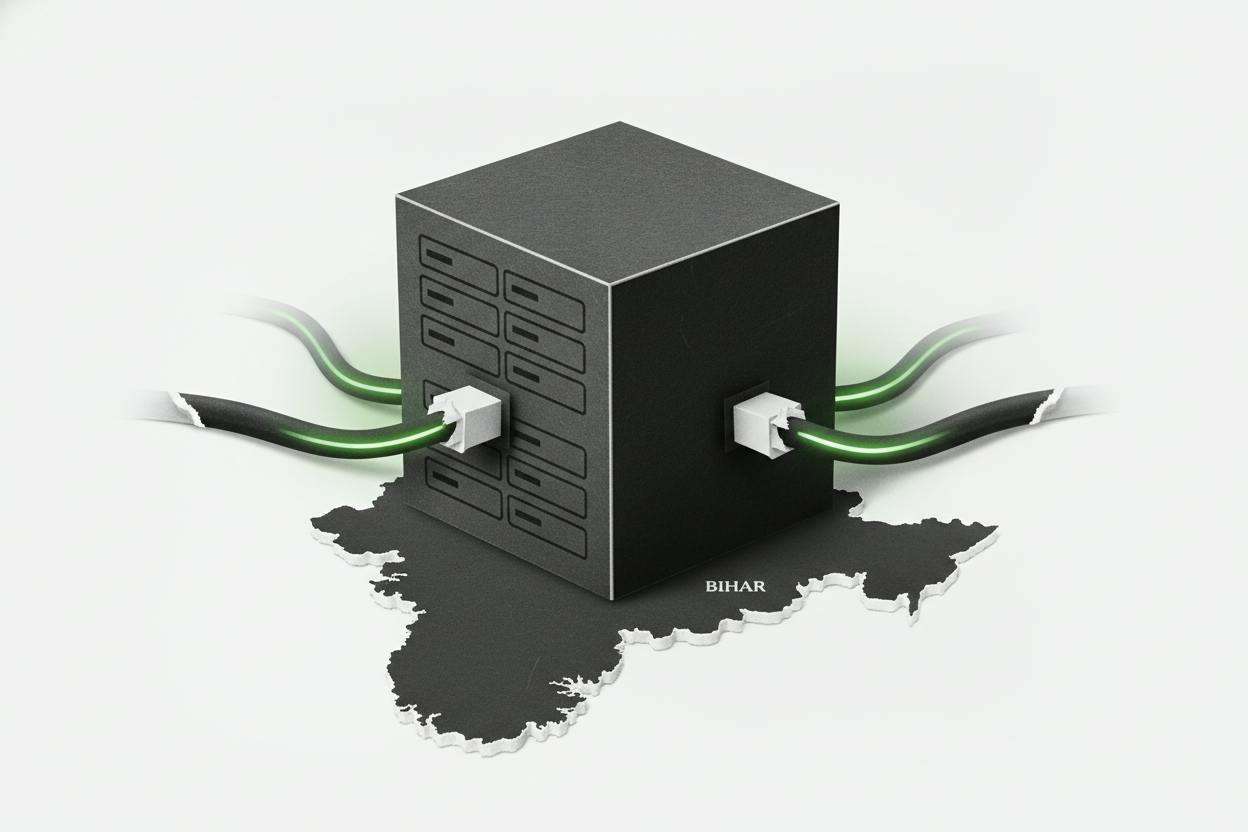
CtrlS Datacenters, one of India's largest data center operators, has signed an agreement with the Bihar state government to develop a massive 150-megawatt (MW) facility in Patna, the state capital. The investment is pegged at 100 billion rupees, roughly $1.08 billion, according to a Reuters report.
The new campus is slated to become commercially operational in 2029-2030, marking a significant expansion for CtrlS in eastern India. It follows the inauguration last month of a smaller 12MW data center in Patna, meaning the new facility would be more than twelve times larger than the company's current local footprint.
Why Bihar? Why now?
India's data center industry is growing rapidly, driven by surging demand from cloud computing providers and the explosion of artificial intelligence workloads. These applications require enormous amounts of computing power and storage, and companies like CtrlS are positioning themselves as the landlords of this digital infrastructure.
Bihar, historically not a major tech hub, is becoming an attractive location due to its central geography, relatively low land costs, and improving connectivity. CtrlS is also expanding elsewhere in the state: the company has previously flagged another 100 billion-rupee investment for a similar project in Bodh Gaya, a city known for its Buddhist pilgrimage sites.
This Patna project is part of a much larger ambition. CtrlS currently operates 19 data centers across India and is targeting a total capacity of 4.4 gigawatts by 2030. That goal requires a pipeline of large projects, each of which must hit milestones years before the revenue starts flowing.
The power bottleneck
For a data center of this scale, the real challenge isn't construction—it's electricity. A 150MW facility, once operational, draws power around the clock, 24/7. That makes long-term power supply and grid connections the critical bottlenecks.
Bihar's grid will need to reliably support a jump from CtrlS's existing 12MW footprint in Patna to a 150MW campus. That's a significant leap, and delays in power planning or transmission upgrades could ripple into the company's broader capacity targets. The Patna facility alone would represent roughly 3% of CtrlS's 4.4GW 2030 goal, so any slippage matters.
This isn't just a local issue. Across India and globally, data center developers are wrestling with power availability. As Federal Reserve officials have noted, the AI data center boom is adding to electricity demand and, in some cases, to inflationary pressures. For investors, the lesson is that the success of these projects hinges as much on energy infrastructure as on technology.
What it means for investors
For everyday investors, this news is a reminder that the AI and cloud boom isn't just about chipmakers and software giants. It's also about the physical infrastructure—data centers, power grids, and cooling systems—that makes digital services possible.
CtrlS is a private company, so you can't buy its stock directly. But the trend it represents is visible in publicly traded companies that build, equip, or power data centers. For example, Johnson Matthey has seen demand for its emissions filters rise thanks to data center growth, and bond markets are testing appetite for data center debt.
For those watching the sector, the key metrics are not just capacity announcements but execution. A 150MW project like this one has a long lead time—years of planning, construction, and grid integration before it generates a single rupee of revenue. That means investors should focus on a company's ability to deliver on its pipeline, not just its press releases.
Also worth noting: the 2029-2030 target is a long way off. In the fast-moving world of AI, demand could shift, technology could change, and competing projects could come online elsewhere. But for now, CtrlS is betting that Bihar will be a key part of India's digital future.
As some companies explore even more exotic solutions like orbital data centers, the more mundane challenge of grid connections remains the industry's biggest test. For Bihar, this project could bring jobs, investment, and a foothold in the digital economy. For CtrlS, it's a bet that the state can deliver the power when the time comes.