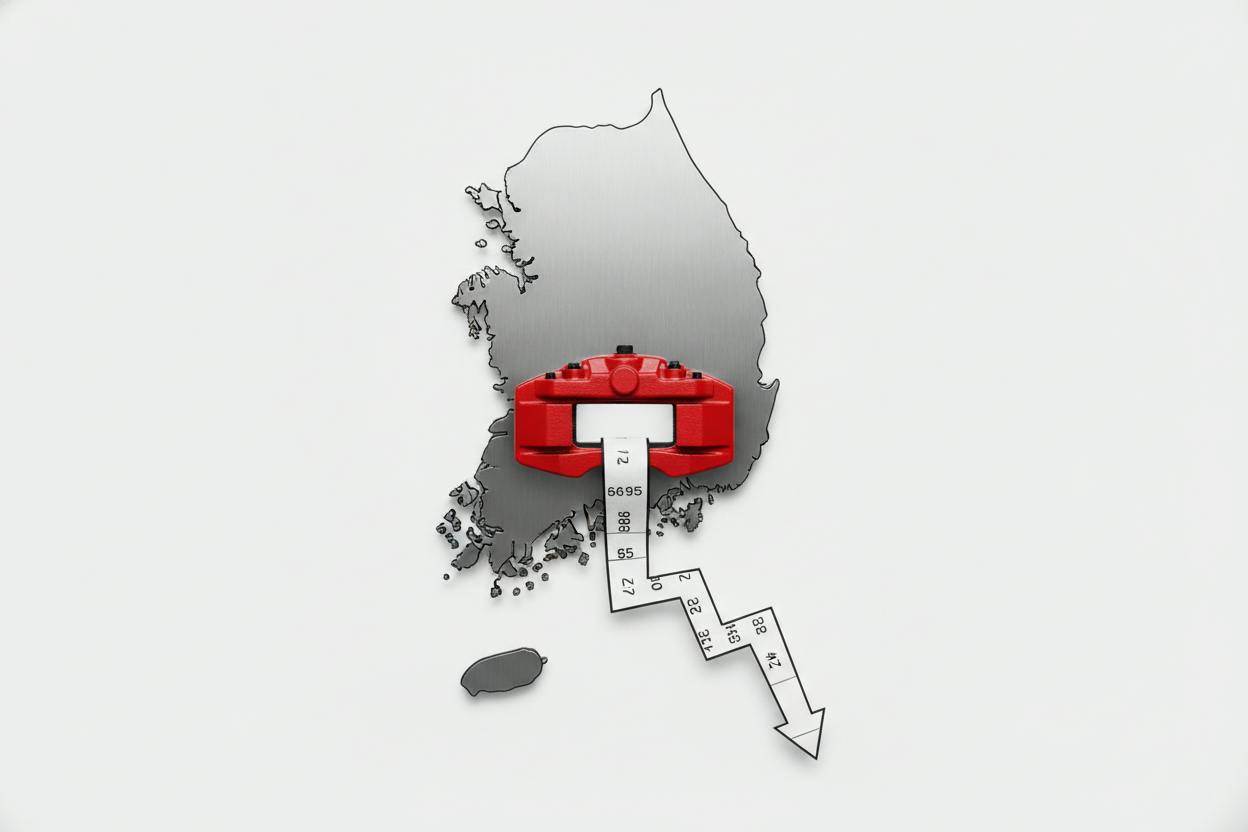
South Korea's stock market hit a speed bump on Tuesday, with the benchmark KOSPI index tumbling more than 5% and triggering a rare 'sidecar' halt on automated sell orders. The exchange paused program trading for five minutes after foreign investors unloaded 355.6 billion won (roughly $260 million) of shares, according to Reuters.
The sidecar mechanism is a circuit breaker designed to give the market a brief cooling-off period when selling becomes too frantic. It temporarily suspends program trades—computer-driven orders that can amplify market swings—but leaves regular manual trading untouched. Think of it as a speed bump on a highway: it doesn't stop traffic, but it forces everyone to slow down for a moment.
Why the KOSPI is sliding
The sharp drop comes amid a broader selloff in Asian tech stocks, fueled by hotter-than-expected US inflation data. That report raised concerns that the Federal Reserve might keep interest rates higher for longer, which tends to hurt growth-oriented sectors like technology. South Korea's market is heavily weighted toward chipmakers and tech giants, making it especially sensitive to shifts in global tech sentiment.
As we noted in our earlier coverage of hot US inflation hitting Asian tech stocks, the KOSPI had already been under pressure. The index had fallen for six straight sessions as chip stocks reversed course and investors braced for the inflation print. Tuesday's slide extends that losing streak, with the 5% drop marking one of the worst single-day declines in recent months.
Foreign investors, who play a large role in South Korea's market, have been net sellers in recent sessions. Their 355.6 billion won sell-off on Tuesday was a key driver of the plunge, according to Reuters. When foreign money exits, it can create a feedback loop: falling prices trigger more selling, which pushes prices down further.
What a sidecar halt means for investors
For everyday investors, the sidecar halt is a signal that market stress is elevated, but it's not necessarily a reason to panic. The mechanism is designed to prevent disorderly trading and give participants a chance to reassess. It's a routine safeguard, not a sign that the market is broken.
Still, the halt underscores how quickly sentiment can shift. The KOSPI's drop is part of a wider trend: chip selloffs in South Korea and Taiwan have dragged the MSCI emerging markets index to a two-month low. That means the pain isn't isolated—it's rippling across global markets.
For investors holding Korean stocks or funds, the key takeaway is to focus on the long term. Market pullbacks of 5% or more are not uncommon, even in healthy bull markets. The question is whether the underlying fundamentals—like corporate earnings and economic growth—remain intact. So far, there's no evidence of a systemic problem, just a sharp repricing of risk.
What to watch next
Investors will be watching several things in the coming days. First, whether the KOSPI can stabilize or if the selling continues. Second, how the Bank of Korea responds. The central bank has been holding rates steady as inflation stays above target, as we noted in our piece on the Bank of Korea's rate decision. If market turmoil persists, the BOK might signal a more cautious stance, though its primary focus remains price stability.
Also on the radar: the next US inflation report and any comments from Fed officials. If inflation cools, it could ease pressure on tech stocks and help the KOSPI recover. If it stays hot, expect more volatility.
For now, the sidecar halt is a reminder that markets can move fast—and that automated trading can amplify moves. But for long-term investors, a single day's drop, even a 5% one, is rarely a reason to change course. As always, diversification and a steady hand are your best defenses against market turbulence.