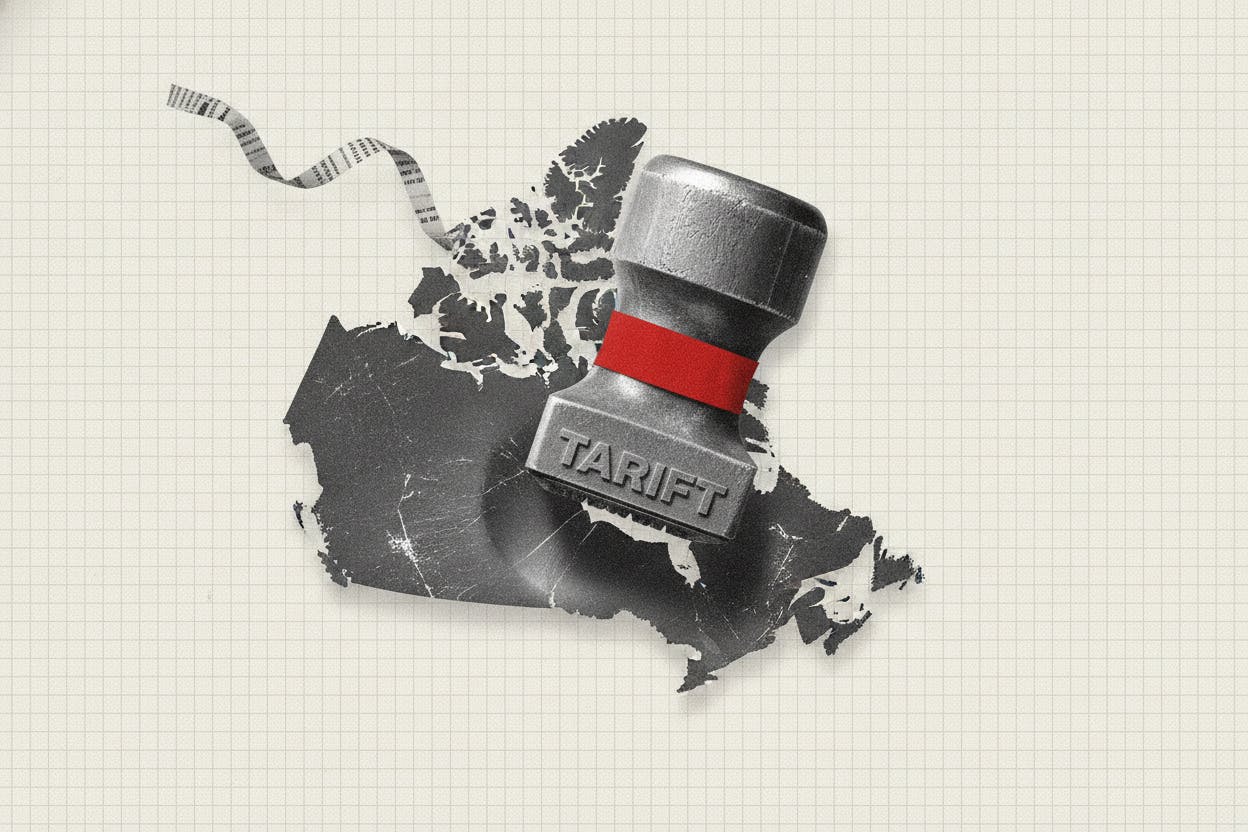
Canada's economic recovery is still expected to continue, but a new analysis from KPMG warns that US tariffs—and any Canadian retaliation—could take a meaningful bite out of growth next year. The professional services firm estimates that a permanent US tariff rate of 7% could shave 0.3 to 0.5 percentage points off Canada's gross domestic product (GDP) growth in 2025.
That may sound modest, but for an economy growing at roughly 1-2% annually, a half-point hit is significant. It could mean the difference between a solid expansion and a near-stall. KPMG also notes that if Canada responds with its own tariffs, the resulting trade friction would add to inflation pressures, complicating the Bank of Canada's efforts to manage price stability.
What's behind the tariff threat?
The US has been increasingly using tariffs as a tool in trade negotiations, and Canada—its largest trading partner—is directly in the crosshairs. While the exact tariff rates and scope remain uncertain, KPMG's scenario assumes a permanent 7% levy on Canadian goods entering the US. That's higher than the typical tariffs seen in recent years, but lower than some of the more aggressive proposals floated during US election campaigns.
For context, Canada sends about 75% of its exports to the US, so even a modest tariff can ripple through the economy. Sectors like autos, lumber, and agriculture are particularly exposed. A 7% tariff would raise costs for US importers, who would likely pass some of that on to consumers or reduce their purchases of Canadian goods.
Retaliation would only worsen the situation. If Canada imposes counter-tariffs on US products, the cost of those goods would rise for Canadian consumers and businesses, feeding directly into inflation. That's a double-edged sword: slower growth on one side, higher prices on the other.
What it means for the Bank of Canada
KPMG's warning comes at a delicate time for the Bank of Canada. The central bank has been holding its key interest rate steady, with some analysts expecting no cuts until 2027. UBS sees the Bank of Canada holding rates through 2026, with easing only in 2027. If tariffs slow growth, the bank might feel pressure to cut rates sooner to support the economy. But if retaliation pushes inflation up, cutting rates would be risky.
That's the classic central bank dilemma: fight inflation or support growth. Tariffs make both harder. The loonie has held steady despite new US tariffs, but UBS sees dip risk ahead. A weaker currency would make imports more expensive, adding to inflation, but it would also make Canadian exports cheaper, partially offsetting the tariff impact.
How does this fit into Canada's recovery?
Canada's economy has shown resilience recently. Canada's GDP grew 3.3% in Q2, driven by a rebound in exports and consumer spending. That strong quarter helped the TSX, though it still fell 120 points on the day the data was released, reflecting broader market jitters. The economy also posted its first current-account surplus since 2022, a sign of improved trade balances.
But that momentum could stall if tariffs bite. KPMG's estimate suggests that even with the recovery on track, the tariff drag could be enough to slow the pace noticeably. For everyday investors, this means the Canadian stock market—particularly export-heavy sectors—could face headwinds. Companies that rely on US sales might see margins squeezed, and those that import from the US could face higher costs.
What should investors watch?
First, watch for any concrete tariff announcements from the US. The 7% figure is a scenario, not a certainty. If the actual rate is lower, the impact would be smaller. If it's higher, the damage could be worse.
Second, keep an eye on inflation data. If tariffs push prices up, the Bank of Canada may have to keep rates higher for longer, which would affect borrowing costs for mortgages and business loans. That would ripple through the housing market and consumer spending.
Third, watch the Canadian dollar. A weaker loonie could help exporters but hurt consumers who buy imported goods. It also affects the returns on US investments when converted back to Canadian dollars.
Finally, consider how different sectors are exposed. Energy and materials companies might benefit from a weaker currency, while retailers and manufacturers that depend on cross-border supply chains could suffer. Build-A-Bear cut its sales forecast again partly due to tariffs, showing how even consumer-facing companies are feeling the pinch.
The bottom line
KPMG's analysis is a reminder that trade policy is now a major variable in Canada's economic outlook. The recovery is still on track, but tariffs could slow it down and complicate the central bank's job. For investors, the key is to stay diversified and pay attention to how companies are managing tariff risks. Some may pass costs to customers, others may absorb them, and a few might find ways to shift production. The next few quarters will reveal who's prepared.
As always, this is not a recommendation to buy or sell any specific stock. It's about understanding the forces that could shape the market in the months ahead.