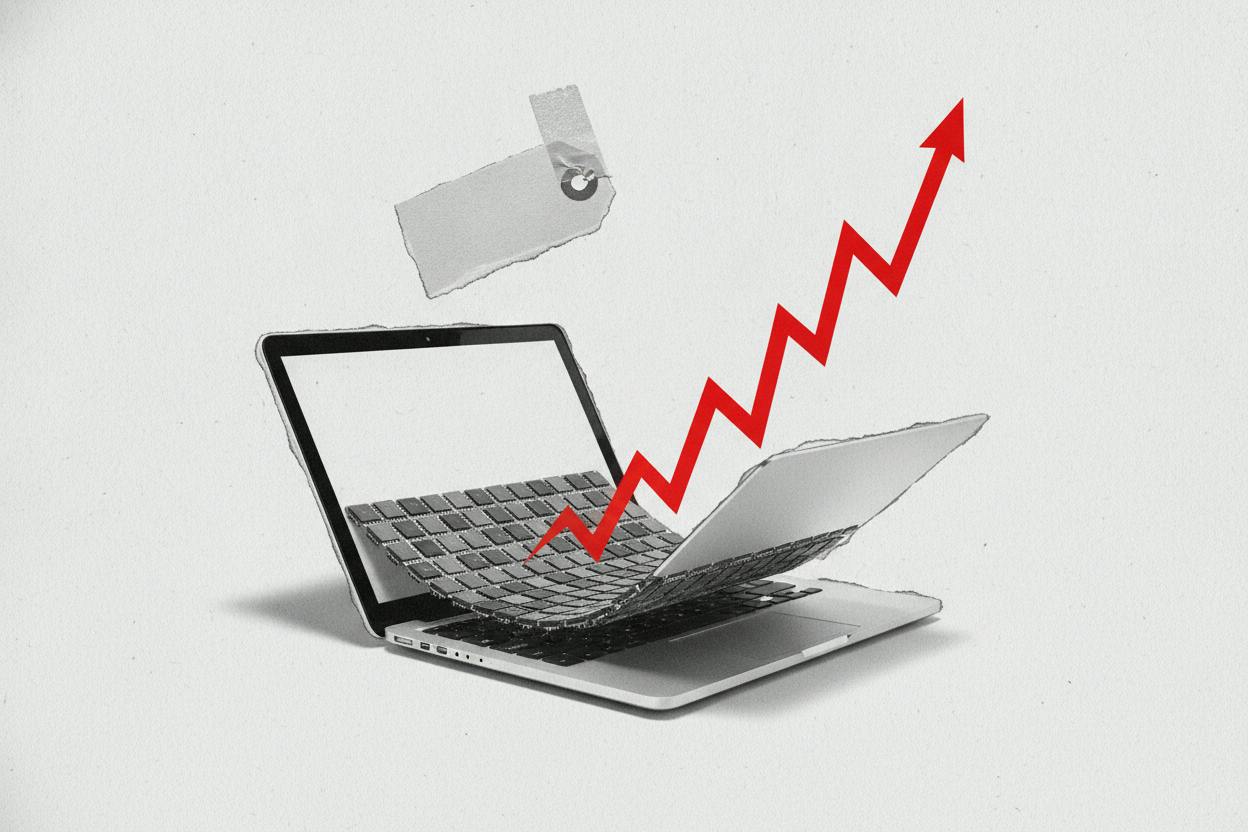
Consumers in the United States and China are increasingly putting off buying a new computer, and the culprit is a sharp rise in the cost of the memory chips that go inside them. UBS Securities, a global investment bank, says prices for two core types of computer memory have surged dramatically since mid-2025, and that jump is now filtering through to the prices shoppers see on store shelves and websites.
According to UBS, the cost of DRAM — the short-term memory that helps a computer run apps smoothly — has climbed 766% since mid-2025. NAND, the storage used in solid-state drives, is up 471% over the same period. Those are extraordinary increases for components that are typically subject to boom-and-bust pricing cycles, and they are changing the math for anyone in the market for a new PC.
Why memory prices matter to PC buyers
Memory chips are a fundamental building block of every computer. DRAM handles active tasks, while NAND stores files and programs. When their prices rise, manufacturers face a choice: absorb the higher costs and accept thinner margins, or pass them on to customers. UBS's findings suggest that at least some of the increase is reaching buyers, particularly at the entry level.
That matters because most shoppers start with a budget and then decide what features they can afford. When a basic laptop or desktop suddenly costs more, or when the same price buys less memory and storage, some buyers respond by waiting for prices to come down. Others simply skip the purchase altogether. UBS says that behavior is now visible in both the US and China, the world's two largest PC markets.
The dynamic is a classic example of demand elasticity — the idea that when prices rise, demand tends to fall. In the PC business, where replacement cycles are already long and many consumers can stretch the life of an older machine, even a modest price increase can prompt a delay. A jump of this magnitude makes that decision much easier for budget-conscious shoppers.
The broader memory cycle and what's driving it
Memory prices are notoriously cyclical. When demand is strong and supply is tight, prices can spike; when manufacturers add capacity or demand cools, prices can collapse. The current surge appears to be driven by a combination of factors, including strong demand from data centers and AI-related hardware, which has diverted supply away from consumer devices. Memory makers have also been disciplined about production, which has kept the market tight.
For PC makers, this creates a difficult environment. Companies that sell high volumes of low-cost machines are most exposed, because memory represents a larger share of their total costs. Premium brands may be better able to absorb the increase, but they are not immune. Investors have already taken note: shares of some chipmakers and PC manufacturers have been volatile as the market tries to gauge how long the price spike will last. The pressure on margins is a key concern, as reflected in recent coverage of Nvidia's valuation and memory costs.
It's worth remembering that memory is a global commodity, and prices can turn quickly. If demand from data centers cools or manufacturers ramp up supply, the current spike could ease. But for now, the trend is firmly upward, and that is rippling through the PC supply chain.
What it means for investors
For everyday investors, the story offers several takeaways. First, it highlights the interconnectedness of the tech sector. A surge in memory prices doesn't just affect memory makers; it affects PC brands, component suppliers, and ultimately consumer spending. Companies with significant exposure to the PC market may see slower sales or compressed margins if shoppers continue to hold back.
Second, it underscores the importance of watching input costs. When a key component becomes dramatically more expensive, it can change the competitive landscape. Firms that can pass costs on to customers may fare better than those that cannot. Investors should pay attention to earnings calls and guidance for clues about how companies are managing these pressures.
Third, the situation is a reminder that consumer behavior can shift in response to price changes. If the memory spike persists, it could weigh on overall PC demand, which in turn could affect a wide range of companies, from chipmakers to retailers. On the other hand, if prices stabilize or fall, pent-up demand could fuel a rebound.
It's also worth noting that the memory market is not isolated. Similar cost pressures are being felt across the technology supply chain, and investors are monitoring how companies adapt. For those looking at the broader landscape, our coverage of rising diesel prices and SoftBank's AI debt shows how input costs and financing conditions can intersect.
For now, UBS's data suggests that the memory price surge is having a real impact on consumer behavior. Whether that translates into a prolonged slump in PC sales or just a temporary pause will depend on how quickly supply and demand come back into balance. Investors should keep an eye on memory pricing trends, PC makers' margins, and any signs that consumers are ready to start buying again.