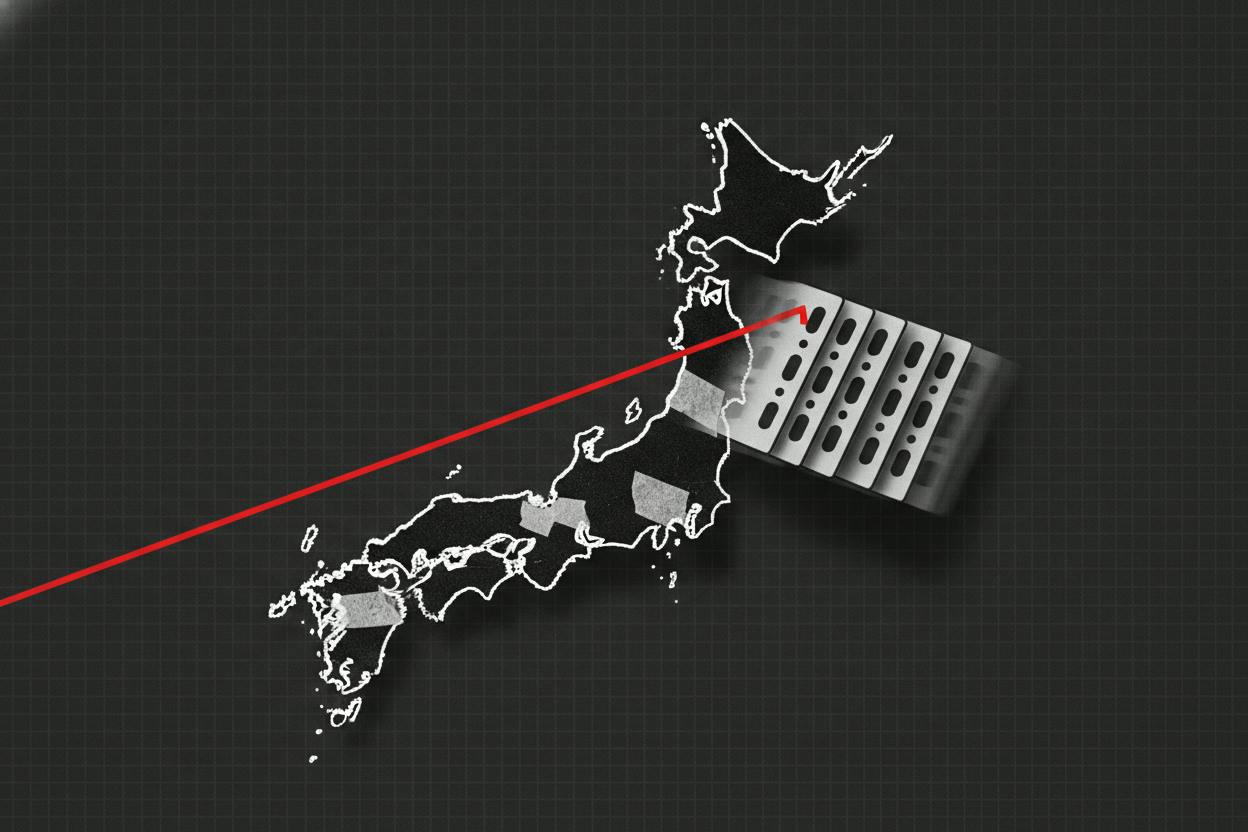
Japan's benchmark Nikkei index tumbled 3.1% on Wednesday, as a sell-off in AI-related stocks spread through the market. The trigger: US election results that suggested Democrats were gaining ground, raising the possibility of stricter rules for data centers—the massive facilities that power cloud computing and artificial intelligence.
Among the hardest hit were some of Japan's most prominent tech names. SoftBank, the investment giant with heavy exposure to AI startups, fell about 7%. Chip-equipment makers Advantest and Tokyo Electron dropped 6.4% and 5%, respectively. The selling also spilled into adjacent suppliers like Fujikura and Furukawa Electric, which make components used in data-center infrastructure, dragging the broader TOPIX index lower as well.
Why US politics is moving Japanese stocks
At first glance, it might seem odd that an American election would hit Tokyo's stock market so hard. But Japan's index is packed with companies that supply the global AI boom—chipmakers, equipment manufacturers, and materials firms. When investors worry that US policy could slow the construction of data centers, they quickly reassess the outlook for these suppliers.
The concern is that Washington could tighten permitting, power, or disclosure rules for data centers. That would make it harder or more expensive for the giant cloud companies—often called hyperscalers—to build new facilities. Since those hyperscalers are the biggest buyers of chips, servers, and specialized gear, any slowdown in their capital spending would ripple through the supply chain.
Investors are also watching knock-on policy areas like the fiscal outlook, defense spending, and regulation. But the data-center angle hit Japan first because the Nikkei is so heavily weighted toward AI-sensitive names. As one market watcher put it, Japan's AI complex can trade like a single "AI capex" basket, amplifying moves whenever US policy odds shift.
What it means for investors
For everyday investors, the key takeaway is how quickly policy uncertainty can reprice stocks. When the outlook for data-center projects becomes murky, markets don't wait for companies to report earnings. They immediately adjust expectations for future demand.
This tends to hit "long-duration" stocks first—shares whose value depends heavily on profits expected years down the road. Because AI-related companies are often priced for strong long-term growth, they are especially sensitive to any sign that the growth might slow. That's why a single political development can cause outsized moves in names like SoftBank, which fell roughly 7% in one session.
For those holding diversified portfolios, the lesson is that sector concentration can amplify risk. An index like the Nikkei, with its heavy tech weighting, can swing more than broader markets when a single theme—like AI—comes under pressure. Investors with exposure to Japanese equities or tech funds should be prepared for continued volatility as US policy debates unfold.
It's also worth noting that this isn't the first time politics has moved markets. As we've seen in post-midterm market patterns, election outcomes can shape investor sentiment for weeks. Similarly, financial stocks often react to election risks, and tech is no exception.
Looking ahead
Investors will be watching for any concrete policy proposals from the incoming Congress. If Democrats push for stricter data-center regulations, the AI supply chain could face more headwinds. On the other hand, if the focus shifts to other priorities, the sell-off could prove short-lived.
For now, the market is in a wait-and-see mode. The Nikkei's drop is a reminder that global investors are closely tied to US policy decisions, even when those decisions are made thousands of miles away. As the AI buildout continues, expect more volatility in stocks that depend on it.
For a broader view of how tech stocks are moving, check out our coverage of chip stocks rallying on the Nasdaq and tech weakness in Toronto. These stories show that AI-related swings are a global phenomenon, not just a Japanese one.