Oil prices continued their upward march this week, with Brent crude reaching $84.50 a barrel—an 11% gain over the past five days. The move comes as traders attempt to price in the potential for supply disruptions stemming from escalating tensions involving Iran, a major oil producer.
Two Forces at Play
Markets are currently balancing two powerful forces that typically move in opposite directions. On one hand, softer-than-expected US inflation data has reduced the probability of a Federal Reserve interest rate hike in July. This has helped keep the US dollar from strengthening and US Treasury yields from jumping—both of which would normally put downward pressure on oil prices.
On the other hand, the conflict in the Middle East is injecting fresh uncertainty into energy markets. Iran sits near the Strait of Hormuz, a critical chokepoint through which about 20% of the world's oil passes. Any disruption there could send prices sharply higher, as traders weigh the real risk of a Strait of Hormuz disruption.
What It Means for Inflation
The rise in crude prices complicates the inflation picture. Higher oil costs feed directly into gasoline, heating, and transportation expenses, which can push up headline inflation numbers. This creates a dilemma for central banks: while recent data suggests inflation is cooling, a sustained oil rally could reverse that trend.
For everyday investors, this means the relationship between oil and inflation remains a key variable to watch. If crude stays elevated, it could delay the timing of any future rate cuts, which would affect everything from bond yields to stock valuations.
Broader Market Impact
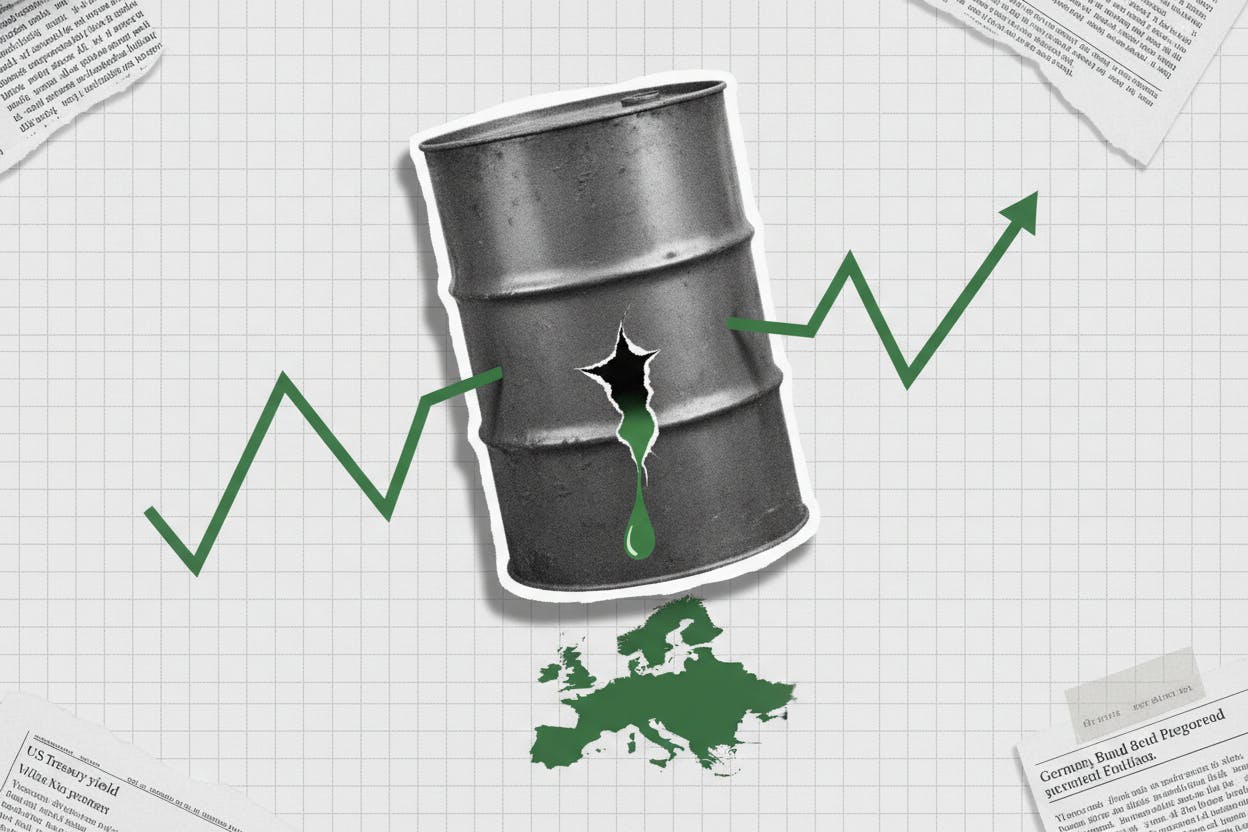
The oil rally has had ripple effects across global markets. European stocks have stalled as AI optimism clashes with oil price jitters, while emerging market currencies like the South African rand have held near key levels as Brent crude rises to $85 on US-Iran tensions. In India, stocks are set for a flat open as Brent crude tops $85 on Middle East tensions, and the rupee is nearing record lows as Brent tops $85 and RBI support fades.
Energy companies themselves are feeling the effects. TotalEnergies recently warned of sharply lower LNG earnings despite higher Q2 profits on the Iran war oil boost, highlighting how the conflict is reshaping earnings across the sector.
What Investors Should Watch
For now, the key question is whether the oil rally has further to run. That depends on two things: the trajectory of the Iran conflict and the path of US inflation. If tensions escalate further, oil could test $90 or beyond. But if diplomacy gains ground or if US economic data weakens enough to dampen demand, prices could retreat.
Investors should also keep an eye on the dollar and Treasury yields. A weaker dollar tends to support oil prices, while higher yields can weigh on them. The current standoff between geopolitical risk and economic data is likely to keep markets volatile in the near term.
As always, the best approach for everyday investors is to stay diversified and avoid making big bets based on short-term price moves. Oil is notoriously volatile, and trying to time it is rarely a winning strategy.