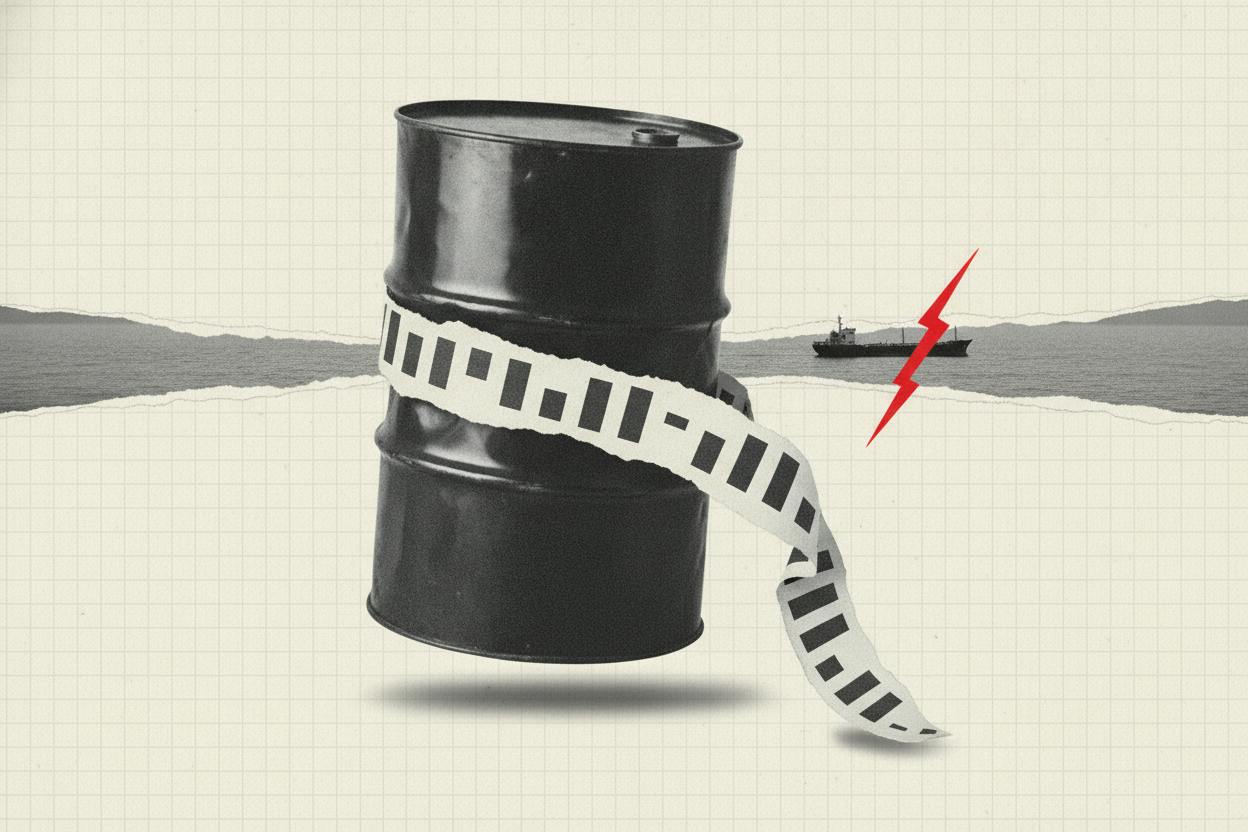
Oil prices fell on Monday even as new tanker incidents were reported near the Strait of Hormuz, a critical chokepoint for global crude shipments. The decline came as traders weighed a fresh warning from the International Energy Agency (IEA) that global oil demand could shrink sharply in 2026.
The UK Maritime Trade Operations (UKMTO), a British naval liaison group that monitors shipping security, said a tanker was hit by a projectile and logged other potentially hostile incidents over the weekend. Such reports typically add a “risk premium” to crude prices, because the Strait of Hormuz is a narrow waterway through which a large share of the world’s seaborne oil passes.
Yet this time, the market’s attention was elsewhere. The IEA, an energy watchdog that advises major economies, projected that global oil demand would drop by 2.7 million barrels per day (mb/d) in 2026. That bearish demand outlook outweighed the supply-side worries from the Gulf, sending crude lower.
Why the Strait of Hormuz matters
The Strait of Hormuz, located between Iran and Oman, is one of the most strategically important oil transit points on Earth. Roughly one-fifth of global oil consumption moves through it, mostly by tanker. Any disruption there—whether from military conflict, sabotage, or accidents—can quickly tighten global supply and push prices up.
In recent weeks, tensions in the region have flared, with incidents involving tankers and warnings about potential mines. Gulf stocks have slipped as Bahrain intercepted attacks and Iran warned of mines in the strait. Such headlines normally make traders nervous, but the IEA’s demand forecast appears to have taken center stage.
The UKMTO’s latest report of a projectile hitting a tanker is a reminder that the risk of supply disruption remains real. However, the market’s muted reaction suggests that investors are more worried about a future glut than an immediate shortage.
The IEA’s demand warning
The IEA’s projection of a 2.7 mb/d drop in global oil demand in 2026 is a significant downgrade. For context, that’s roughly the equivalent of the entire consumption of a mid-sized country. The agency’s outlook reflects a combination of factors, including slower economic growth, greater energy efficiency, and the accelerating shift toward electric vehicles and renewable energy.
For everyday investors, this matters because oil prices are a key driver of inflation and corporate profits. When demand is expected to fall, prices tend to weaken, which can lower costs for consumers and businesses that rely on fuel. But it also means lower revenues for oil producers and energy companies.
The IEA’s warning is not a forecast of an immediate collapse in prices. Rather, it signals that the market may be entering a period of oversupply, especially if producers continue to pump at current levels. That could keep a lid on crude prices even as geopolitical risks flare.
What it means for investors
For investors, the tug-of-war between supply risks and demand worries is a familiar theme. Oil surges on Saudi attacks and Hormuz risks have previously set up pullbacks in equity markets, as higher energy costs can hurt corporate margins and consumer spending. But when demand fears dominate, oil’s decline can be a tailwind for airlines, shipping companies, and other fuel-intensive sectors.
At the same time, palm oil slipped as cheaper rival oils and weak crude weighed on prices, illustrating how oil’s moves ripple through other commodities. And Exxon’s $12.5 billion commitment to a Guyana oil project shows that major producers are still betting on long-term demand, even as the IEA warns of a future decline.
For ordinary investors, the key takeaway is that oil prices are likely to remain volatile. Geopolitical events can cause sharp spikes, but the underlying trend in demand—shaped by economic growth and the energy transition—will ultimately set the direction. Diversification across sectors and asset classes remains a prudent strategy, as energy’s fortunes can turn quickly.
Investors should also watch how central banks respond to oil price moves. Fed Chair Warsh’s recent trip to Silicon Valley highlighted the inflation risks that remain on policymakers’ radar. If oil prices stay low, that could ease inflationary pressures and give central banks more room to cut interest rates, which would be a positive for stocks and bonds.
In the near term, the market will likely keep a close eye on any further incidents in the Strait of Hormuz. But as the IEA’s forecast shows, the bigger story may be the gradual shift in global oil demand—a trend that could reshape energy markets for years to come.