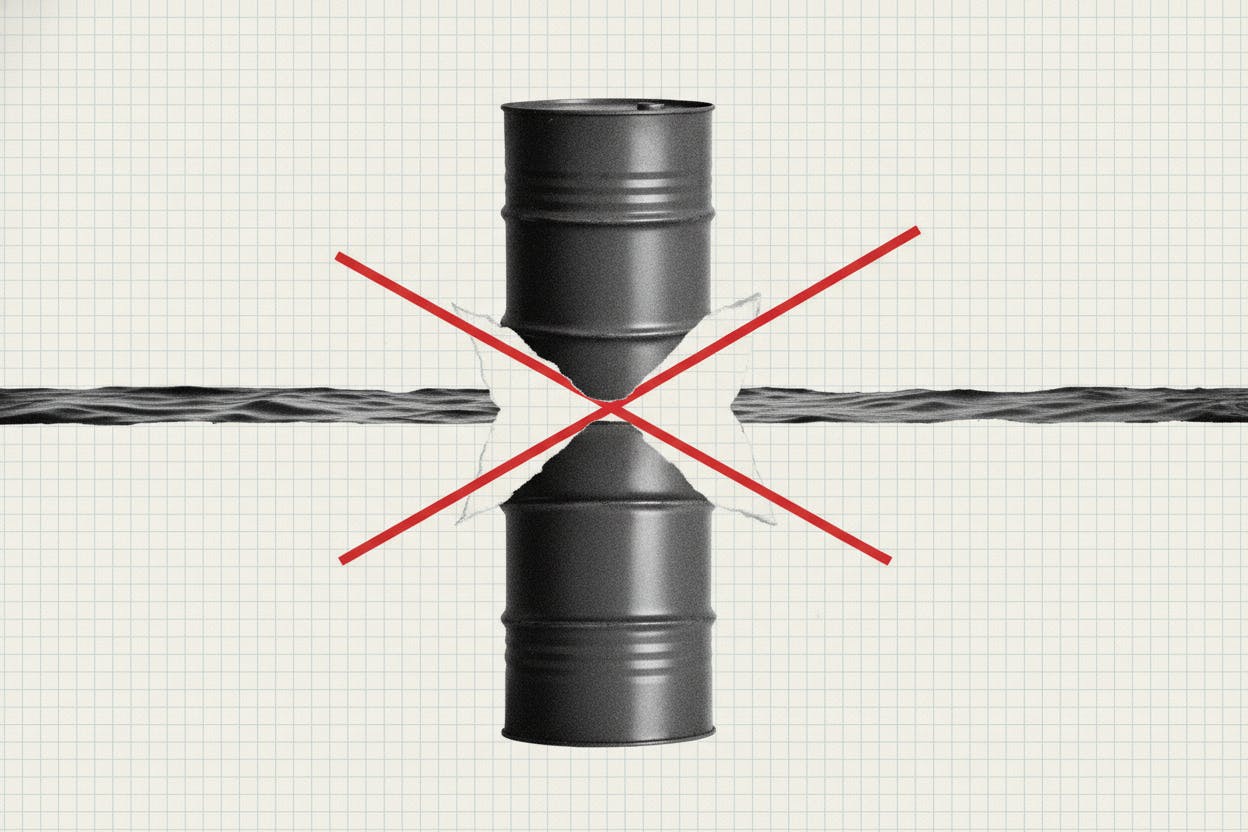
Oil prices jumped sharply on Monday after Iran announced it had closed the Strait of Hormuz, following a weekend of missile and drone strikes between the United States and Iran. Brent crude, the global benchmark, rose 4.8% to $79.67 a barrel as traders scrambled to assess the risk to one of the world's most critical energy shipping routes.
The Strait of Hormuz, a narrow waterway between Iran and Oman, is a vital chokepoint for global oil supplies. Roughly one-fifth of the world's petroleum passes through it daily, making any disruption a major event for energy markets. Iran's claim of closure, even if temporary, immediately sent shockwaves through trading floors.
What's behind the price move
The 4.8% spike in Brent crude reflects traders pricing in the risk that oil shipments through the strait could be delayed or blocked entirely. While a full, sustained closure is not guaranteed, markets react to the possibility of disruption, especially for oil that needs to be delivered soon.
This type of event tends to hit near-term oil contracts hardest. Refiners and fuel buyers still have commitments to meet, and any delay forces them to pay a premium for barrels that can be delivered quickly. That's why the biggest price moves often appear in front-month futures and short-term hedging instruments, while longer-dated contracts may rise less if investors believe the long-run supply picture remains intact.
The broader market response can appear calmer than the oil move suggests. Investors are weighing geopolitical risks alongside company-specific news and broader economic data. But if shipping risks persist, energy becomes a faster-moving input cost story for sectors that consume large amounts of fuel or petroleum-based feedstocks, rather than an automatic repricing of all stocks.
Why the Strait of Hormuz matters
The strait is not just any shipping lane. It connects Persian Gulf producers like Saudi Arabia, Iraq, Kuwait, and the UAE to global markets. Any closure effectively cuts off a huge portion of the world's oil supply, at least temporarily. Past tensions in the region have led to brief disruptions or heightened insurance costs for tankers, but a full closure is rare and serious.
This weekend's escalation follows a pattern of rising US-Iran tensions. The US and Iran traded missile and drone strikes, marking a significant increase in direct military confrontation. Iran's announcement of the strait closure is a dramatic escalation that goes beyond previous rhetoric.
For context, similar events have historically caused sharp but often short-lived oil price spikes. The key question for investors is whether this disruption will be resolved quickly or drag on, tightening physical oil markets and raising costs for businesses.
What it means for investors
For everyday investors, the immediate takeaway is that oil at $79.67 signals near-term stress more than a lasting shortage. The market is paying up for certainty on prompt deliveries, not betting on a permanent supply cut.
The sectors most directly affected are those with tight energy budgets: airlines, shipping companies, and chemical manufacturers. Their fuel and feedstock costs can change quickly if oil stays elevated, even if longer-term expectations don't shift. Investors in these sectors should watch short-term oil volatility and near-term pricing closely.
Energy stocks, by contrast, often benefit from rising crude prices, as seen in previous episodes of Hormuz tension. The oil surge lifts energy stocks as higher prices boost revenues for producers. However, broader equity markets may struggle if the disruption persists, as higher energy costs act as a tax on consumers and businesses.
Geographically, markets in regions most exposed to oil price swings are reacting. Saudi stocks edged lower as the strikes revived fears, while European stocks edged lower as oil gains weighed on tech and other sectors. China stocks tumbled on the threat to oil flows, highlighting the global nature of the risk.
For now, the oil market is pricing in a risk premium. Whether that premium expands or contracts depends on the next moves from Tehran and Washington. Investors should monitor headlines from the region and watch short-dated oil futures for signs of further stress.