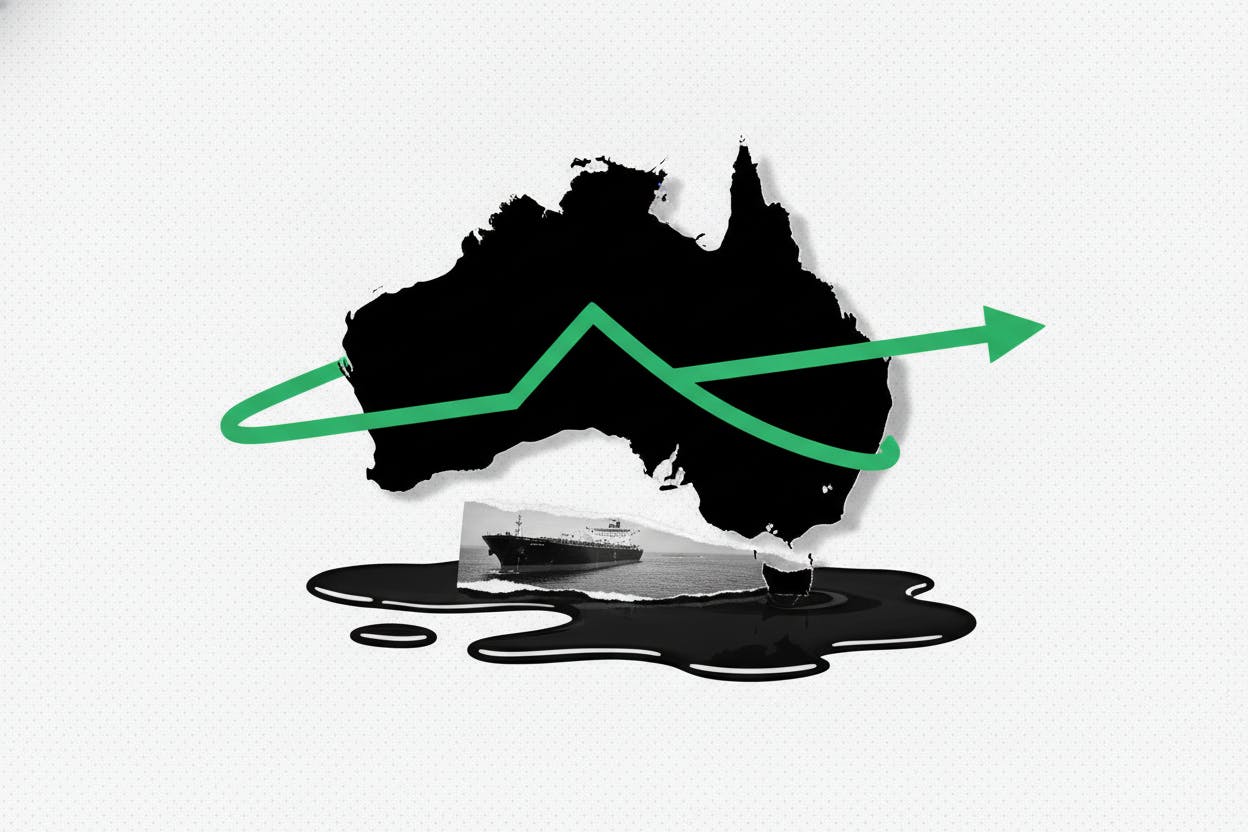
Oil prices surged on renewed tensions between the United States and Iran, stoking fears of disruptions to tanker traffic through the Strait of Hormuz, a critical chokepoint for global crude shipments. The jump in crude helped set a firmer tone for Australian shares on Tuesday, even as gold slipped and investors turned their attention to the Reserve Bank of Australia's June meeting minutes due later in the day.
Brent crude, the international benchmark, rose sharply as markets priced in the risk that escalating rhetoric between Washington and Tehran could spill over into shipping lanes. The Strait of Hormuz, a narrow waterway between the Persian Gulf and the Gulf of Oman, handles roughly a fifth of the world's oil supply. Any real or perceived threat to that flow tends to send prices higher quickly.
Why oil spikes matter beyond the pump
Energy shocks can act like a two-sided headline for markets. On one hand, pricier crude often lifts oil and gas stocks and can nudge broader indexes higher, which is part of why risk appetite can look firm even when the news is geopolitical. On the other hand, higher oil is basically a tax on the rest of the economy: it raises fuel, shipping, and production costs, which can slow growth while also keeping inflation uncomfortably sticky.
That mix is why gold can slip when investors think “rates higher for longer” is back on the table: if inflation looks harder to beat, central banks have less room to cut. In Australia, the focus shifts from the oil move to the RBA’s June minutes for clues on how policymakers are weighing stubborn price pressures against softer demand. If the board sounds more concerned about inflation than growth, markets may push out expectations for when borrowing costs start to ease.
The broader market context also matters. Recent sessions have seen a mixed picture globally, with tech stocks rebounding in Japan as US-Iran tensions eased temporarily, as noted in our coverage of the Nikkei 225 surge. Meanwhile, European markets have been flat, with tech gains offset by construction sector declines and the European Central Bank's Sintra forum in focus, as reported in European stocks flat.
What the RBA minutes could reveal
The Reserve Bank of Australia's June meeting minutes, due for release later Tuesday, are the next major domestic event for Australian markets. The central bank has held its cash rate steady at 4.35% since November, but the path ahead remains uncertain. Inflation has proven stickier than hoped, partly due to services costs and, more recently, energy-driven price pressures.
Investors will be parsing the minutes for any shift in language around the balance of risks. If policymakers emphasize that inflation remains too high and that further tightening might be needed, markets will likely push back expectations for rate cuts into 2025 or beyond. That would be a blow for borrowers hoping for relief on variable-rate mortgages and business loans. Conversely, if the board acknowledges that the economy is slowing more than expected, it could keep the door open for an earlier easing cycle.
The oil price jump adds a fresh complication. Higher crude costs feed into petrol prices almost immediately, and then ripple through freight and production costs across the economy. That can keep headline inflation elevated even if underlying demand is cooling. For the RBA, that means a tougher job: it cannot ignore the inflation signal from energy, but raising rates further to combat supply-driven price spikes could unnecessarily damage growth.
What it means for everyday investors
For Australian households, the Strait of Hormuz can show up in two places: your gas tank and your interest rate. When oil jumps on shipping-risk fears, it doesn’t stay in the energy market. Higher crude tends to flow into what households pay through fuel prices first, then through freight and other business costs that can keep consumer inflation higher than it would have been.
That matters because the RBA’s job is to get inflation under control. If energy-driven price pressure lingers, the bank may feel it has to keep policy tight for longer, even if parts of the economy are cooling. In practice, that can mean a longer wait for relief on variable-rate loans, while day-to-day expenses like transportation remain elevated.
For investors, the energy sector itself can benefit from higher oil prices, at least in the short term. Australian oil and gas producers, such as Woodside and Santos, tend to see their share prices rise when crude rallies. But the broader market impact is more nuanced: sectors that are sensitive to fuel costs, like airlines, logistics, and manufacturing, can come under pressure. Meanwhile, the prospect of rates staying higher for longer can weigh on interest-rate-sensitive stocks like banks and real estate investment trusts.
The gold market also reacted, slipping as the oil-driven inflation narrative reinforced expectations that central banks will keep rates elevated. Gold, which pays no yield, becomes less attractive when bond yields rise. This dynamic was evident in recent sessions, as tech and chip stocks drove the Nasdaq higher while oil rose and gold slipped.
Looking ahead, investors will be watching for any further escalation in US-Iran tensions, as well as the RBA's tone in its minutes. The combination of geopolitical risk and domestic monetary policy uncertainty means Australian markets could remain volatile in the near term. For everyday investors, the key takeaway is that energy shocks have a way of rippling through the entire economy, affecting everything from the cost of filling up the car to the interest rate on your home loan.