Pay by bank, the payment method that lets you check out online using your current account instead of a card, is no longer a niche experiment. Swedish fintech Trustly said in April that it had passed 120 million users worldwide, and in the UK alone it now counts roughly 15 million users — about one in three adults — up 34% in a single year.
Those numbers used to belong to card networks like Visa and Mastercard, not a decade-old open banking challenger. The milestone is a sign that a technology once confined to early adopters is now part of everyday financial life.
From gambling sites to the supermarket checkout
Trustly's growth didn't start in a supermarket checkout. It started in gambling. UK online casinos were among the first mainstream businesses to build their deposit flows around instant bank transfers, years before “pay by bank” meant anything to the average shopper. UKGC-licensed operators have built entire deposit flows around the technology, and that early use case helped Trustly prove the model worked at scale.
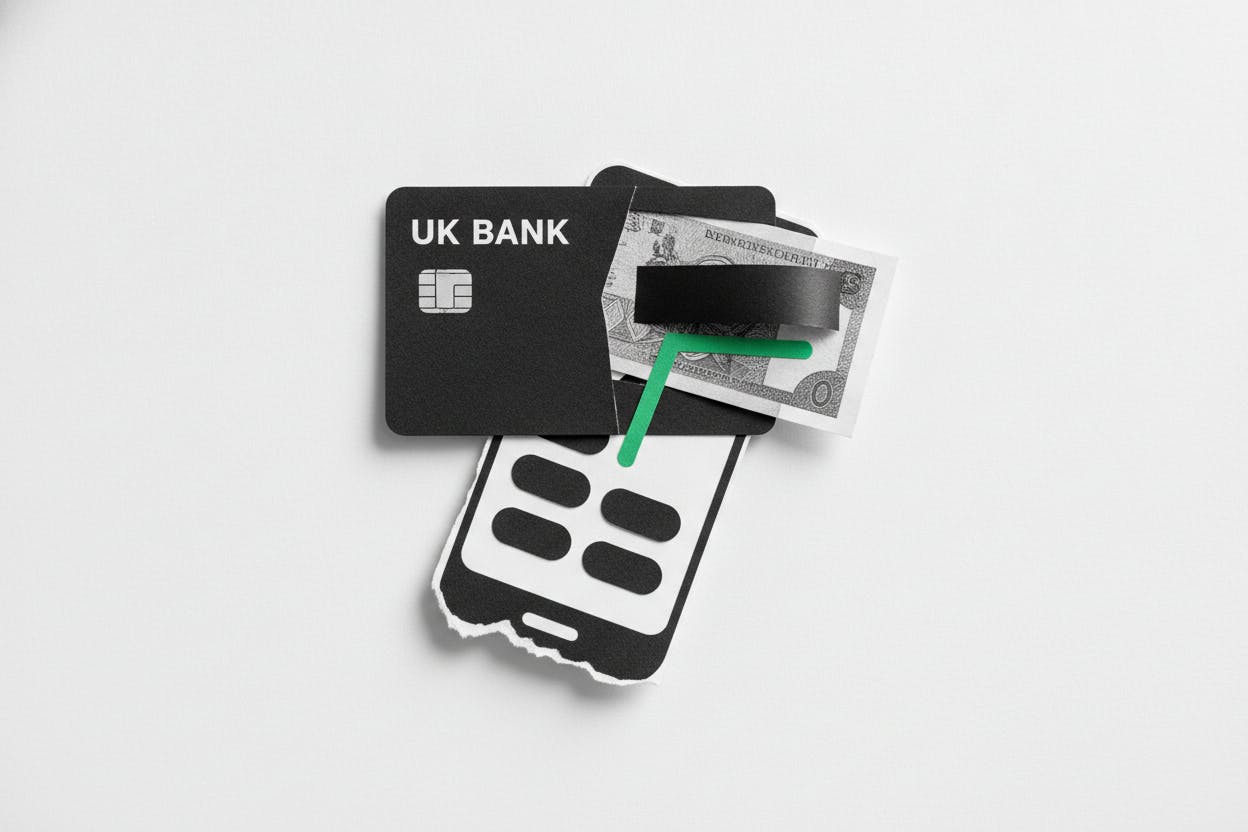
Since then, pay by bank has spread to e-commerce, utilities, travel and even government services. The idea is simple: instead of typing in card details, you log into your bank's app or online banking, approve the payment, and the money moves instantly. No card numbers, no waiting for settlement, no risk of card fraud.
For merchants, the appeal is lower fees than cards and faster settlement. For consumers, it's convenience and security. And for banks, it's a way to stay relevant in payments, a business that has increasingly been captured by card networks and tech giants.
What is open banking?
Open banking is the regulatory framework that allows third-party providers like Trustly to access your bank account data and initiate payments, with your permission. It was introduced in the UK and Europe in the late 2010s as a way to increase competition in financial services. Instead of keeping customer data locked inside banks, open banking lets licensed fintechs plug into the system.
Trustly is one of the largest players in this space. It operates across Europe and the US, and its 120 million user milestone is a measure of how far open banking has come. But it's not just about user numbers — it's about behaviour. A 34% jump in UK users in a single year suggests that pay by bank is moving from a niche option to a default choice for many online transactions.
What it means for investors
For everyday investors, the rise of pay by bank is worth watching for a few reasons.
First, it's a direct challenge to the card networks. Visa and Mastercard have long dominated online payments, and their fees are a source of frustration for merchants. If pay by bank continues to grow, it could put pressure on those fee structures, which would have implications for the revenue models of card companies and the banks that issue cards.
Second, it's a signal about the health of the fintech sector. Trustly's growth is a bright spot in a sector that has seen valuations fall and funding dry up in recent years. The fact that a company can build a large user base without relying on venture capital hype suggests that open banking has real, durable demand.
Third, it's a reminder that financial infrastructure is changing. The way we pay for things is as fundamental as the way we invest, and shifts in payments can ripple through the broader economy. For investors, that means keeping an eye on companies that are positioned to benefit from the shift — and those that might be disrupted by it.
That said, pay by bank is not without challenges. It still faces competition from cards, digital wallets like Apple Pay and Google Pay, and newer payment methods like buy now, pay later. And while Trustly's numbers are impressive, they are still a fraction of the billions of card transactions processed globally each year.
Still, the trajectory is clear. Open banking is no longer a theoretical concept — it's a mainstream payment method with tens of millions of users. Whether you're a shopper who likes the convenience or an investor looking for the next big trend, pay by bank is a story worth following.
For more on how global markets are reacting to economic data, see our coverage of global stocks heading for their best week since May. And for a look at how tech and AI are reshaping other sectors, check out how India's IT stocks jumped in July.