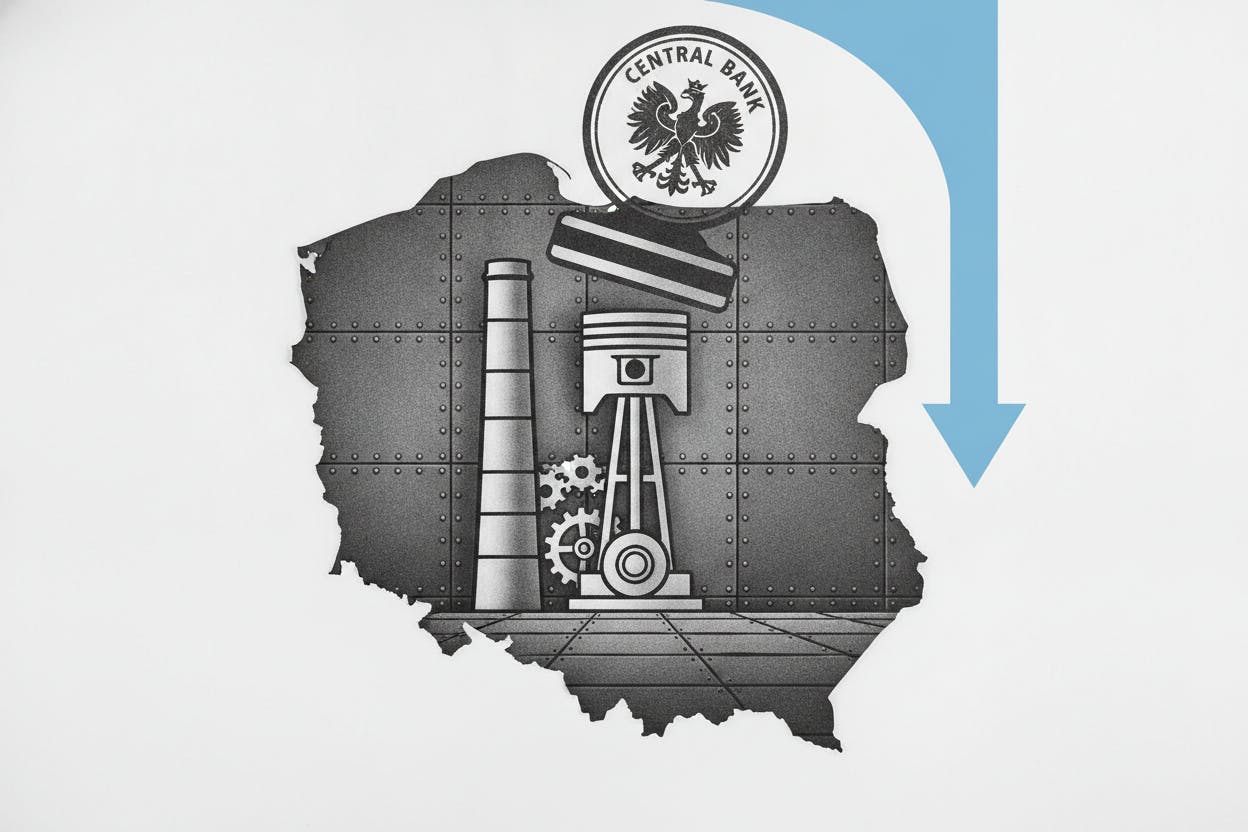
Poland's industrial production rose 7.6% in June compared to the same month last year, and wages climbed 5.9%, both figures coming in stronger than analysts had predicted. Yet despite the upbeat data, economists say the numbers are unlikely to change the central bank's plans to cut interest rates later this year.
The data, released by Poland's statistics office, shows that the country's manufacturing sector is still growing at a solid pace. Wages are also rising, which supports consumer spending. But analysts argue that the overall economic picture remains soft enough for the central bank to continue its easing cycle.
Why the data matters for Poland's economy
Industrial production is a key measure of economic activity, especially for a manufacturing-heavy economy like Poland's. A 7.6% year-on-year increase is a healthy number, but it needs to be seen in context. The previous month's reading was also strong, and some of the gain may reflect one-off factors like calendar effects or base effects from last year's weak period.
Wage growth of 5.9% is also above inflation, which is good news for workers and consumers. But it's not so high that it would force the central bank to worry about a wage-price spiral. In fact, with inflation having fallen sharply from its peak in 2023, the central bank has room to ease policy without stoking price pressures.
What it means for investors
For investors in Polish assets, the key takeaway is that the central bank is likely to stay on its current path. The National Bank of Poland (NBP) has already cut rates once this year, and most analysts expect at least one more cut before the end of 2024. The June data, while better than expected, doesn't change that calculus.
Bond investors have already priced in further easing, so yields may not move much on this news. But if future data comes in much stronger, that could change. For now, the market is betting on lower rates, which would support bond prices and could also boost equities, especially rate-sensitive sectors like banks and real estate.
Currency traders will also be watching. The Polish zloty has been relatively stable, but if the central bank cuts rates more aggressively than expected, the currency could weaken. Conversely, if the economy picks up steam and the central bank holds off on cuts, the zloty could strengthen.
Broader context: Central banks around the world are cutting rates
Poland is not alone in easing policy. Central banks in Europe and elsewhere have started cutting rates as inflation recedes and growth remains sluggish. The European Central Bank cut rates in June, and the US Federal Reserve is expected to follow later this year.
This global trend is important for Polish investors because it affects capital flows and exchange rates. If other central banks cut rates faster than the NBP, the zloty could appreciate, which would be a headwind for exporters. But if the NBP keeps pace, the impact may be neutral.
For everyday investors, the main message is that Poland's economy is still growing, but not so fast that it would force the central bank to reverse course. That means borrowing costs are likely to fall further, which is good for anyone with a mortgage or a business loan. It also means that Polish bonds and dividend-paying stocks could remain attractive.
As always, investors should keep an eye on upcoming data releases, especially inflation and GDP figures, which will give a clearer picture of whether the economy is gaining momentum. If those numbers also beat forecasts, the rate cut outlook could shift. But for now, the consensus is that more cuts are coming.